Protein Kinase C
Protein kinase C (PKC) refers to a family of serine/threonine protein kinases grouped by their activation mechanism. Conventional PKCs (cPKC α -, β I- , β II- and γ -) are activated by phosphatidylserine in a calcium dependent manner and can bind diacylglycerol.
Products for Protein Kinase C - Page 3
- Cat.No. Product Name Information/Activity
-
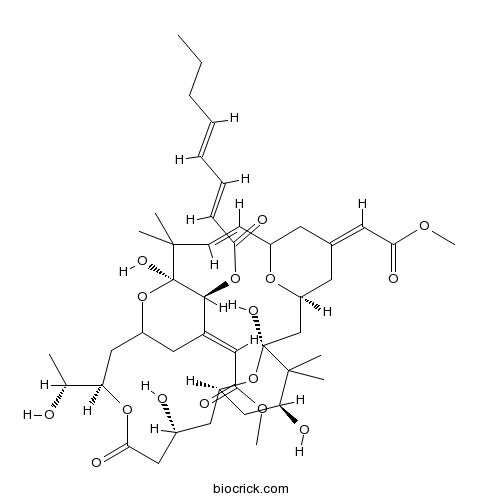
BCC5619
Bryostatin 2
87745-28-6
-
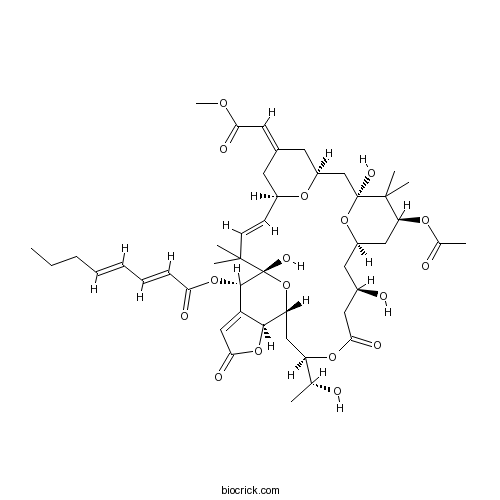
BCC5620
Bryostatin 3
143370-84-7
-
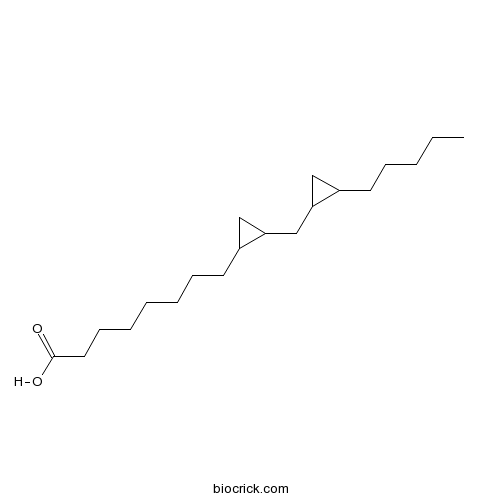
BCC7564
FR 236924
DCP-LA (FR236924), a linoleic acid derivative, selectively and directly activates PKCε.
-
BCN2961
Ingenol 3-Angelate
Ingenol Mebutate is an active ingredient in Euphorbia peplus, acts as a potent PKC modulator, with Kis of 0.3, 0.105, 0.162, 0.376, and 0.171 nM for PKC-α, PKC-β, PKC-γ, PKC-δ, and PKC-ε, respectively, and has antiinflammatory and antitumor activity.

-
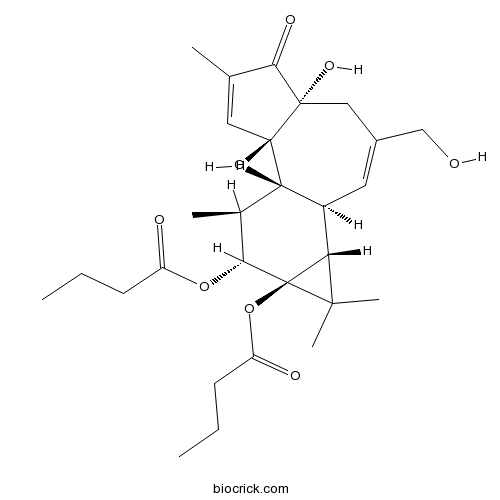
BCC7870
Phorbol 12,13-dibutyrate
Phorbol 12,13-dibutyrate (Phorbol dibutyrate) is a PKC activator and a potent skin tumor promoter.
-
BCN2511
12-O-tetradecanoylphorbol-13-acetate
Phorbol 12-myristate 13-acetate (PMA), a phorbol ester, is a dual SphK and protein kinase C (PKC) activator.

-
BCC6643
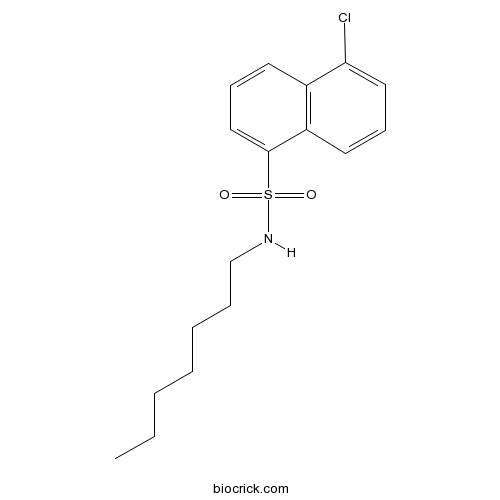
SC-10
102649-79-6
-
BCC6646
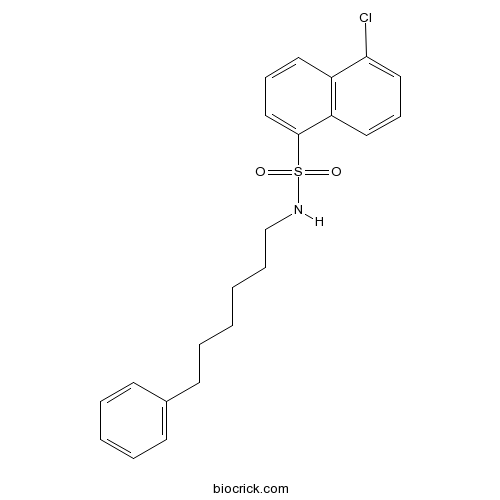
SC-9
102649-78-5
-
BCC2390
Oncrasin 1
Oncrasin-1 is a potent and effective anticancer inhibitor that kills various human lung cancer cells with K-Ras mutations at low or submicromolar concentrations; also led to abnormal aggregation of PKCι in nucleus of sensitive cells but not in resistant cells.