
Isoeucommin ACAS# 134859-90-8 |
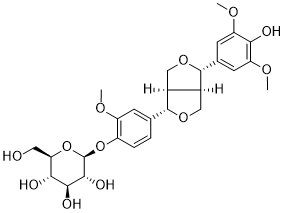
| Cas No. | 134859-90-8 | SDF | File under preparation. |
| PubChem ID | N/A | Appearance | Powder |
| Formula | C27H34O12 | M.Wt | 550.6 |
| Type of Compound | N/A | Storage | Desiccate at -20°C |
| Solubility | Soluble in Chloroform,Dichloromethane,Ethyl Acetate,DMSO,Acetone,etc. | ||
| General tips | For obtaining a higher solubility , please warm the tube at 37 ℃ and shake it in the ultrasonic bath for a while.Stock solution can be stored below -20℃ for several months. We recommend that you prepare and use the solution on the same day. However, if the test schedule requires, the stock solutions can be prepared in advance, and the stock solution must be sealed and stored below -20℃. In general, the stock solution can be kept for several months. Before use, we recommend that you leave the vial at room temperature for at least an hour before opening it. |
||
| About Packaging | 1. The packaging of the product may be reversed during transportation, cause the high purity compounds to adhere to the neck or cap of the vial.Take the vail out of its packaging and shake gently until the compounds fall to the bottom of the vial. 2. For liquid products, please centrifuge at 500xg to gather the liquid to the bottom of the vial. 3. Try to avoid loss or contamination during the experiment. |
||
| Shipping Condition | Packaging according to customer requirements(5mg, 10mg, 20mg and more). Ship via FedEx, DHL, UPS, EMS or other couriers with RT, or blue ice upon request. | ||
Quality Control & MSDS
Package In Stock

Number of papers citing our products


Isoeucommin A Dilution Calculator
Isoeucommin A Molarity Calculator
| 1 mg | 5 mg | 10 mg | 20 mg | 25 mg | |
| 1 mM | 1.8162 mL | 9.081 mL | 18.162 mL | 36.324 mL | 45.405 mL |
| 5 mM | 0.3632 mL | 1.8162 mL | 3.6324 mL | 7.2648 mL | 9.081 mL |
| 10 mM | 0.1816 mL | 0.9081 mL | 1.8162 mL | 3.6324 mL | 4.5405 mL |
| 50 mM | 0.0363 mL | 0.1816 mL | 0.3632 mL | 0.7265 mL | 0.9081 mL |
| 100 mM | 0.0182 mL | 0.0908 mL | 0.1816 mL | 0.3632 mL | 0.4541 mL |
| * Note: If you are in the process of experiment, it's necessary to make the dilution ratios of the samples. The dilution data above is only for reference. Normally, it's can get a better solubility within lower of Concentrations. | |||||
- Idesin
Catalog No.:BCX2649
CAS No.:20331-85-5
- 4'-Demethylpicropodophyllin glucoside
Catalog No.:BCX2648
CAS No.:7598-48-3
- 7, 4'-Dihydroxy-8-methoxyhomoisoflavan
Catalog No.:BCX2647
CAS No.:1447664-19-8
- Stizophyllin
Catalog No.:BCX2646
CAS No.:109237-00-5
- O-Demethylfukanedone A
Catalog No.:BCX2645
CAS No.:246870-47-3
- 4'-O-Methylsinolignan B
Catalog No.:BCX2644
CAS No.:619296-83-2
- Cyclobuxophylline M
Catalog No.:BCX2643
CAS No.:1053-21-0
- 2,4-Dihydroxy-α-oxobenzeneacetic acid
Catalog No.:BCX2642
CAS No.:5336-27-6
- 1-(4-Hydroxybenzyl)-4-methoxy-9,10-dihydrophenanthrene-2,7-diol
Catalog No.:BCX2641
CAS No.:87530-26-5
- Cyclobuxosuffrine K
Catalog No.:BCX2640
CAS No.:10088-22-9
- Cyclosuffrobuxinine M
Catalog No.:BCX2639
CAS No.:7759-55-9
- 7-O-Methylcatechin
Catalog No.:BCX2638
CAS No.:182694-28-6
- Lyohebecarpiin A
Catalog No.:BCX2651
CAS No.:420837-18-9
- Huazhongilexin
Catalog No.:BCX2652
CAS No.:135820-79-0
- 5-O-Methylshanciguol
Catalog No.:BCX2653
CAS No.:87530-27-6
- Ferulacoumarin C
Catalog No.:BCX2654
CAS No.:263746-12-9
- Fukanedone II
Catalog No.:BCX2655
CAS No.:219595-70-7
- Fukanedone III
Catalog No.:BCX2656
CAS No.:219595-68-3
- 2-epi-Baigene C methyl ether
Catalog No.:BCX2657
CAS No.:263746-21-0
- Baigene C methyl ether
Catalog No.:BCX2658
CAS No.:263746-22-1
- 3-Hydroxy-2-(4-hydroxy-3-methoxyphenyl)-1-(4-hydroxyphenyl)propan-1-one
Catalog No.:BCX2659
CAS No.:3037164-85-2
- 1-(4-Hydroxybenzyl)-4-methoxypenanthrene-2,7-diol
Catalog No.:BCX2660
CAS No.:133740-30-4
- 12β,17β-Dihydroxyandrosta-1,4,6-trien-3-one
Catalog No.:BCX2661
CAS No.:88378-70-5
- 12β,17β-Dihydroxyandrosta-1,4-dien-3-one
Catalog No.:BCX2662
CAS No.:80227-48-1
[Glycoside compounds from Chrysanthemum indicum and their antioxidant activity].[Pubmed:39701762]
Zhongguo Zhong Yao Za Zhi. 2024 Oct;49(19):5244-5251.
Thirteen glycoside compounds were isolated and purified from 95% ethanol extract of Chrysanthemum indicum by normal and reversed phase silica gels, glucan gel, and high performance liquid chromatography, and their chemical structures were identified by spectroscopic data and physicochemical properties. These compounds were(2S,3R)-2,3-dihydro-3-hydroxymethyl-7-methoxy-2-benzodioxole-5-benzofuranpropanol-10-O-beta-D-glucopyranoside(1), 4,6,8-decatriynyl-beta-D-glucopyranoside(2), 5-(beta-D-glucopyranosyloxy)-2-hydroxy benzoic acid methyl ester(3), citrusin C(4), cuminyl beta-D-glucopyranoside(5), benzyl-6-[(2E)-2-butenoate]-beta-D-glucopyranoside(6), benzyl beta-D-glucoside(7), viridoside(8), phenylethyl beta-D-glucopyranoside(9), syringaresinol-4'-O-beta-D-glucoside(10), pinoresinol-4'-O-beta-D-glucoside(11), Isoeucommin A(12), and eucommin A(13). Among them, compound 1 was a new compound. Compounds 2 and 5 were first isolated from Chrysanthemum. Compounds 3-4, 6, 8, and 11-13 were isolated from the C. indicum for the first time. Compounds 5 and 8 have potential antioxidant activity.
Chiral resolution of furofuran lignans and their derivatives from the stems of Dendrobium 'Sonia'.[Pubmed:39428185]
Chin J Nat Med. 2024 Oct;22(10):937-944.
Five new furofuran lignans and their derivatives, (-)-glaberide I 4-O-beta-D-glucopyranoside (1a), (+)-glaberide I 4-O-beta-D-glucopyranoside (1b), (+)-glaberide I 7'-ethoxy-4-O-beta-D-glucopyranoside (2a), (-)-glaberide I 7'-ethoxy-4-O-beta-D-glucopyranoside (2b), and (-)-Isoeucommin A (3b), along with fifteen known analogs were isolated from the stems of Dendrobium 'Sonia'. These compounds were classified into ten pairs of enantiomers or diastereoisomers via chiral resolution, and their structures were determined based on extensive spectroscopic data. Their absolute configurations were determined by hydrolysis, comparison of experimental and calculated electronic circular dichroism (ECD) data, and single-crystal X-ray diffraction analysis. The isolates were evaluated for their ability to inhibit nitric oxide (NO) production in RAW264.7 cells. Among them, syringaresinol (5) exhibited prominent inhibition activity, with an IC(50) value of 28.4 +/- 3.0 mumol.L(-1), and there was a slight difference between 5a, 5b and the racemic mixture 5.
The promising antioxidant effects of lignans: Nrf2 activation comes into view.[Pubmed:38695909]
Naunyn Schmiedebergs Arch Pharmacol. 2024 Sep;397(9):6439-6458.
Lignans are biologically active compounds widely distributed, recognized, and identified in seeds, fruits, and vegetables. Lignans have several intriguing bioactivities, including anti-inflammatory, antioxidant, and anticancer activities. Nrf2 controls the expression of many cytoprotective genes. Activation of Nrf2 is a promising therapeutic approach for treating and preventing diseases resulting from oxidative injury and inflammation. Lignans have been demonstrated to stimulate Nrf2 signaling in a variety of in vitro and experimental animal models. The review summarizes the findings of fourteen lignans (Schisandrin A, Schisandrin B, Schisandrian C, Magnolol, Honokiol, Sesamin, Sesamol, Sauchinone, Pinoresinol, Phyllanthin, Nectandrin B, Isoeucommin A, Arctigenin, Lariciresinol) as antioxidative and anti-inflammatory agents, affirming how Nrf2 activation affects their pharmacological effects. Therefore, lignans may offer therapeutic candidates for the treatment and prevention of various diseases and may contribute to the development of effective Nrf2 modulators.
Isoeucommin A attenuates kidney injury in diabetic nephropathy through the Nrf2/HO-1 pathway.[Pubmed:34228907]
FEBS Open Bio. 2021 Aug;11(8):2350-2363.
Diabetic nephropathy (DN) is a common complication in patients with diabetes and a leading cause of mortality. The management of DN in the clinic still remains a challenge. Therefore, the identification of novel compounds for DN treatment and their characterization in preclinical DN models are crucial. Isoeucommin A is a lignan compound isolated from Eucommia ulmoides Oliv, which has not been studied in detail. Our aim was to investigate the effect of Isoeucommin A in DN and to elucidate the molecular mechanisms though which Isoeucommin A acts in vitro and in vivo. We first isolated and purified Isoeucommin A by microporous resin column chromatography and studied the mass spectrogram, as well as the structure of Isoeucommin A, by high-resolution electrospray ionization mass spectroscopy and NMR, respectively. We further established an in vivo rat DN model and measured the changes of blood glucose, body weight, kidney index (KI), blood urea nitrogen, creatinine (CRE), glutathione, malondialdehyde (MDA), SOD, albumin (ALB) and urinary ALB to CRE ratios on treatment with Isoeucommin A. In addition, we measured SOD, MDA, glycogen synthase kinase-3beta (GSK-3beta), phosphorylated (p)-GSK-3beta, nuclear factor erythroid-derived 2-related factor 2 (Nrf2) and heme oxygenase-1 (HO-1) levels by quantitative real-time PCR and western blot, and estimated cell viability by a 3-(4,5-dimethylthiazol-2-yl)-2,5-diphenyl-tetrazolium bromide assay. After Isoeucommin A treatment, body weight, as well as SOD, glutathione, HO-1 and Nrf2 expression levels, in DN rats increased in a dose-dependent manner. In contrast, the levels of blood glucose, KI, blood urea nitrogen, CRE, urinary ALB to CRE ratio, tumor necrosis factor-alpha, interleukin-1beta, interleukin-6 and MDA decreased significantly. In addition, Isoeucommin A protected H(2) O(2) -stimulated renal tubular epithelial cells from oxidative stress and activated the Nrf2/HO-1 signaling pathway in high-glucose-stimulated human renal mesangial cells. In conclusion, Isoeucommin A could alleviate inflammation and oxidative stress in in vitro and in vivo DN models and thus attenuate kidney injury by activating the Nrf2/HO-1 signaling pathway. Isoeucommin A could have the potential to be used as an effective drug for the treatment of DN.
Phenolic glycosides from Nitraria sibirica leaves and their in vitro biological activities.[Pubmed:31379199]
Nat Prod Res. 2021 Apr;35(8):1388-1392.
Seventeen phenolic glycosides were isolated from the Nitraria sibirica. Their structures were identified by the spectroscopic data and comparison with literatures as isovanillyl alcohol-7-O-beta-d-glucopyranoside (1), benzyl beta-primeveroside (2), benzyl-O-beta-d-glucopyranoside (3), 1-O-beta-d-glucopyranosyl-4-(8-hydroxyethyl)-2-methoxyphenyl (4), dehydrosyringin (5), trans-ferulic acid-4-O-beta-d-glucoside (6), cis-ferulic acid 4-O-beta-d-glucopyranoside (7), glucosyringic acid (8), 1-O-feruloyl-beta-d-glucoside (9), sachaloside VII (10), (3S, 5R, 6R, 7E, 9S)-megastigmane-7-ene-3-hydroxy-5,6-epoxy-9-O-beta-d-glucopyranoside(11), 3-hydroxy-4,5-dimethoxybenzyl alcohol (12), pinoresinol 4-O-beta-d-glucopyranoside (13), eucommin A (14), Isoeucommin A (15), acanthoside (16), liriodendrin (17). All these compounds except compound 13 were isolated from the Nitraria genus for the first time. In bioactivity assays for all compounds, the compounds 8 and 15 were exhibited strong antioxidant activity (IC(50) = 18.11 and 16.29 muM respectively), while compounds 3 and 11 were exhibited strong PTP1B enzymatic inhibition (IC(50) = 6.97 and 11.76 muM, respectively). Furthermore, the compounds 10 and 17 were presented strong inhibitory capacities against Candida albicans (14.5 and 13.5 mm, respectively).
[Lignans from flower buds of Magnolia biondii].[Pubmed:29676096]
Zhongguo Zhong Yao Za Zhi. 2018 Mar;43(5):970-976.
The present study aims to investigate the lignans from the flower buds of Magnolia biondii. The isolation and purification of the compounds were performed by column chromatographies on Diaion HP-20, silica gel, and Sephadex LH-20, combined with semi-preparative HPLC. Their structures were elucidated on the basis of spectral data and physiochemical properties. Eighteen compounds were isolated and identified as magnolin (1), epimagnolin (2), eudesmin (3), kobusin (4), aschantin (5), lirioresinol B dimethyl ether (6), pinoresinol monomethy ether (7), (+)-de-O-methylmagnolin (8), Isoeucommin A (9), syringaresinol 4-O-beta-D-glucopyranoside (10), phillygenin (11), lariciresinol-4'-O-beta-1-D-glucoside (12), conicaoside (13), (7'S, 8'R)-dihydrodehydrodiconiferylalcohol (14), 7R*, 8S*-dihydrodehydrodiconiferyl alcohol 4-O-beta-D-glucopyranoside (15), 7S, 8R-erythro-7, 9, 9'-trihydroxy-3, 3'-dimethoxy-8-O-4'-neolignan 4-O-beta-D-glucopyranoside (16), 7S, 8R-erythro-4, 9, 9'-trihydroxy-3, 3'-dimethoxy-8-O-4'-neolignan-7-O-beta-D-glucopyranoside (17), and (+)-isolariciresinol (18). Compounds 7-18 are isolated from this plant for the first time.
[Lignans from stems of Cistanche deserticola cultured in Tarim desert].[Pubmed:26084171]
Zhongguo Zhong Yao Za Zhi. 2015 Feb;40(3):463-8.
In order to clarify the chemical constituents of Cistanche deserticola cultured in Tarim desert, a systematically phytochemical investigation was carried out. The chemical constituents were isolated by column chromatography, such as silica gel, Sephadex LH- 20, MCI gel, ODS and semi-preparative HPLC, and their structures were determined on the basis of MS, NMR spectroscopic analysis and/or comparison with literature data. Eleven lignans were isolated from the 85% ethanol extract of the stems of C. deserticola cultured in Tarim desert. Their structures were identified as (+)-syringaresinol-4'-O-beta-D-glucopyranoside (1), (+)-Isoeucommin A (2), eucommin A (3), (+)-pinoresinol monomethylether beta-D-glucoside (4), lariciresinol 4'-O-beta-D-glucopyranoside (5), lariciresinol 4-O-beta-D-glucopyranoside (6), conicaoside (7), dehydrodiconiferyl alcohol 4-O-beta-D-glucopyranoside (8), dehydrodiconiferyl alcohol gamma'-O-beta-D-glucoside (9), citrusin A (10), and alaschanioside A (11). Compounds 1, 3-7, 10 and 11 were isolated from this genus for the first time, and compounds 2, 8 and 9 were obtained from this species for the first time.
Two new phenolic glycosides from Viburnum plicatum var. plicatum f. plicatum.[Pubmed:22312734]
Nat Prod Commun. 2011 Dec;6(12):1901-4.
Two new glycosides, named dideoxyplicatumoside A (1) and erythro-syringylglycerol-beta-O-4'-(+)-Isoeucommin A 4'''-O-beta-D-glucopyranoside (2), together with seven known compounds, were isolated from the leaves of Viburnum plicatum Thunb. ex Murray var. plicatum f. plicatum. Their structures were established on the basis of NMR, MS and chemical data.

Calcutta University

University of Minnesota

University of Maryland School of Medicine

University of Illinois at Chicago

The Ohio State University

University of Zurich

Harvard University

Colorado State University

Auburn University

Yale University

Worcester Polytechnic Institute

Washington State University

Stanford University

University of Leipzig

Universidade da Beira Interior

The Institute of Cancer Research

Heidelberg University

University of Amsterdam

University of Auckland

TsingHua University

The University of Michigan

Miami University

DRURY University

Jilin University

Fudan University

Wuhan University

Sun Yat-sen University

Universite de Paris

Deemed University

Auckland University

The University of Tokyo

Korea University



