
Heart Failure Research
Heart failure, also known as congestive heart failure or CHF, is an inability of the heart to pump sufficient blood around the body.Heart failure typically occurs secondary to an existing pathology that alters cardiac function. Examples of syndromes that can precede heart failure include myocardial infarction, arrhythmia or infection. These can also cause dilated cardiomyopathy, a condition which accounts for approximately one third of all cases of heart failure. The pathogenesis of heart failure is cyclical and progressive; endogenous mechanisms, which are activated during heart failure in an attempt to counteract the symptoms, actually worsen cardiac function. Cardiac dysfunction, either systolic or diastolic, triggers a decrease in stroke volume and a resultant increase in cardiac output. In healthy individuals the body responds to decreases in cardiac output by initiating the renin-angiotensin-aldosterone system (RAAS) to promote fluid retention, and also by activating the sympathetic nervous system to cause peripheral vasoconstriction. Under normal circumstances this counteracts the imbalance in stroke volume, restoring cardiac output to normal levels. In patients with heart failure the increase in blood volume, together with the heightened peripheral resistance and elevated levels of circulating catecholamines, causes an increased load on the already weakened ventricles with each contraction, and the stroke volume does not return to normal levels. Repeated cycles of this process further weaken the ventricle walls, prompting ventricular hypertrophy and a decreased force of contraction.
Heart Failure Research Products Targets
- PI 3-kinase (22)
- Others (7)
- Mineralocorticoid Receptor (7)
- Angiotensin-Converting Enzyme (8)
- NO donors and precursors (9)
- nNOS (5)
- iNOS (11)
- eNOS (1)
- Angiotensin AT2 Receptor (3)
- Angiotensin AT1 Receptor (9)
- NKCC (2)
- Adrenergic α2 Receptor (33)
- Adrenergic α1 Receptor (22)
- Adrenergic β2 Receptor (6)
- Adrenergic β1 Receptor (7)
Products for Heart Failure Research - Page 9
- Cat.No. Product Name Information/Activity
-
BCC4366
Spironolactone
Spironolactone is a potent antagonist of the androgen receptor.

-
BCC1119
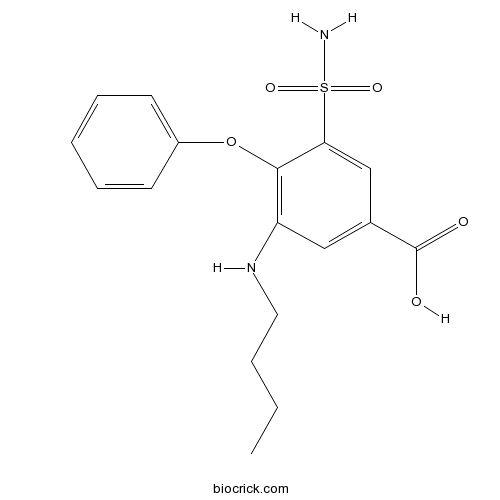
Bumetanide
Bumetanide (Ro 10-6338;PF 1593) is a selective Na+-K+-Cl- cotransporter 1 (NKCC1) inhibitor, weakly inhibits NKCC2, with IC50s of 0.68 and 4.0 μM for hNKCC1A and hNKCC2A, respectively.
-
BCC3782
Furosemide
Furosemide is a loop diuretic inhibitor of Na+/2Cl-/K+ (NKCC) cotransporter of which used in the treatment of congestive heart failure and edema.

-
BCC3715
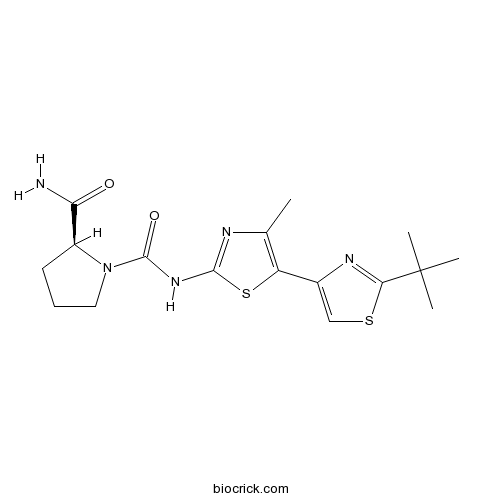
A66
A66 is a highly specific and selective p110α inhibitor with an IC50 of 32 nM.
-
BCC4988
AS-252424
AS-252424 is a potent and selective PI3Kγ inhibitor with an IC50 of 30±10 nM.

-
BCC2495
AS-605240
AS-605240 is a specific and orally active inhibitor of the PI3Kγ, with an IC50 of 8 nM, and a Ki of 7.8 nM.

-
BCC2523
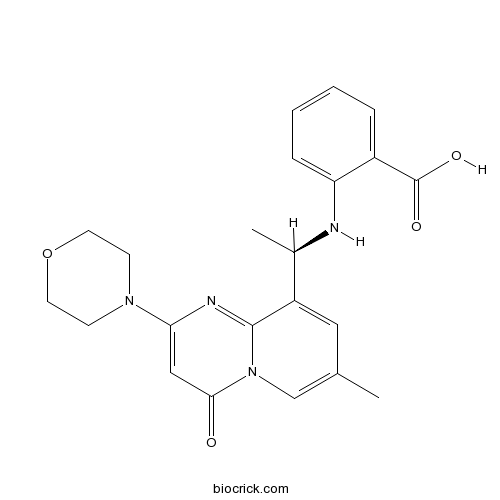
AZD6482
AZD 6482 (KIN-193) is a potent and selective p110β inhibitor with an IC50 of 0.69 nM.
-
BCC1813
NVP-BAG956
NVP-BAG956 is an ATP-competitive PI3K inhibitor with IC50s of 34, 56, 112 and 444 nM for PI3Kδ, PI3Kα, PI3Kγ and PI3Kβ, respectively.

-
BCC1507
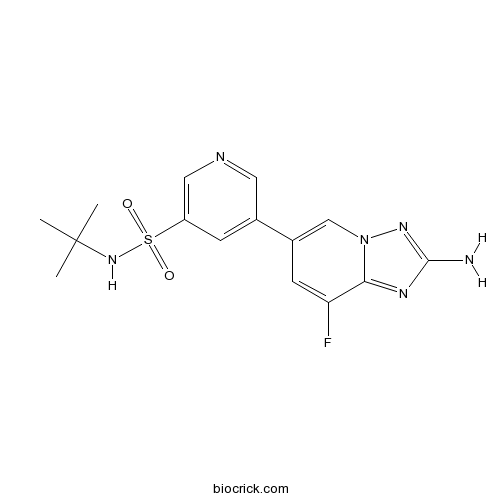
CZC24832
CZC24832 is a highly selective and potent PI3Kγ inhibitor (IC50=27 nM) with apparent dissociation constants (Kdapp) of 19 nM.
-
BCC4984
GSK1059615
GSK1059615 is a dual inhibitor of PI3Kα/β/δ/γ (reversible) and mTOR with IC50 of 0.4 nM/0.6 nM/2 nM/5 nM and 12 nM, respectively.