Nicotinic (α4β2) Receptor
Nicotinic α 4β 2 receptors have high affinity for nicotine and account for >90% of [3H]-nicotine binding to brain tissues. A stoichiometry of (α 4)2(β 2)3 has been proposed, generating two agonist binding sites consistent with the model of the muscle nAChR.
Products for Nicotinic (α4β2) Receptor
- Cat.No. Product Name Information/Activity
-
BCC7705
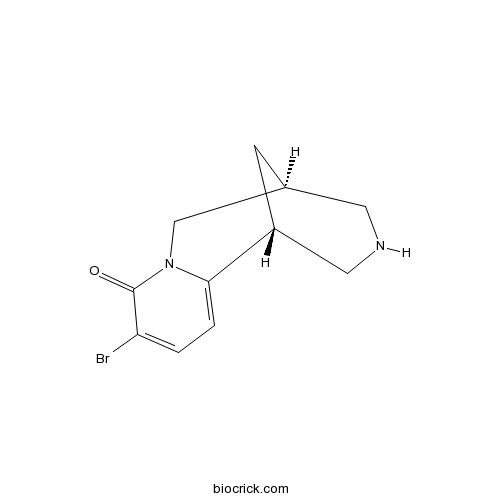
3-Bromocytisine
3-Bromocytisine (3-Br-cytisine) is a potent nACh receptors agonist, with IC50s are 0.28, 0.30 and 31.6 nM for hα4β4, hα4β2, and hα7-nACh, respectively. 3-Bromocytisine (3-Br-cytisine) shows different effects on high (HS) and low (LS) ACh sensitivity α4β2 nAChRs with EC50s are 8 and 50 nM, respectively.
-
BCC7099
5-Iodo-A-85380 dihydrochloride
1217837-17-6
-
BCC7102
5-Iodo-A-85380, 5-trimethylstannyl N-BOC derivative
213766-21-3

-
BCC3821
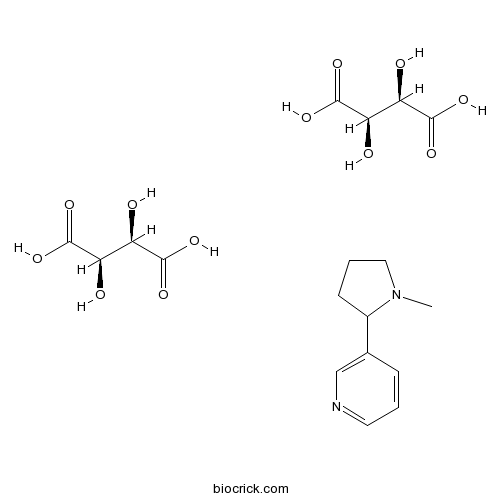
Nicotine Difartrate
65-31-6
-
BCC6118
3-pyr-Cytisine
948027-43-8

-
BCC1902
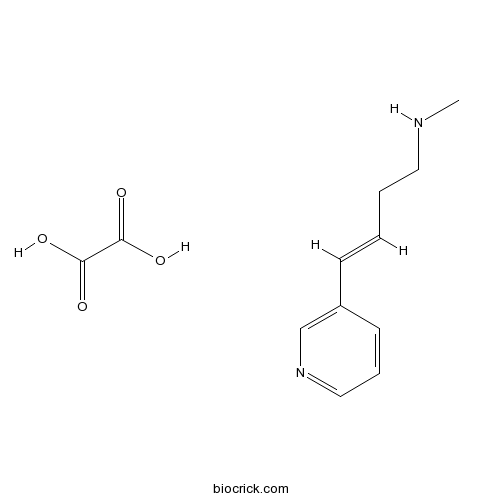
RJR-2403 oxalate
Rivanicline oxalate (RJR-2403 oxalate; (E)-Metanicotine oxalate) is a neuronal nicotinic receptor agonist, showing high selectivity for the α4β2 subtype (Ki=26 nM); > 1,000 fold selectivity than α7 receptors(Ki= 3.6 μM).
-
BCC7975
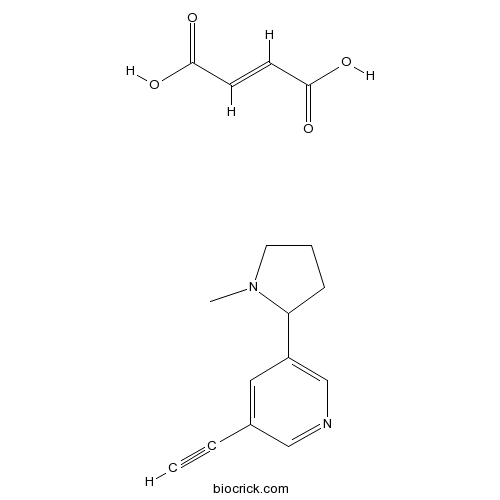
SIB 1508Y maleate
192231-16-6
-
BCC7469
TC 2559 difumarate
212332-35-9

-
BCN2170
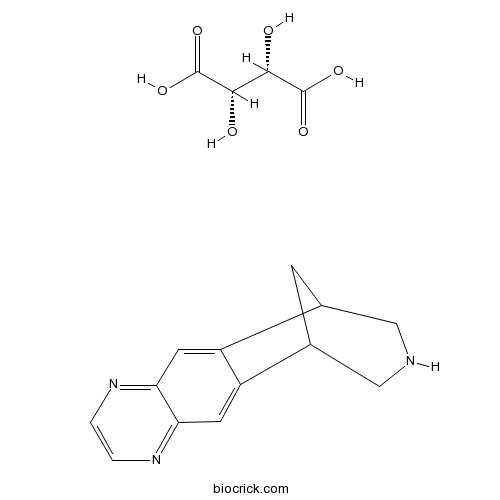
Varenicline tartrate
Varenicline Tartrate(CP 526555;Champix) is a nicotinic receptor partial agonist; it stimulates nicotine receptors more weakly than nicotine itself does.
-
BCC7341
Dihydro-β-erythroidine hydrobromide
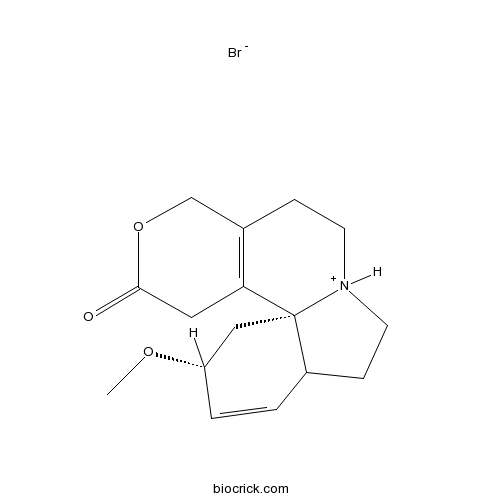
Dihydro-β-erythroidine (DHβE) hydrobromide is a potent, orally active and competitive antagonist of neuronal nicotinic acetyicholine receptors (nAChRs). Dihydro-β-erythroidine hydrobromide shows selectivity for α4β4 and α4β2 nAChRs, with IC50s of 0.19 and 0.37 μM, respectively. Antidepressant-like activities.