
LeptodactyloneCAS# 61899-44-3 |
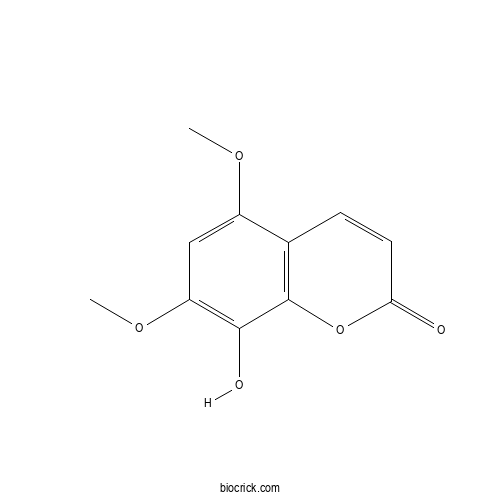
| Cas No. | 61899-44-3 | SDF | File under preparation. |
| PubChem ID | 442134 | Appearance | Powder |
| Formula | C11H10O5 | M.Wt | 222.2 |
| Type of Compound | Coumarins | Storage | Desiccate at -20°C |
| Solubility | Soluble in Chloroform,Dichloromethane,Ethyl Acetate,DMSO,Acetone,etc. | ||
| Chemical Name | 8-hydroxy-5,7-dimethoxychromen-2-one | ||
| SMILES | COC1=CC(=C(C2=C1C=CC(=O)O2)O)OC | ||
| Standard InChIKey | TUFLVKBJDSZLAW-UHFFFAOYSA-N | ||
| Standard InChI | InChI=1S/C11H10O5/c1-14-7-5-8(15-2)10(13)11-6(7)3-4-9(12)16-11/h3-5,13H,1-2H3 | ||
| General tips | For obtaining a higher solubility , please warm the tube at 37 ℃ and shake it in the ultrasonic bath for a while.Stock solution can be stored below -20℃ for several months. We recommend that you prepare and use the solution on the same day. However, if the test schedule requires, the stock solutions can be prepared in advance, and the stock solution must be sealed and stored below -20℃. In general, the stock solution can be kept for several months. Before use, we recommend that you leave the vial at room temperature for at least an hour before opening it. |
||
| About Packaging | 1. The packaging of the product may be reversed during transportation, cause the high purity compounds to adhere to the neck or cap of the vial.Take the vail out of its packaging and shake gently until the compounds fall to the bottom of the vial. 2. For liquid products, please centrifuge at 500xg to gather the liquid to the bottom of the vial. 3. Try to avoid loss or contamination during the experiment. |
||
| Shipping Condition | Packaging according to customer requirements(5mg, 10mg, 20mg and more). Ship via FedEx, DHL, UPS, EMS or other couriers with RT, or blue ice upon request. | ||
Quality Control & MSDS
3D structure
Package In Stock
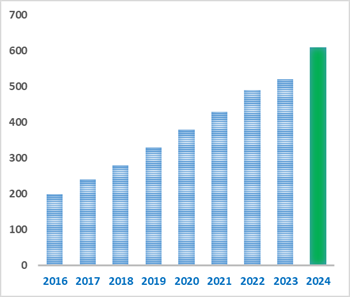
Number of papers citing our products

Leptodactylone Dilution Calculator
Leptodactylone Molarity Calculator
-
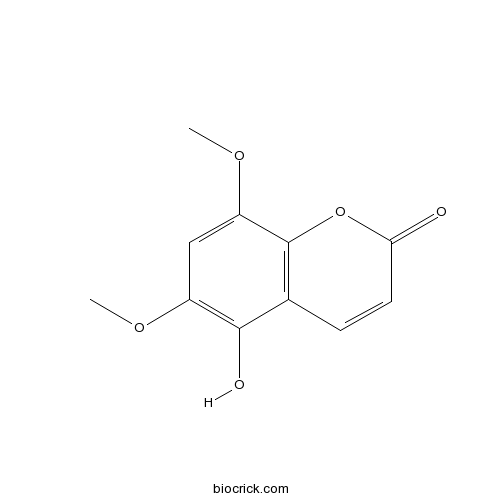 ArtemininCatalog No.: BCN3642CAS No.: 466639-11-2
 -
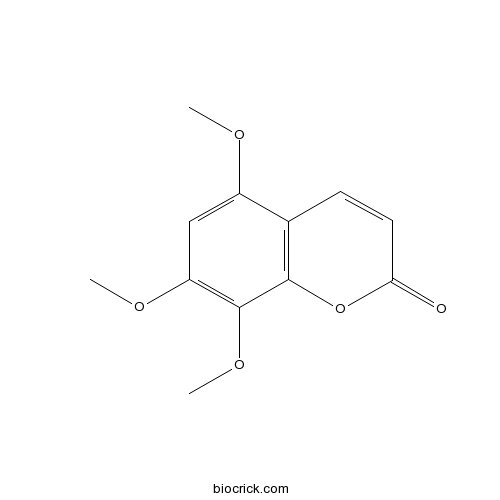 5,7,8-TrimethoxycoumarinCatalog No.: BCN4125CAS No.: 60796-65-8
 -
 Murrayacarpin BCatalog No.: BCN3577CAS No.: 120693-44-9
 -
 7-Methoxy-8-Hydroxy-4-MethylcoumarinCatalog No.: BCC8291CAS No.: 22084-94-2
 -
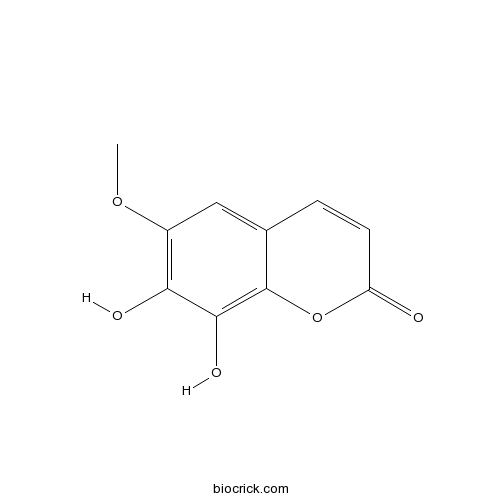 FraxetinCatalog No.: BCN5903CAS No.: 574-84-5
 -
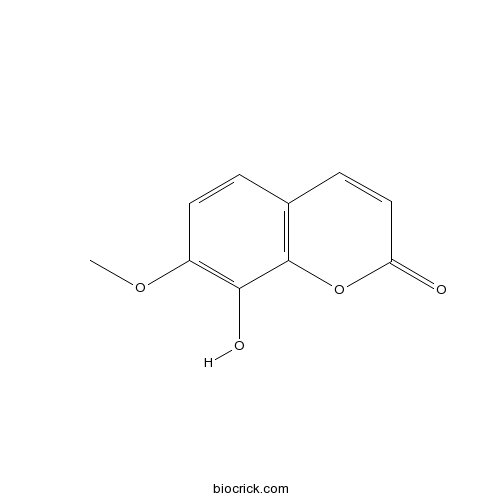 Daphnetin 7-methyl etherCatalog No.: BCN2734CAS No.: 19492-03-6
| 1 mg | 5 mg | 10 mg | 20 mg | 25 mg | |
| 1 mM | 4.5005 mL | 22.5023 mL | 45.0045 mL | 90.009 mL | 112.5113 mL |
| 5 mM | 0.9001 mL | 4.5005 mL | 9.0009 mL | 18.0018 mL | 22.5023 mL |
| 10 mM | 0.45 mL | 2.2502 mL | 4.5005 mL | 9.0009 mL | 11.2511 mL |
| 50 mM | 0.09 mL | 0.45 mL | 0.9001 mL | 1.8002 mL | 2.2502 mL |
| 100 mM | 0.045 mL | 0.225 mL | 0.45 mL | 0.9001 mL | 1.1251 mL |
| * Note: If you are in the process of experiment, it's necessary to make the dilution ratios of the samples. The dilution data above is only for reference. Normally, it's can get a better solubility within lower of Concentrations. | |||||
- Hopantenic acid (Dexpanthenol Impurity 4)
Catalog No.:BCX2225
CAS No.:49831-65-4
- (S)-7-O-Methylpeucedanol 3'-O-beta-D-glucopyranoside
Catalog No.:BCX2224
CAS No.:214627-06-2
- 9S,12S,13S-Trihydroxy-10E-octadecenoate
Catalog No.:BCX2223
CAS No.:97134-11-7
- 14-Acetoxy-12-senecioyloxytetradeca-2E,8E,10E-trien-4,6-diyn-1-ol
Catalog No.:BCX2222
CAS No.:113269-37-7
- 15R-Kirenol (ent-2alpha,15R,16,19-tetrahydroxypimar-8(14)-ene)
Catalog No.:BCX2221
CAS No.:1622876-96-3
- Higenamine 4'-O-beta-D-glucoside
Catalog No.:BCX2220
CAS No.:1440545-91-4
- Puerarin 6''-O-glucoside
Catalog No.:BCX2219
CAS No.:168060-90-0
- Isoswertisin
Catalog No.:BCX2218
CAS No.:6980-40-1
- Vernodalin
Catalog No.:BCX2217
CAS No.:21871-10-3
- Euphorbia factor L11
Catalog No.:BCX2216
CAS No.:850560-45-1
- 8-Acetyl-9-hydroxy-3-methoxy-7-methyl-1-phenalenon
Catalog No.:BCX2215
CAS No.:2193052-99-0
- cis-Melilotoside
Catalog No.:BCX2214
CAS No.:2446-60-8
- Byakangelicin-3''-ethyl ether
Catalog No.:BCX2227
CAS No.:68047-30-3
- erythro-1-C-Syringylglycerol 4-O-beta-D-glucopyranoside
Catalog No.:BCX2228
CAS No.:942304-07-6
- 2,3-Dihydroxy-2,3-dihydrosqualene (NSC837085)
Catalog No.:BCX2229
CAS No.:915385-29-4
- Tokinolide A
Catalog No.:BCX2230
CAS No.:112899-62-4
- Butanoic acid
Catalog No.:BCX2231
CAS No.:1977-33-9
- 2,3,5-Trihydroxy-2,3-dihydrosqualene
Catalog No.:BCX2232
CAS No.:1076200-13-9
- Deacetylcentapicrin
Catalog No.:BCX2233
CAS No.:60197-56-0
- Cronupapin methyl ester
Catalog No.:BCX2234
CAS No.:1454585-35-3
- Grammatophylloside B
Catalog No.:BCX2235
CAS No.:1425047-07-9
- Grammatophylloside A
Catalog No.:BCX2236
CAS No.:1425047-04-6
- Pubetallin
Catalog No.:BCX2237
CAS No.:75207-37-3
- Pubeside D
Catalog No.:BCX2238
CAS No.:335150-90-8
Effects of cooking on the phytochemical profile of breadfruit as revealed by high-resolution UPLC-MS(E).[Pubmed:31846074]
J Sci Food Agric. 2020 Mar 30;100(5):1962-1970.
BACKGROUND: This study evaluated the impact of cooking on the profile of bioactive compounds in unripe breadfruit. To this end, the accessibility of bioactive compounds by various solvents was assessed through total phenolic content and antioxidant capacity analyses. The most efficient solvent was applied to extract the metabolites, which were evaluated by ultra-performance liquid chromatography coupled with high-resolution quadrupole time-of-flight mass spectrometry in MS(E) mode. RESULTS: Cooked and raw breadfruit presented total phenolic content and antioxidant capacities in almost all extracts, and pure water proved to be the best extractor. Globally, 146 bioactive compounds have been identified for both raw and cooked fruits' aqueous extracts. Most of these compounds were stable to the heat treatment applied (121 degrees C/10 min). However, results revealed that 22 metabolites contributed to significantly distinguishing the raw from the cooked samples. Among those, 15 compounds, such as pyrogallol, 1-acetoxypinoresinol, and scopolin, evidenced higher relative abundance in the cooked extracts. On the other hand, only seven metabolites, such as 4-hydroxyhippuric acid, epicatechin, and Leptodactylone, decreased post-heating. CONCLUSIONS: Cooking promoted little alteration in the bioactive compounds profile of immature breadfruit and thus appears to be an exploitation alternative for this perishable fruit, which seems to be a source of a large range of bioactive compounds. (c) 2019 Society of Chemical Industry.
Bioactive coumarins from Boenninghausenia sessilicarpa.[Pubmed:17365191]
J Asian Nat Prod Res. 2007 Jan-Feb;9(1):59-65.
Bioassay guided fractionation of Boenninghausenia sessilicarpa (Rutaceae) resulted in the isolation of a new dimeric coumarin glucoside 9'-methoxyl rutarensin (1) and a cytotoxic compound rutamarin (4), as well as an antivirus component Leptodactylone (8), together with six known coumarins. Their structures were elucidated by 1D- and 2D NMR spectroscopy and ESI-MS analyses, respectively. Rutamarin (4) showed significant inhibitory activities against A-549, Bel-7402, HepG-2 and HCT-8 tumour cell lines with IC50s of 1.318, 2.082, 2.306 and 2.497 microg/ml. In addition, Leptodactylone (8) showed potent protective activity on cells infected by SARS-CoV with ratio of 60% at 100 microg/ml.

Calcutta University

University of Minnesota

University of Maryland School of Medicine

University of Illinois at Chicago

The Ohio State University

University of Zurich

Harvard University

Colorado State University

Auburn University

Yale University

Worcester Polytechnic Institute

Washington State University

Stanford University

University of Leipzig

Universidade da Beira Interior

The Institute of Cancer Research

Heidelberg University

University of Amsterdam

University of Auckland

TsingHua University

The University of Michigan

Miami University

DRURY University

Jilin University

Fudan University

Wuhan University

Sun Yat-sen University

Universite de Paris

Deemed University

Auckland University

The University of Tokyo

Korea University