
Products for Coumarins
-
BCN2455
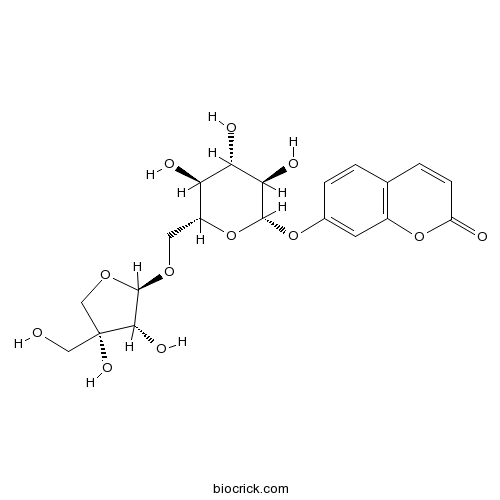
Apiosylskimmin
Apiosylskimmin (Adicardin), a coumarin isolated from Hydrangea macrophylla, has anti-chronic renal failure activity .
(CAS NO.:
103529-94-8)
-
BCN2938
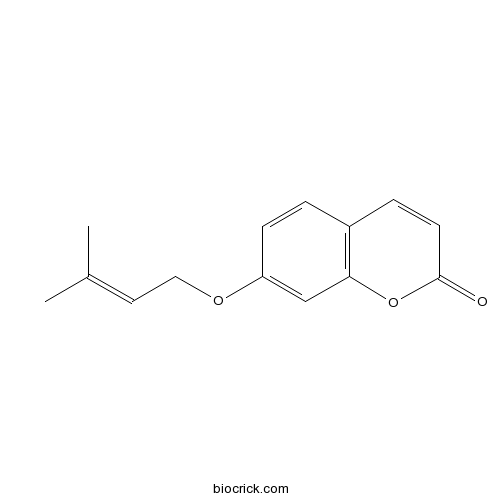
7-Prenylumbelliferone
7-Prenyloxycoumarin (7-O-Prenylumbelliferone) is a secondary metabolite from the endophytic fungus of Annulohypoxylon ilanense.
(CAS NO.:
10387-50-5)
-
BCN3546
Moellendorffilin
Botanical source: The roots of Heracleum moellendorffii
(CAS NO.:
105099-87-4)

-
BCN2562
7-Amino-4-methylcoumarin-3-acetic acid
Botanical source: The herbs of Guazuma ulmifolia
(CAS NO.:
106562-32-7)

-
BCN5882
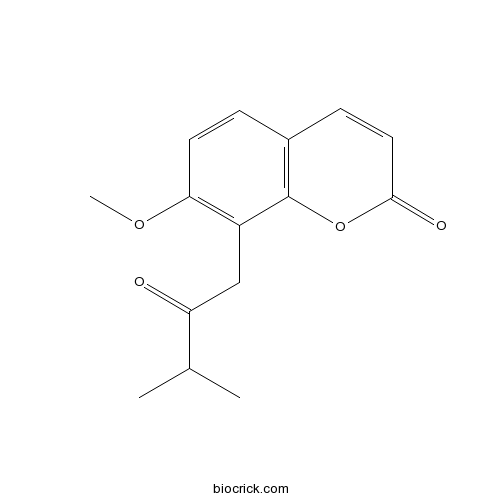
Isomeranzin
Isomerazin is a coumarin isolated from Poncirus trifoliate Raf., and shows cholinesterase inhibition.
(CAS NO.:
1088-17-1)
-
BCN1626
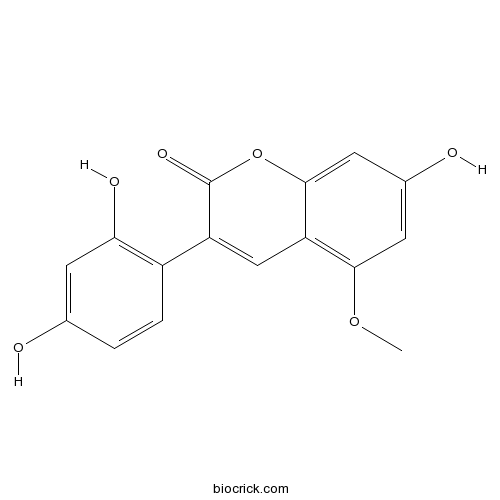
7,2',4'-Trihydroxy-5-methoxy-3-phenylcoumarin
Botanical source: The herbs of Fissistigma oldhamii
(CAS NO.:
1092952-62-9)
-
BCN8271
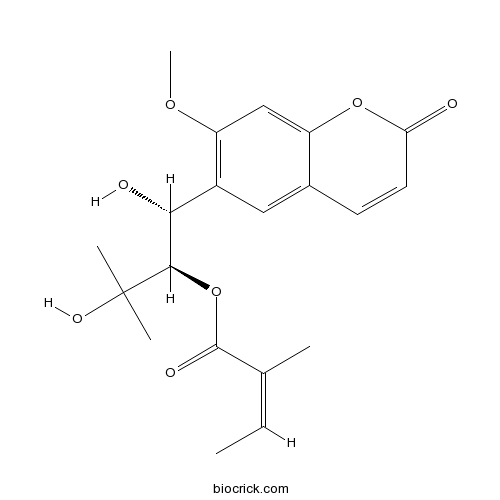
Angelol M
Botanical source: The root of Angelica sinensis
(CAS NO.:
1092952-64-1)
-
BCN5888
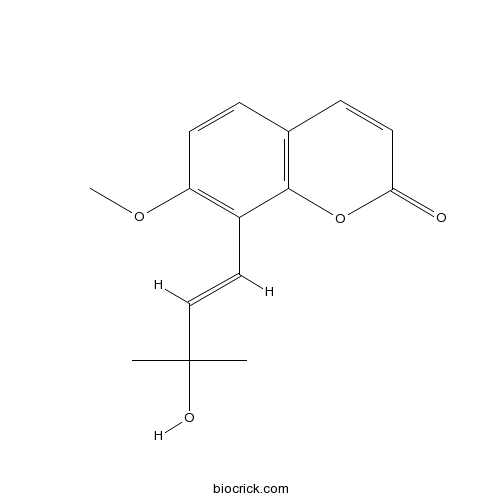
Murraol
Botanical source: The herbs of Murraya exotica
(CAS NO.:
109741-38-0)
-
BCN4735
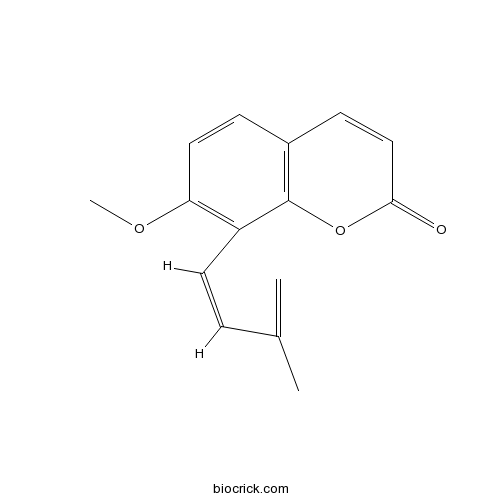
cis-Dehydroosthol
Botanical source: The herbs of Murraya exotica
(CAS NO.:
109741-40-4)
-
BCN4731
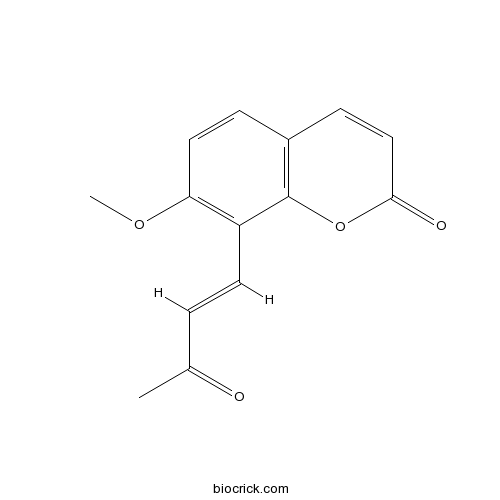
Osthenone
Botanical source: The herbs of Murraya exotica
(CAS NO.:
112789-90-9)
-
BCN3573
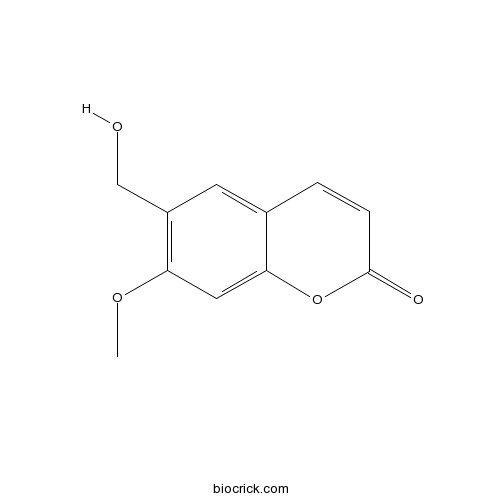
6-Hydroxymethylherniarin
Botanical source: The stem bark of Citrus funadoko
(CAS NO.:
117597-79-2)
-
BCN6793
3,4-Dihydrocoumarin
Dihydrocoumarin is a compound found in Melilotus officinalis. Dihydrocoumarin is a yeast Sir2p inhibitor. Dihydrocoumarin also inhibits human SIRT1 and SIRT2 with IC50s of 208 μM and 295 μM, respectively.
(CAS NO.:
119-84-6)

-
BCN6088
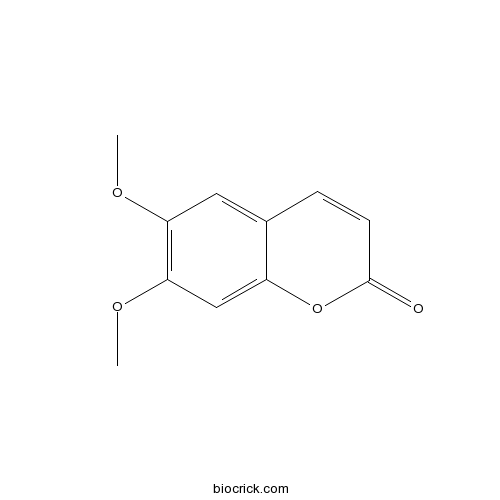
Scoparone
Scoparone is isolated from Artemisia capillaris, has anticoagulant, vasorelaxant antioxidant, anti-inflammatory activities.
(CAS NO.:
120-08-1)
-
BCN6561
Edgeworin
Botanical source: The root and stem of Edgeworthia chrysantha LINDL.
(CAS NO.:
120028-43-5)

-
BCN3577
Murrayacarpin B
Botanical source: The herbs of Murraya paniculata
(CAS NO.:
120693-44-9)

-
BCN6107
Moluccanin
Botanical source: The herbs of Croton cascarilloides
(CAS NO.:
121700-26-3)

-
BCN6108
Moluccanin diacetate
Botanical source: The herbs of Croton cascarilloides
(CAS NO.:
121700-27-4)

-
BCN6113
Auraptenol
Botanical source: The fruits of Citrus aurantium
(CAS NO.:
1221-43-8)

-
BCN6117
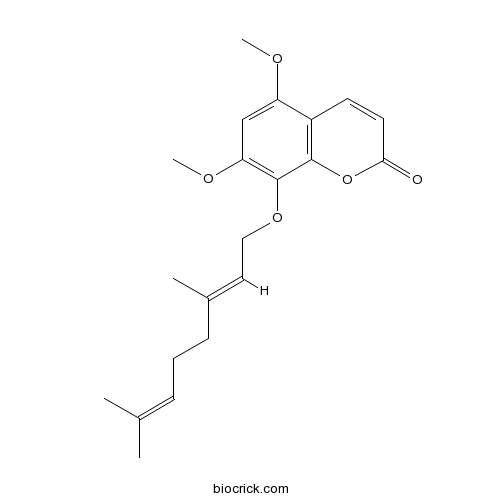
8-Geranyloxy-5,7-dimethoxycoumarin
Botanical source: The herbs of Toddalia asiatica
(CAS NO.:
1228175-65-2)
-
BCN1594
8-(3-Ethoxy-2-hydroxy-3-methylbutyl)-7-methoxycoumarin
Botanical source: The herbs of Murraya paniculata
(CAS NO.:
125072-68-6)

-
BCN7322
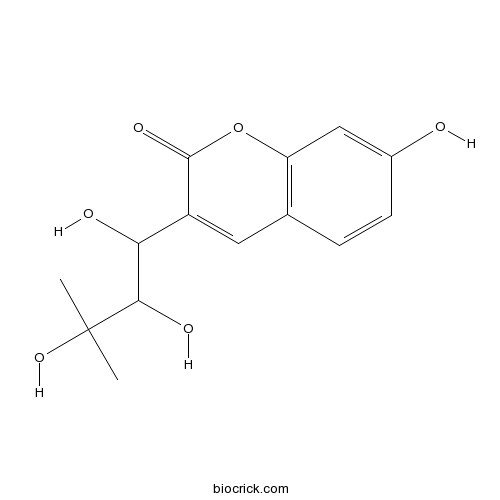
Evodosin A
Botanical source: The herbs of Evodia lepta
(CAS NO.:
1291053-38-7)
-
BCN3434
Peucedanocoumarin I
Botanical source: The roots of Peucedanum praeruptorum
(CAS NO.:
130464-55-0)

-
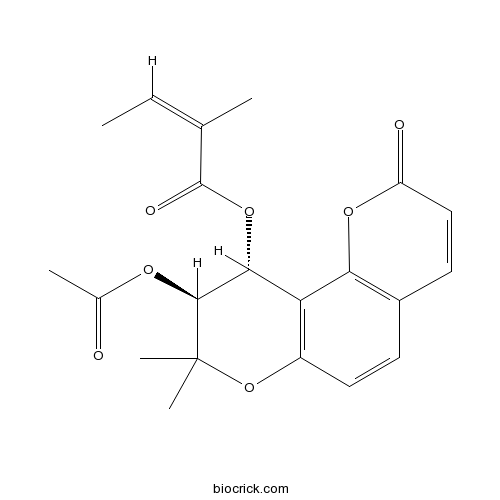
BCN3435
Peucedanocoumarin II
Botanical source: The roots of Peucedanum praeruptorum
(CAS NO.:
130464-56-1)
-
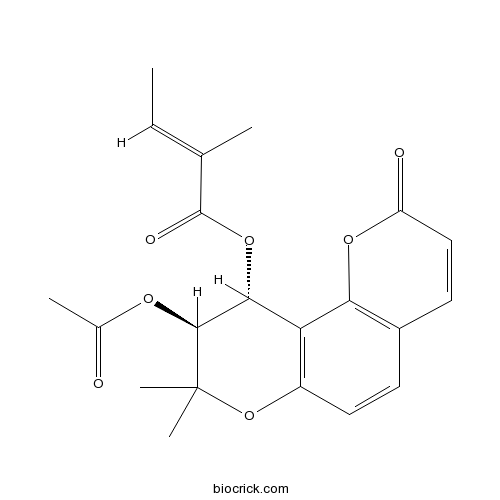
BCN3471
Peucedanocoumarin III
Botanical source: The roots of Peucedanum praeruptorum
(CAS NO.:
130464-57-2)
-
BCC9222
Decursinol angelate
Decursinol angelate, a cytotoxic and protein kinase C (PKC) activating agent from the root of Angelica gigas, possesses anti-tumor and anti-inflammatory activities.
(CAS NO.:
130848-06-5)


BioCrick BioTech
88# Keyuan road,Hi-Tech Zone
Chengdu, Sichuan 610042, PRC
Email: info@biocrick.com
Tel:86-28-8543-3893


88# Keyuan road,Hi-Tech Zone
Chengdu, Sichuan 610042, PRC
Email: info@biocrick.com
Tel:86-28-8543-3893
Follow us:
BioCrick is one of the biggest natural products manufacturers in Asia
Our products can be used as reference standards,inhibitors in pharmacological research
Our MISSION is to provide Best-in-class High-purity natural compounds to researchers all around the world

© 2007-2026 BioCrick BioTech. All rights reserved. sitemap