Cancer Research
Cancer is a term used to define a group of diseases in which abnormal cells divide without control, are able to invade neighboring tissues/organs and metastasize. Cancer has been characterized by six hallmarks; self sufficiency in proliferative growth signals, insensitivity to growth inhibitors, evasion of apoptosis, limitless replicative potential, ability to develop blood vessels (angiogenesis), and tissue invasion and metastasis.
Cancer Research Products Areas
Products for Cancer Research - Page 32
- Cat.No. Product Name Information/Activity
-
BCC4980
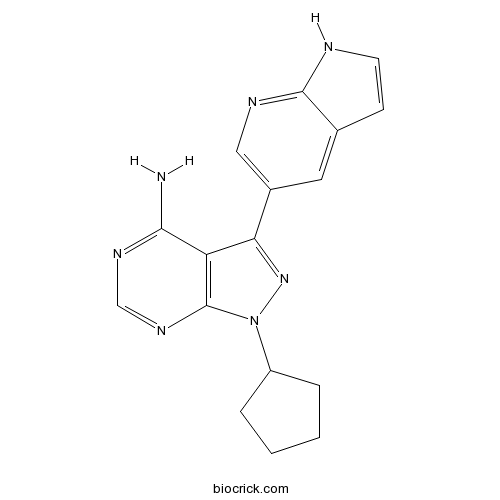
PP121
PP121 is a multi-targeted kinase inhibitor with IC50s of 10, 60, 12, 14, 2 nM for mTOR, DNK-PK, VEGFR2, Src, PDGFR, respectively.
-
BCN6049
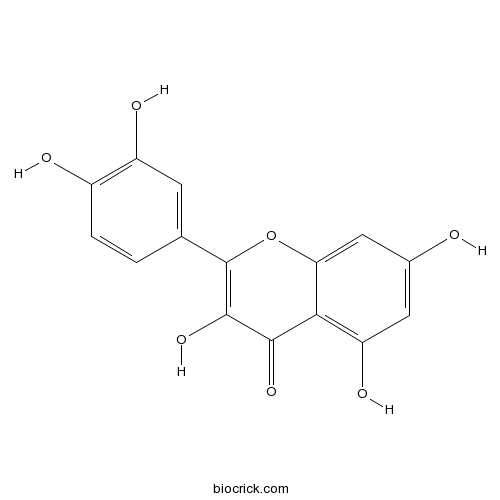
Quercetin
Quercetin, a natural flavonoid, is a stimulator of recombinant SIRT1 and also a PI3K inhibitor with IC50 of 2.4±0.6 μM, 3.0±0.0 μM and 5.4±0.3 μM for PI3K γ, PI3K δ and PI3K β, respectively.
-
BCC4985
TG100713
PI 3-kinase inhibitor,TG100713 is a pan-PI3K inhibitor against PI3Kγ, PI3Kδ, PI3Kα and PI3Kβ with IC50 of 50 nM, 24 nM, 165 nM and 215 nM, respectively.

-
BCC1244
TGX-221
TGX-221 is a potent, selective, and cell membrane permeable inhibitor of the PI3K p110β catalytic subunit, used for cancer treatment.

-
BCC3874
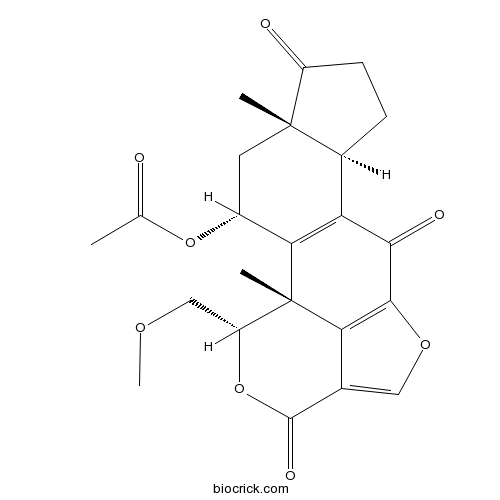
Wortmannin
Wortmannin (SL-2052; KY-12420) is a potent, selective and irreversible PI3K inhibitor with an IC50 of 3 nM. Wortmannin also blocks autophagy formation, and potently inhibits Polo-like kinase 1 (PlK1) and Plk3 with IC50s of 5.8 and 48 nM, respectively.
-
BCC5861
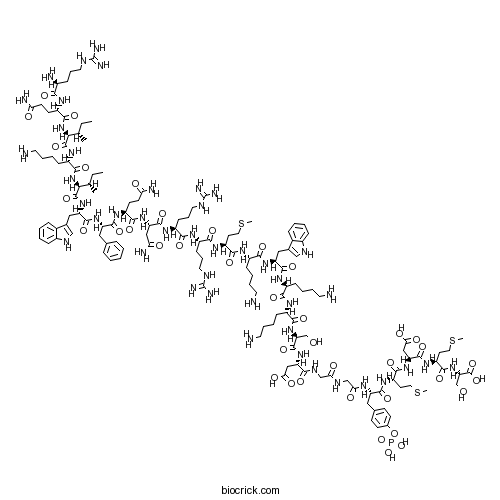
740 Y-P
740 Y-P (PDGFR 740Y-P) is a potent and cell permeable PI3K activator.
-
BCC6365
iMDK
881970-80-5

-
BCC7068
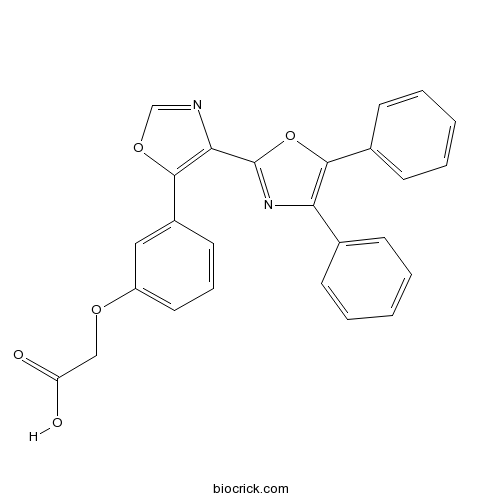
BMY 45778
Non-prostanoid prostacyclin IP receptor partial agonist
-
BCC7315
(±)-Cloprostenol sodium salt
Cloprostenol sodium salt (ICI 80996 sodium salt) is a potent synthetic prostaglandin analogue, acts as a luteolytic agent, and is a PGF2α receptor agonist.

-
BCC7843
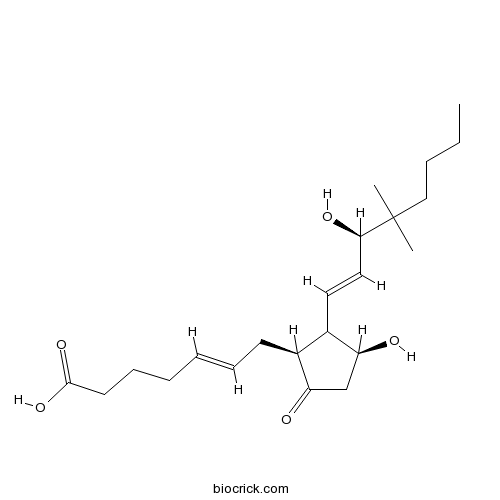
16,16-Dimethyl Prostaglandin E2
16,16-Dimethyl prostaglandin E2 (16,16-dimethyl PGE2) is an orally active vertebrate Hematopoietic stem cells (HSCs) homeostasis critical regulator. 16,16-Dimethyl prostaglandin E2 can act through EP2/EP4 and has an interaction with the Wnt pathway.