EGFR
The epidermal growth factor receptor (EGFR) is a receptor tyrosine kinase of the ErbB family. Four members of the ErbB family have been identified; EGFR (ErbB1, HER1), ErbB2 (HER2), ErbB3 (HER3) and ErbB4 (HER4). EGFR signaling drives many cellular responses.
Products for EGFR - Page 2
- Cat.No. Product Name Information/Activity
-
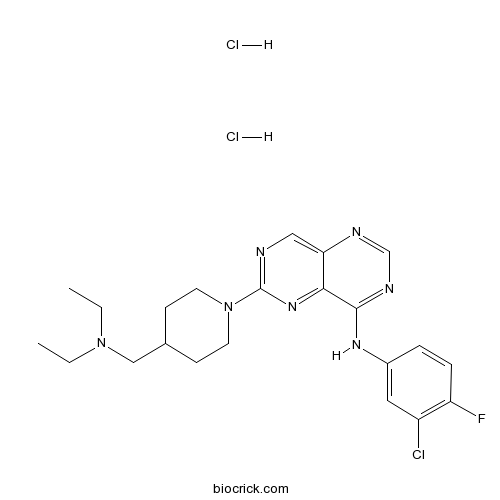
BCC7356
BIBU 1361 dihydrochloride
Selective inhibitor of EGFR-kinase
-
BCC1449
Canertinib dihydrochloride
Canertinib dihydrochloride (CI-1033 dihydrochloride) is a potent and irreversible EGFR inhibitor; inhibits cellular EGFR and ErbB2 autophosphorylation with IC50s of 7.4 and 9 nM.

-
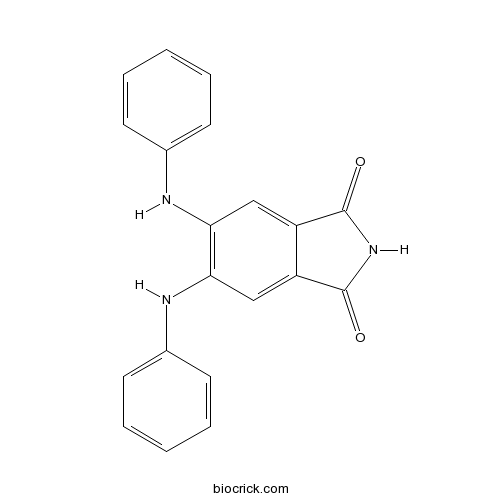
BCC7667
CGP 52411
CGP52411 (DAPH) is a high selective, potent, orally active and ATP-competitive EGFR inhibitor with an IC50 of 0.3 μM. CGP52411 blocks the toxic influx of Ca2+ ions into neuronal cells, and dramatic inhibits and reverses the formation of β-amyloid (Aβ42) fibril aggregates associated with Alzheimer's disease.
-
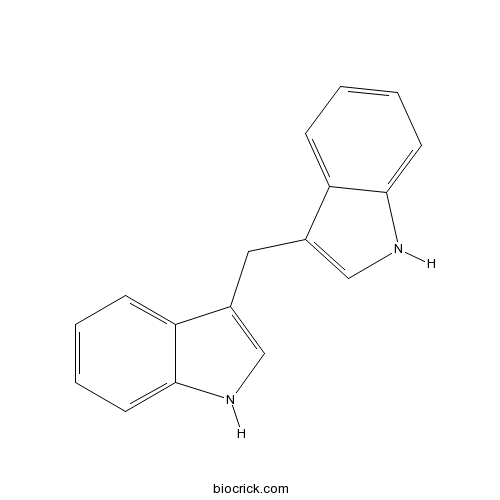
BCC1306
3,3'-Diindolylmethane
3,3'-Diindolylmethane is a strong, pure androgen receptor (AR) antagonist.
-
BCN5499
Genistein
Genistein, a soy isoflavone, is a multiple tyrosine kinases (e.g., EGFR) inhibitor which acts as a chemotherapeutic agent against different types of cancer, mainly by altering apoptosis, the cell cycle, and angiogenesis and inhibiting metastasis.

-
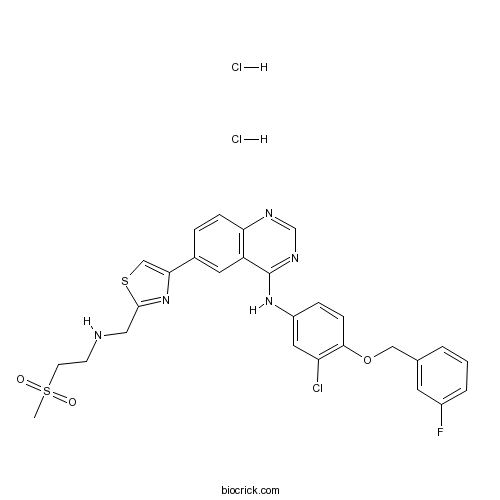
BCC7300
GW 583340 dihydrochloride
1173023-85-2
-
BCC7441
HDS 029
881001-19-0

-
BCC6046
HKI 357
HKI-357 is an irreversible dual inhibitor of EGFR and ERBB2 with IC50s of 34 nM and 33 nM, respectively. HKI-357 suppresses EGFR autophosphorylation (at Y1068), and AKT and MAPK phosphorylation.

-
BCN2173
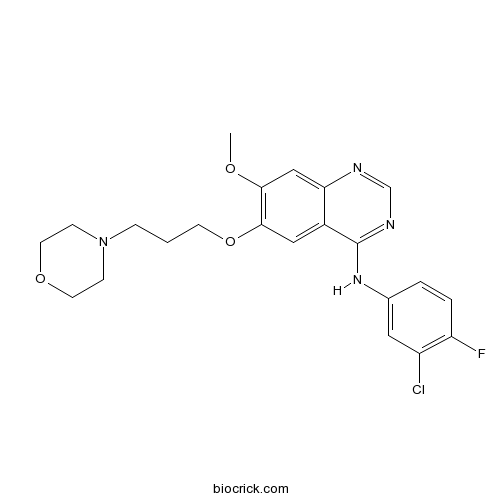
Gefitinib
Gefitinib (ZD1839) is a potent, selective and orally active EGFR tyrosine kinase inhibitor with an IC50 of 33 nM. Gefitinib selectively inhibits EGF-stimulated tumor cell growth (IC50 of 54 nM) and that blocks EGF-stimulated EGFR autophosphorylation in tumor cells. Gefitinib also induces autophagy. Gefitinib has antitumour activity.
-
BCC7662
JNJ 28871063 hydrochloride
944342-90-9