
Growth Factors and Cytokines
Growth factors are extracellular polypeptides that bind to cell surface receptors and trigger intracellular signaling cascades, resulting in cell proliferation and/or differentiation. Growth factors can be versatile, stimulating growth in a variety of different cell types (for example IGF-1), whilst others are cell-specific (for example erythropoietin acts solely on erythrocytes).
Growth Factors and Cytokines Products Targets
Products for Growth Factors and Cytokines - Page 11
- Cat.No. Product Name Information/Activity
-
BCC1055
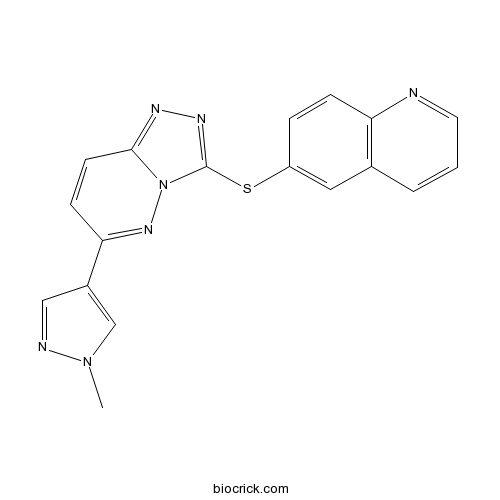
SGX-523
SGX-523 is a selective Met inhibitor with IC50 of 4 nM, no activity to BRAFV599E, c-Raf, Abl and p38α.
-
BCC1243
SU11274
SU11274 is a selective Met inhibitor with IC50 of 10 nM, but has no effects on PGDFRβ, EGFR or Tie2.

-
BCC6977
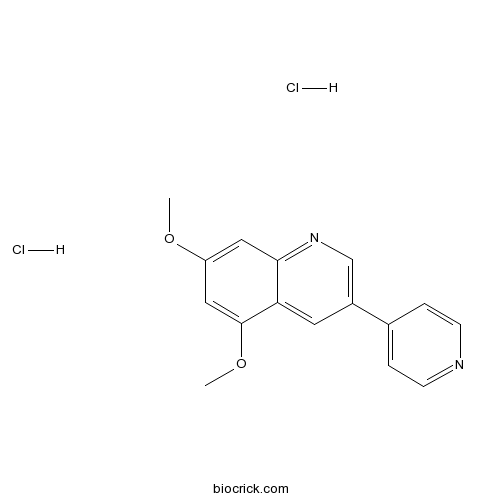
DMPQ dihydrochloride
1123491-15-5
-
BCC1115
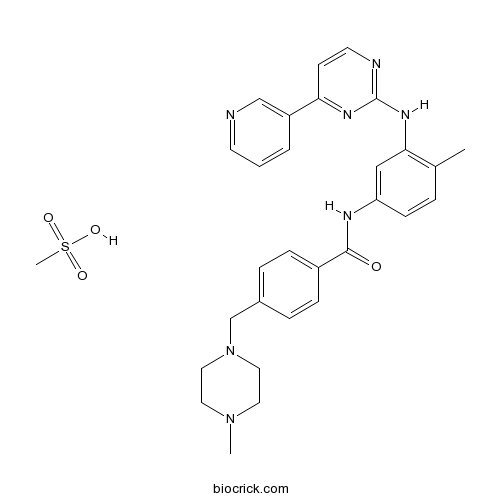
Imatinib Mesylate (STI571)
Imatinib Mesylate (STI571 Mesylate) is a tyrosine kinases inhibitor that inhibits c-Kit, Bcr-Abl, and PDGFR (IC50=100 nM) tyrosine kinases.
-
BCC7639
SU 16f
SU16f is a potent and selective PDGFRβ inhibitor with IC50s of 10 nM, 140 nM, 2.29 μM for PDGFRβ, PDGFR1, PDGFR2, respectively. Neutralization of PDGFRβ receptor by SU16f blocks the promoting role of GC-MSCs (gastric cancer-derived mesenchymal stem cells) conditioned medium in gastric cancer cell proliferation and migration.

-
BCC3664
Sunitinib malate
Sunitinib Malate (SU 11248 Malate) is a multi-targeted receptor tyrosine kinase inhibitor with IC50s of 80 nM and 2 nM for VEGFR2 and PDGFRβ, respectively. Sunitinib Malate, an ATP-competitive inhibitor, effectively inhibits autophosphorylation of Ire1α by inhibiting autophosphorylation and consequent RNase activation.

-
BCC2005
Toceranib
Toceranib phosphate (SU11654 phosphate) is an orally active receptor tyrosine kinase (RTK) inhibitor, and it potently inhibits PDGFR, VEGFR, and Kit with Kis of 5 and 6 nM for PDGFRβ and Flk-1/KDR, respectively. Toceranib phosphate (SU11654 phosphate) has antitumor and antiangiogenic activity, and used in the treatment of canine mast cell tumors.

-
BCC5033
Amitriptyline HCl
Amitriptyline hydrochloride is a dibenzocycloheptene-derivative tricyclic antidepressant (TCA).

-
BCC5944
BDNF (human)
218441-99-7

-
BCC6072
7,8-Dihydroxyflavone
7,8-Dihydroxyflavone is a potent and selective TrkB agonist that mimics the physiological actions of Brain-derived neurotrophic factor (BDNF). Displays therapeutic efficacy toward various neurological diseases.