
Calcium-Sensing Receptor
The calcium-sensing receptor (CaSR) is a G-protein-coupled receptor (GPCR) that senses extracelluar Ca2+. The CaSR has wide tissue expression being found in the parathyroid gland, thyroid, kidney, intestine, skin, brain, heart, pancreas, bone and lung.
Products for Calcium-Sensing Receptor
- Cat.No. Product Name Information/Activity
-
BCC7973
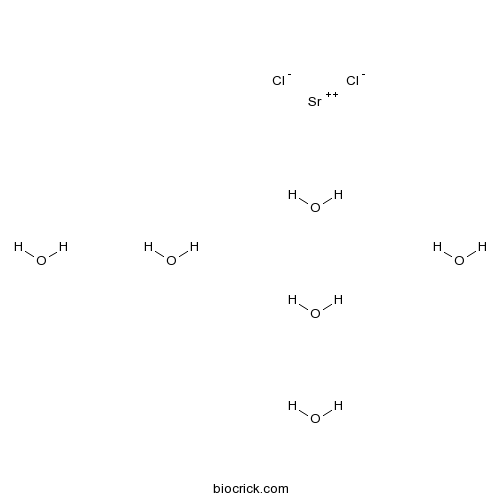
Strontium chloride
10476-85-4
-
BCC1808
NPS-2143 hydrochloride
NPS-2143 hydrochloride (SB-262470A hydrochloride), an orally active calcilytic agent, is a selective and potent calcium ion-sensing receptor (CaSR) antagonist. NPS-2143 hydrochloride (SB-262470A hydrochloride) blocks increases in cytoplasmic Ca2+ concentrations (IC50=43 nM) elicited by activating the Ca2+ receptor in HEK 293 cells expressing the human Ca2+ receptor.

-
BCC7931
Calhex 231 hydrochloride
Negative allosteric modulator of the calcium-sensing receptor

-
BCC7781
R 568 hydrochloride
Tecalcet Hydrochloride (R 568 Hydrochloride), an orally active calcimimetic compound, allosterically and positively modulates the calcium-sensing receptor (CaSR). Tecalcet Hydrochloride (R 568 Hydrochloride) increases the sensitivity to activation by extracellular Ca2+.