
SisymbrifolinCAS# 173936-61-3 |
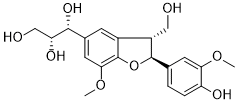
| Cas No. | 173936-61-3 | SDF | File under preparation. |
| PubChem ID | N/A | Appearance | Powder |
| Formula | C20H24O8 | M.Wt | 392.4 |
| Type of Compound | N/A | Storage | Desiccate at -20°C |
| Solubility | Soluble in Chloroform,Dichloromethane,Ethyl Acetate,DMSO,Acetone,etc. | ||
| General tips | For obtaining a higher solubility , please warm the tube at 37 ℃ and shake it in the ultrasonic bath for a while.Stock solution can be stored below -20℃ for several months. We recommend that you prepare and use the solution on the same day. However, if the test schedule requires, the stock solutions can be prepared in advance, and the stock solution must be sealed and stored below -20℃. In general, the stock solution can be kept for several months. Before use, we recommend that you leave the vial at room temperature for at least an hour before opening it. |
||
| About Packaging | 1. The packaging of the product may be reversed during transportation, cause the high purity compounds to adhere to the neck or cap of the vial.Take the vail out of its packaging and shake gently until the compounds fall to the bottom of the vial. 2. For liquid products, please centrifuge at 500xg to gather the liquid to the bottom of the vial. 3. Try to avoid loss or contamination during the experiment. |
||
| Shipping Condition | Packaging according to customer requirements(5mg, 10mg, 20mg and more). Ship via FedEx, DHL, UPS, EMS or other couriers with RT, or blue ice upon request. | ||
Quality Control & MSDS
Package In Stock

Number of papers citing our products


Sisymbrifolin Dilution Calculator
Sisymbrifolin Molarity Calculator
| 1 mg | 5 mg | 10 mg | 20 mg | 25 mg | |
| 1 mM | 2.5484 mL | 12.7421 mL | 25.4842 mL | 50.9684 mL | 63.7105 mL |
| 5 mM | 0.5097 mL | 2.5484 mL | 5.0968 mL | 10.1937 mL | 12.7421 mL |
| 10 mM | 0.2548 mL | 1.2742 mL | 2.5484 mL | 5.0968 mL | 6.371 mL |
| 50 mM | 0.051 mL | 0.2548 mL | 0.5097 mL | 1.0194 mL | 1.2742 mL |
| 100 mM | 0.0255 mL | 0.1274 mL | 0.2548 mL | 0.5097 mL | 0.6371 mL |
| * Note: If you are in the process of experiment, it's necessary to make the dilution ratios of the samples. The dilution data above is only for reference. Normally, it's can get a better solubility within lower of Concentrations. | |||||
- 7,4'-Dihydroxy-3'-methoxyflavan
Catalog No.:BCX2677
CAS No.:95587-88-5
- Bulbocol
Catalog No.:BCX2676
CAS No.:210231-51-9
- Gymconopin D
Catalog No.:BCX2675
CAS No.:847670-85-3
- Juglanoside E
Catalog No.:BCX2674
CAS No.:725265-67-8
- Iturin A7
Catalog No.:BCX2673
CAS No.:83777-03-1
- Iturin A6
Catalog No.:BCX2672
CAS No.:83777-02-0
- Iturin A4
Catalog No.:BCX2671
CAS No.:83777-00-8
- Iturin A3
Catalog No.:BCX2670
CAS No.:64642-38-2
- Acernikol
Catalog No.:BCX2669
CAS No.:623584-31-6
- 3-O-Methylshancigusin D
Catalog No.:BCX2668
CAS No.:2086662-46-4
- Dshamirone
Catalog No.:BCX2667
CAS No.:62561-19-7
- Idescarpin
Catalog No.:BCX2666
CAS No.:188557-53-1
- Evofolin B 4-O-(threo-β-guaiacylglyceryl) ether
Catalog No.:BCX2679
CAS No.:1621072-58-9
- threo-Acernikol
Catalog No.:BCX2680
CAS No.:1313434-76-2
- Funingensin A
Catalog No.:BCX2681
CAS No.:939377-87-4
- Arundin
Catalog No.:BCX2682
CAS No.:148225-37-0
- Arundinan
Catalog No.:BCX2683
CAS No.:767291-22-5
- Pestalotiopsin H
Catalog No.:BCX2684
CAS No.:2270234-26-7
- Thaliatrioside A
Catalog No.:BCX2685
CAS No.:3078805-86-1
- Scabiostellatoside A
Catalog No.:BCX2686
CAS No.:2229823-05-4
- Neridienone A
Catalog No.:BCX2687
CAS No.:53823-05-5
- (3-Hydroxy-9-(4′-hydroxy-3′-methoxyphenyl)-11-methoxy-5,6,9,10-tetrahydrophenanthro[2,3-b]furan-10-yl)methyl acetate
Catalog No.:BCX2688
CAS No.:1009566-73-7
- 4,6-Di-O-galloylarbutin
Catalog No.:BCX2689
CAS No.:108027-05-0
- (2S*,3S*)-3-((E)-4,8-dimethylnona-3,7-dien-1-yl)-7-methoxy-2,3-dimethyl-2H-furo[3,2-c]chromen-4(3H)-one
Catalog No.:BCX2690
CAS No.:1714988-35-8
A New Lignan Glucoside from Lagochilus ilicifolius.[Pubmed:25709232]
Pharmacogn Mag. 2015 Jan-Mar;11(41):191-5.
BACKGROUND: The whole herb of Lagochilus ilicifolius has been used as a folk medicine for treating hemostatic, inflammation and ulcer in China. There were only limited reports on its chemical constituents, and no reports on its pharmacology study. OBJECTIVE: To isolate compounds from the whole herb of L. ilicifolius and evaluate their cytotoxic activity. MATERIALS AND METHODS: The column chromatographic techniques were used for separating the constituents of the n-butanol-soluble fraction of the 95% ethanol extract from the whole plant of L. ilicifolius. The structures of one new lignan and two known lignans were elucidated on the basis of spectroscopic analyses and comparison with literature data. The cytotoxic activities of these three lignans were evaluated using the MTT-assay against PC12 cell line derived from rat adrenal pheochromocytoma. RESULTS: The new lignan was identified as erythro-1-[(4-O-beta-D-glucopyranosyl-3-methoxyl)-phenyl]-2-[(5'-methoxyl)-pinoresinol]-propane-1,3-diol (1), and two known lignans were identified as tortoside C (2) and Sisymbrifolin (3). The new lignan exhibited significant cytotoxic activity against PC12 cell line with IC50 value of 1.22 +/- 0.03 mumol/L. CONCLUSIONS: A new lignan, erythro-1-[(4-O-beta-D-glucopyranosyl-3-methoxyl)-phenyl]-2-[(5'-methoxyl)-pinoresinol]-propane-1,3-diol and two known lignans were isolated from the whole herbs of L. ilicifolius. The two known lignans were reported for the first time in the genus Lagochilus. Three lignans were evaluated for in vitro cytotoxic activity. The new lignan showed relatively strong cytotoxicity against PC12 cell line, while Sisymbrifolin and tortoside C exibited no cytotoxicity.
Antioxidant phenylethanoid glycosides and a neolignan from Jacaranda caucana.[Pubmed:19361168]
J Nat Prod. 2009 May 22;72(5):852-6.
Extracts from several plants of the family Bignoniaceae from Panama were submitted to a rapid DPPH TLC test for the detection of radical-scavenging activity. The MeOH extract of the stems of Jacaranda caucana, a tree that grows from Costa Rica to Colombia, was selected due to its interesting activity and the lack of phytochemical studies on the polar extract. This extract was partitioned between ethyl acetate, butanol, and water. The EtOAc fraction afforded two new phenylethanoid glycosides (1, 2), along with protocatechuic acid, acteoside, and jionoside D. Further purifications yielded isoacteoside and martynoside. The BuOH fraction afforded a new rhamnosyl derivative of Sisymbrifolin (8), a neolignan. The structures were determined by means of spectrometric methods, including 1D and 2D NMR experiments and MS analysis.
Isolation and structure determination of a lignan from the bark of Salix alba.[Pubmed:17487617]
Nat Prod Res. 2007 May;21(5):451-4.
A lignan, Sisymbrifolin (1) found in the fruits of Solanum sisymbriflolium has been isolated from the bark extract of Salix alba (Salicaceae). Its structure was elucidated by its direct spectrum data of ESI-MS and one- and two-dimensional NMR spectroscopy for the first time.

Calcutta University

University of Minnesota

University of Maryland School of Medicine

University of Illinois at Chicago

The Ohio State University

University of Zurich

Harvard University

Colorado State University

Auburn University

Yale University

Worcester Polytechnic Institute

Washington State University

Stanford University

University of Leipzig

Universidade da Beira Interior

The Institute of Cancer Research

Heidelberg University

University of Amsterdam

University of Auckland

TsingHua University

The University of Michigan

Miami University

DRURY University

Jilin University

Fudan University

Wuhan University

Sun Yat-sen University

Universite de Paris

Deemed University

Auckland University

The University of Tokyo

Korea University



