
DshamironeCAS# 62561-19-7 |
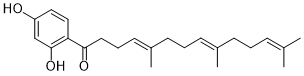
| Cas No. | 62561-19-7 | SDF | File under preparation. |
| PubChem ID | N/A | Appearance | Solid |
| Formula | C23H32O3 | M.Wt | 356.5 |
| Type of Compound | N/A | Storage | Desiccate at -20°C |
| Solubility | Soluble in Chloroform,Dichloromethane,Ethyl Acetate,DMSO,Acetone,etc. | ||
| General tips | For obtaining a higher solubility , please warm the tube at 37 ℃ and shake it in the ultrasonic bath for a while.Stock solution can be stored below -20℃ for several months. We recommend that you prepare and use the solution on the same day. However, if the test schedule requires, the stock solutions can be prepared in advance, and the stock solution must be sealed and stored below -20℃. In general, the stock solution can be kept for several months. Before use, we recommend that you leave the vial at room temperature for at least an hour before opening it. |
||
| About Packaging | 1. The packaging of the product may be reversed during transportation, cause the high purity compounds to adhere to the neck or cap of the vial.Take the vail out of its packaging and shake gently until the compounds fall to the bottom of the vial. 2. For liquid products, please centrifuge at 500xg to gather the liquid to the bottom of the vial. 3. Try to avoid loss or contamination during the experiment. |
||
| Shipping Condition | Packaging according to customer requirements(5mg, 10mg, 20mg and more). Ship via FedEx, DHL, UPS, EMS or other couriers with RT, or blue ice upon request. | ||
Quality Control & MSDS
Package In Stock

Number of papers citing our products


Dshamirone Dilution Calculator
Dshamirone Molarity Calculator
| 1 mg | 5 mg | 10 mg | 20 mg | 25 mg | |
| 1 mM | 2.805 mL | 14.0252 mL | 28.0505 mL | 56.101 mL | 70.1262 mL |
| 5 mM | 0.561 mL | 2.805 mL | 5.6101 mL | 11.2202 mL | 14.0252 mL |
| 10 mM | 0.2805 mL | 1.4025 mL | 2.805 mL | 5.6101 mL | 7.0126 mL |
| 50 mM | 0.0561 mL | 0.2805 mL | 0.561 mL | 1.122 mL | 1.4025 mL |
| 100 mM | 0.0281 mL | 0.1403 mL | 0.2805 mL | 0.561 mL | 0.7013 mL |
| * Note: If you are in the process of experiment, it's necessary to make the dilution ratios of the samples. The dilution data above is only for reference. Normally, it's can get a better solubility within lower of Concentrations. | |||||
- Idescarpin
Catalog No.:BCX2666
CAS No.:188557-53-1
- Vanicoside A
Catalog No.:BCX2665
CAS No.:155179-22-9
- Evofolin B
Catalog No.:BCX2664
CAS No.:138171-64-9
- Shancigusin D
Catalog No.:BCX2663
CAS No.:1174157-28-8
- 12β,17β-Dihydroxyandrosta-1,4-dien-3-one
Catalog No.:BCX2662
CAS No.:80227-48-1
- 12β,17β-Dihydroxyandrosta-1,4,6-trien-3-one
Catalog No.:BCX2661
CAS No.:88378-70-5
- 1-(4-Hydroxybenzyl)-4-methoxypenanthrene-2,7-diol
Catalog No.:BCX2660
CAS No.:133740-30-4
- 3-Hydroxy-2-(4-hydroxy-3-methoxyphenyl)-1-(4-hydroxyphenyl)propan-1-one
Catalog No.:BCX2659
CAS No.:3037164-85-2
- Baigene C methyl ether
Catalog No.:BCX2658
CAS No.:263746-22-1
- 2-epi-Baigene C methyl ether
Catalog No.:BCX2657
CAS No.:263746-21-0
- Fukanedone III
Catalog No.:BCX2656
CAS No.:219595-68-3
- Fukanedone II
Catalog No.:BCX2655
CAS No.:219595-70-7
- 3-O-Methylshancigusin D
Catalog No.:BCX2668
CAS No.:2086662-46-4
- Acernikol
Catalog No.:BCX2669
CAS No.:623584-31-6
- Iturin A3
Catalog No.:BCX2670
CAS No.:64642-38-2
- Iturin A4
Catalog No.:BCX2671
CAS No.:83777-00-8
- Iturin A6
Catalog No.:BCX2672
CAS No.:83777-02-0
- Iturin A7
Catalog No.:BCX2673
CAS No.:83777-03-1
- Juglanoside E
Catalog No.:BCX2674
CAS No.:725265-67-8
- Gymconopin D
Catalog No.:BCX2675
CAS No.:847670-85-3
- Bulbocol
Catalog No.:BCX2676
CAS No.:210231-51-9
- 7,4'-Dihydroxy-3'-methoxyflavan
Catalog No.:BCX2677
CAS No.:95587-88-5
- Sisymbrifolin
Catalog No.:BCX2678
CAS No.:173936-61-3
- Evofolin B 4-O-(threo-β-guaiacylglyceryl) ether
Catalog No.:BCX2679
CAS No.:1621072-58-9
Chloroform extract of underground parts of Ferula heuffelii: secondary metabolites and spasmolytic activity.[Pubmed:25238082]
Chem Biodivers. 2014 Sep;11(9):1417-27.
Plants from the genus Ferula L. (Apiaceae) were used for various purposes in traditional medicine of different nations throughout the history. Ferula heuffelii Griseb. ex Heuffel is a perennial species endemic for Balkan peninsula. Ten compounds which belong to classes of prenyl-furocoumarin-, prenyl-dihydrofurochromone-, prenyl-benzoyl- and prenyl-benzoylfuranone-type sesquiterpenoids, as well as sesquiterpene coumarins and phenylpropanoids, were, for the first time, isolated from the CHCl3 extract of the underground parts of this plant and identified. Furthermore, extract and three isolated compounds, i.e., latifolone (1), Dshamirone (4), and (2S*,3R*)-2-[(3E)-4,8-dimethylnona-3,7-dien-1-yl]-2,3-dihydro-7-hydroxy-2,3-dimethylfuro[3,2-c]coumarin (6) were, for the first time, evaluated for their in vitro antispasmodic activities in three experimental models: spontaneous contraction, and ACh- and KCl-induced contraction of an isolated rat ileum. The extract (0.1-1.3 mg/ml) and compound 6 (1-10 mug/ml) exhibited dose-dependent effect in all three models. Compound 1 (1-6 mug/ml) affected spontaneous contractions and those induced by KCl, while compound 4 (8 mug/ml) displayed only moderate activity with ACh-induced contractions. It can be concluded that tested compounds contribute to exhibited antispasmodic activity of crude extract. Additionally, extract (0.1-1.3 mg/ml) was tested for in vitro relaxant activity on an isolated rat trachea, and relaxed the KCl-induced contractions in a dose-dependent manner.
Compounds from gum ammoniacum with acetylcholinesterase inhibitory activity.[Pubmed:24106674]
Sci Pharm. 2013 Aug 12;81(3):793-805.
The use of herbal medicinal preparations in dementia therapy has been studied based on experience from traditional medicine. A dichloromethane extract of gum ammoniacum, the gum-resin from Dorema ammoniacum D. Don had shown acetylcholinesterase (AChE) inhibitory activity in a previous study. The aim of this study was the isolation and characterization of the active compounds from this resin. The extract was investigated by a respective colorimetric microplate assay and the active zones were identified via TLC bioautography and isolated using several chromatographic techniques. The structures of the active components were characterized by one- and two-dimensional (1)H and (13)C NMR spectroscopy and mass spectrometry as (2'S,5'S)-2'-ethenyl-5'-(3-hy-droxy-6-methyl-4-oxohept-5-en-2-yl)-7-methoxy-2'-methyl-4H-spiro[chromene-3,1'-cyclopentane]-2,4-dione (1), which is an analogue of doremone A and a new natural compound, and as (2'S,5'R)-2'-ethenyl-5'-[(2R,4R)-4-hydroxy-6-methyl-3-oxohept-5-en-2-yl]-7-methoxy-2'-methyl-4H-spiro[chromene-3,1'-cyclo-pentane]-2,4-dione (2 = doremone A), (4E,8E)-1-(2,4-dihydroxyphenyl)-5,9,13-trimethyltetradeca-4,8,12-trien-1-one (3 = Dshamirone), and 4,7-dihydroxy-3-[(2E,6E)-3,7,11-trimethyldodeca-2,6,10-trien-1-yl]-2H-chromen-2-one (4 = am-moresinol). Dshamirone turned out to be the most active compound with an IC50 value for AChE inhibitory activity of 23.5 muM, whereas the other substances showed weak activity. The concentrations of the analytes in the resin were determined by HPLC as 3.1%, 4.6%, 1.9%, and 9.9%, respectively.

Calcutta University

University of Minnesota

University of Maryland School of Medicine

University of Illinois at Chicago

The Ohio State University

University of Zurich

Harvard University

Colorado State University

Auburn University

Yale University

Worcester Polytechnic Institute

Washington State University

Stanford University

University of Leipzig

Universidade da Beira Interior

The Institute of Cancer Research

Heidelberg University

University of Amsterdam

University of Auckland

TsingHua University

The University of Michigan

Miami University

DRURY University

Jilin University

Fudan University

Wuhan University

Sun Yat-sen University

Universite de Paris

Deemed University

Auckland University

The University of Tokyo

Korea University



