
Evofolin BCAS# 138171-64-9 |
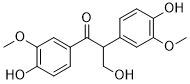
| Cas No. | 138171-64-9 | SDF | File under preparation. |
| PubChem ID | N/A | Appearance | Powder |
| Formula | C17H18O6 | M.Wt | 318.3 |
| Type of Compound | N/A | Storage | Desiccate at -20°C |
| Solubility | Soluble in Chloroform,Dichloromethane,Ethyl Acetate,DMSO,Acetone,etc. | ||
| General tips | For obtaining a higher solubility , please warm the tube at 37 ℃ and shake it in the ultrasonic bath for a while.Stock solution can be stored below -20℃ for several months. We recommend that you prepare and use the solution on the same day. However, if the test schedule requires, the stock solutions can be prepared in advance, and the stock solution must be sealed and stored below -20℃. In general, the stock solution can be kept for several months. Before use, we recommend that you leave the vial at room temperature for at least an hour before opening it. |
||
| About Packaging | 1. The packaging of the product may be reversed during transportation, cause the high purity compounds to adhere to the neck or cap of the vial.Take the vail out of its packaging and shake gently until the compounds fall to the bottom of the vial. 2. For liquid products, please centrifuge at 500xg to gather the liquid to the bottom of the vial. 3. Try to avoid loss or contamination during the experiment. |
||
| Shipping Condition | Packaging according to customer requirements(5mg, 10mg, 20mg and more). Ship via FedEx, DHL, UPS, EMS or other couriers with RT, or blue ice upon request. | ||
Quality Control & MSDS
Package In Stock

Number of papers citing our products


Evofolin B Dilution Calculator
Evofolin B Molarity Calculator
| 1 mg | 5 mg | 10 mg | 20 mg | 25 mg | |
| 1 mM | 3.1417 mL | 15.7085 mL | 31.4169 mL | 62.8338 mL | 78.5423 mL |
| 5 mM | 0.6283 mL | 3.1417 mL | 6.2834 mL | 12.5668 mL | 15.7085 mL |
| 10 mM | 0.3142 mL | 1.5708 mL | 3.1417 mL | 6.2834 mL | 7.8542 mL |
| 50 mM | 0.0628 mL | 0.3142 mL | 0.6283 mL | 1.2567 mL | 1.5708 mL |
| 100 mM | 0.0314 mL | 0.1571 mL | 0.3142 mL | 0.6283 mL | 0.7854 mL |
| * Note: If you are in the process of experiment, it's necessary to make the dilution ratios of the samples. The dilution data above is only for reference. Normally, it's can get a better solubility within lower of Concentrations. | |||||
- Shancigusin D
Catalog No.:BCX2663
CAS No.:1174157-28-8
- 12β,17β-Dihydroxyandrosta-1,4-dien-3-one
Catalog No.:BCX2662
CAS No.:80227-48-1
- 12β,17β-Dihydroxyandrosta-1,4,6-trien-3-one
Catalog No.:BCX2661
CAS No.:88378-70-5
- 1-(4-Hydroxybenzyl)-4-methoxypenanthrene-2,7-diol
Catalog No.:BCX2660
CAS No.:133740-30-4
- 3-Hydroxy-2-(4-hydroxy-3-methoxyphenyl)-1-(4-hydroxyphenyl)propan-1-one
Catalog No.:BCX2659
CAS No.:3037164-85-2
- Baigene C methyl ether
Catalog No.:BCX2658
CAS No.:263746-22-1
- 2-epi-Baigene C methyl ether
Catalog No.:BCX2657
CAS No.:263746-21-0
- Fukanedone III
Catalog No.:BCX2656
CAS No.:219595-68-3
- Fukanedone II
Catalog No.:BCX2655
CAS No.:219595-70-7
- Ferulacoumarin C
Catalog No.:BCX2654
CAS No.:263746-12-9
- 5-O-Methylshanciguol
Catalog No.:BCX2653
CAS No.:87530-27-6
- Huazhongilexin
Catalog No.:BCX2652
CAS No.:135820-79-0
- Vanicoside A
Catalog No.:BCX2665
CAS No.:155179-22-9
- Idescarpin
Catalog No.:BCX2666
CAS No.:188557-53-1
- Dshamirone
Catalog No.:BCX2667
CAS No.:62561-19-7
- 3-O-Methylshancigusin D
Catalog No.:BCX2668
CAS No.:2086662-46-4
- Acernikol
Catalog No.:BCX2669
CAS No.:623584-31-6
- Iturin A3
Catalog No.:BCX2670
CAS No.:64642-38-2
- Iturin A4
Catalog No.:BCX2671
CAS No.:83777-00-8
- Iturin A6
Catalog No.:BCX2672
CAS No.:83777-02-0
- Iturin A7
Catalog No.:BCX2673
CAS No.:83777-03-1
- Juglanoside E
Catalog No.:BCX2674
CAS No.:725265-67-8
- Gymconopin D
Catalog No.:BCX2675
CAS No.:847670-85-3
- Bulbocol
Catalog No.:BCX2676
CAS No.:210231-51-9
Investigating the pharmaceutical substances and action mechanisms of Changmaxifeng granules against tic disorders.[Pubmed:41357924]
World J Psychiatry. 2025 Dec 19;15(12):112055.
BACKGROUND: Tic disorders (TDs) are a type of neurological and psychiatric disorder characterized by vocal or motor tics in the head, body, or limbs. Clinical studies have shown that Changmaxifeng granules (CG) can treat TDs. However, the pharmaceutical substances and mechanism of action of CG remain unclear. AIM: To investigate the pharmaceutical substances and action mechanisms of CG against TDs, this study employs serum medicinal chemistry, network pharmacology, and molecular docking analysis. METHODS: Ultrahigh-performance liquid chromatography with quadrupole time-of-flight mass spectrometry was used to identify the blood-absorbed constituents of CG; Network pharmacology was then used to integrate these compounds with disease targets, followed by protein-protein interaction (PPI) networks analysis to pinpoint key proteins. Finally, Gene Ontology (GO) and Kyoto Encyclopedia of Genes and Genomes (KEGG) enrichment analyses combined with molecular docking elucidated the underlying mechanism of action. RESULTS: Overall, 187 chemical components, including terpenoids, sugars, phenolic acids, and flavonoids, were identified in vitro. In addition, 75 components, namely 49 prototype components and 26 metabolites, were identified in vivo. The PPI results revealed 225 overlapping targets, with TNF, IL-6, FOS, VEGFA, and ESR1 being the major targets. GO and KEGG analyses were performed to identify key signaling pathways and biological processes. Paeonol, Evofolin B, aspalathin, and paeoniflorin were identified as potential pharmacodynamic substances based on the results of the "compound-target" network. The maximum binding energy between the core target and the active ingredient was less than -4.7 kcal/mol, indicating that the pharmacophore exhibited a strong affinity toward the core ingredient. CONCLUSION: This study elucidated the in vitro and in vivo chemical components of CG and outlined their potential targets and action mechanisms. This study provides a basis for further research into the action mechanism and clinical application of CG.
[Chemical constituents from seeds of Hydnocarpus anthelminthica].[Pubmed:35718521]
Zhongguo Zhong Yao Za Zhi. 2022 Jun;47(11):2989-2993.
The present study investigated the chemical constituents from the dry seeds of Hydnocarpus anthelminthica. The compounds were isolated and purified from the dry seeds of H. anthelminthica by various chromatographic techniques including column chromatography over silica gel and Sephadex LH-20 and reversed-phase HPLC. Their structures were identified by spectroscopic analysis. The in vitro cytotoxic activities were determined by MTT assay. Ten compounds were isolated and identified as 2-(4-hydroxy-3,5-dimethoxyphenyl)-3-(2-hydroxy-5-methoxyphenyl)-3-oxo-1-propanol(1), threo-1,2-bis-(4-hydroxy-3-methoxyphenyl)-propane-1,3-diol(2), erythro-1,2-bis-(4-hydroxy-3-methoxyphenyl)-propane-1,3-diol(3), 2-(4-hydroxy-3-methoxyphenyl)-3-(2-hydroxy-5-methoxyphenyl)-3-oxo-1-propanol(4), 3-hydroxy-2-(4-hydroxy-3-methoxyphenyl)-1-(4-hydroxyphenyl)-propan-1-one(5), chrysoeriol(6), Evofolin B(7), apigenin-3'-methoxy-7-O-rutinoside(8), luteolin(9), and vitexin(10). Compound 1 is a new compound. Compounds 4 and 5 were isolated from this genus for the first time. All compounds showed no significant cytotoxic activity.
[Lignans from Agrimonia pilosa].[Pubmed:35718520]
Zhongguo Zhong Yao Za Zhi. 2022 Jun;47(11):2982-2988.
Thirteen lignans were isolated from 60% ethanol extract of Agrimonia pilosa by column chromatography over silica gel, ODS, and MCI and preparative high performance liquid chromatography(HPLC). Their chemical structures were identified by physiochemical properties and spectral data as(7S,8S)-threo-4,7,9,9'-tetrahydroxy-3,3',5'-trimethoxy-8-O-4'-neolignan(1),(+)-4,9,9'-trihydroxy-3-methoxy-3',7-epoxy-8,4'-oxyneolignan(2), dihydrodehydro-diconiferyl alcohol(3), 4,9,9'-trihydroxy-3,3',5-trimethoxy-4',7-epoxy-8,5'-neolignan(4),(-)-secoisolariciresinol(5), 4,7,9,9'-tetrahydroxy-3,3',5'-trimethoxy-8-O-4'-neolignan(6),(+)-isolariciresinol(7), 4,7,9,9'-tetrahydroxy-3,3'-dimethoxy-8-O-4'-neolignan(8), burselignan(9),(-)-Evofolin B(10), icariol A2(11), ciwujiatone(12), and(+)-4'',4-dihydroxy-3,3',3'',3,5,5'-hexamethoxy-7,9';7',9-diepoxy-4,8'';4',8-bisoxy-8,8'-dineolignan-7'',7,9'',9-tetraol(13). Compound 1 was a new compound, and compounds 1-13 were isolated from Agrimonia plant for the first time. This study can enrich the chemical components in A. pilosa and provide material conditions for the follow-up study of its biological activity and the elucidation of its pharmacodynamic substances.
[Active constituents of Urtica fissa in inhibition of benign prostatic hyperplasia].[Pubmed:35178984]
Zhongguo Zhong Yao Za Zhi. 2022 Jan;47(2):419-427.
The present study investigated the material basis of Urtica fissa for the inhibition of benign prostatic hyperplasia(BPH). The active fractions were screened, and the extracts of dichloromethane and ethyl acetate exhibited significantly inhibitory activities against 5alpha-reductase in vitro and BPH in model rats. The chemical constituents in the active fractions were systematically investigated, and 28 compounds were obtained, which were identified as lobechine methyl ester(1), dibutyl-O-phthalate(2), 1-monolinolein(3), epipinoresinol(4), 5-hydroxy-3,4-dimethyl-5-pentanyl-2(5H)-furanone(5), E-7,9-diene-11-methenyl palmitic acid(6), Evofolin B(7), ficusal(8), threo-2,3-bis-(4-hydroxy-3-methoxyphenyl)-3-ethoxypropan-1-ol(9), alpha-viniferin(10),(9R,7E)-9-hydroxy-5,7-mengatigmadien-4-one-9-O-beta-D-glucopyranoside(11), indole-3-carboxaldehyde(12), p-hydroxy ethyl cinnamate(13), benzyl alcohol-O-beta-D-glucoside(14), L-methionine(15), 4-methoxyaniline(16), 6-aminopurine(17), 8'-acetyl oilvil(18), 4-methoxyl-8'-acetyl oilvil(19), vanillic acid(20), beta-hydroxypropiovanillone(21), 7-hydroxy-6-methoxycoumarin(22), p-hydroxybenzaldehyde(23), pinoresinol(24), erythro-1,2-bis-(4-hydroxy-3-methoxyphenyl)-1,3-propanediol(25), urticol(26), urticol-7-O-beta-D-glucopyranoside(27), and lobechine(28). Compounds 1-17 were isolated from U. fissa for the first time. Meanwhile, compound 1 was a new natural product. Compounds 10, 11, 19, 21, and 27 exhibited significant inhibitory effects on 5alpha-reductase.
[Study on non-flavonoids chemical constituents from Spatholobi Caulis].[Pubmed:32237455]
Zhongguo Zhong Yao Za Zhi. 2020 Mar;45(5):1120-1127.
To study the non-flavonoids chemical constituents in water extract of Spatholobi Caulis. Some purification and analysis techniques like silica gel, D101-macroporous adsorptive resins, and Sephadex LH-20 column chromatographies as well as reversed phase high-performance liquid chromatography were used to isolate and analyze the phenolic acid esters and other type compounds from Spatholobi Caulis integrally. The structures of these compounds were identified by spectroscopic techniques such as nuclear magnetic resonance and high resolution mass spectrometries. Twenty-seven compounds, including phenolic acid, coumarin, lignan, terpene, alkaloid, and steroid compounds, were isolated from ethyl acetate and n-butanol fractions in water extract of Spatholobi Caulis, and they were identified as beta-sitosterol(1), feruli acid methyl ester(2), syringaresinol(3),(+)-medioresinol(4),(+)-epipinoresinol(5), p-acetylphenol(6), bolusanthin Ⅳ(7), Evofolin B(8), salicylic acid(9), trans-p-hydroxy-cinnamic acid(10), abscisic acid(11), m-hydroxyphenol(12), C-veratroylglycol(13), p-hydroquinone(14), 8,9-dihydroxymegastigma-4,6-dien-3-one(15), p-hydroxybenzoic acid(16), 6,9-dihydroxymegastigma-4,7-dien-3-one(17), protocatechuic acid(18), protocatechuic acid methyl ester(19), 5,7-dihydroxycoumarin(20), isolariciresinol(21), nicotinic acid(22), daucosterol(23),(+)-pinoresinol(24), stigmasterol(25), allantoin(26) and koaburaside(27), respectively. Furthermore, compounds 2-15, 19-22, 24 and 26 were isolated from genus Spatholobus for the first time.
[Lignans from seed of Hydnocarpus anthelminthica].[Pubmed:31090297]
Zhongguo Zhong Yao Za Zhi. 2019 Apr;44(7):1397-1402.
This project is to investigate lignans from the seed of Hydnocarpus anthelminthica. Thirteen lignans were isolated from the 95% ethanol extract of the seed of H. anthelminthica, by polyamide resin, Sephadex LH-20, ODS column chromatography and preparative HPLC. Their structures were elucidated as(+)-syringaresinol(1), lirioresinol A(2),(+)-medioresinol(3),(7R,8R,8'R)-4'-guaiacylglyceryl-Evofolin B(4), leptolepisol C(5),(-)-(7R,7'R,7''R,8S,8'S,8''S)-4',4''-dihydroxy-3,3',3'',5,5',5''-hexamethoxy-7,9':7',9-diepoxy-4,8''-oxy-8,8'-sesquineolignan-7'',9''-diol(6),(-)-(7R,7'R,7''R,8S,8'S,8''S)-4',4''-dihydroxy-3,3',3'',5,5'-pentamethoxy-7,9':7',9-diepoxy-4,8''-oxy-8,8'ses-quineolignan-7'',9''-diol(7), ceplignan(8), hydnocarpusol(9), isohydnocarpin(10),(-)-hydnocarpin(11), hydnocarpin(12), and hydnocarpin-D(13) by spectroscopic data analysis. Compounds 1-8 were obtained from the genus Hydnocarpus for the first time.
[Studies on liposoluble constituents from Momordicae Semen].[Pubmed:29676125]
Zhongguo Zhong Yao Za Zhi. 2018 Mar;43(6):1175-1181.
The liposoluble constituents in Momordicae Semen were investigated in the present study. By silica gel, Sephadex LH-20 column chromatography, and semi-preparative HPLC, 22 compounds were isolated and purified from dichloromethane and ethyl acetate fraction. Based on NMR and MS spectra analyses, these compounds were identified as lupeol (1), 5-(1'-hydroxypentyl)-5H-furan-2-one (2), palmitic acid (3), viscumamide (4), clavatustide C (5), laxanol (6), threo-1-(4-hydroxyphenyl)-2-4-[2-formyl-(E)-vinyl]-2-methoxyphenoxyl-propane-1, 3-diol (7), alpha-spinasterol-3-O-beta-D-glucoside (8), chushizisin F (9), ehletianol C (10), tanegool (11), (7R, 8R, 8'R)-4'-guaiacylglyceryl-Evofolin B (12), ligballinone (13), (7R, 8S, 8'R)- 4, 4', 9-trihydroxy- 7, 9'-epoxy- 8, 8'-lignan (14), chushizisin I (15), chushizisin A (16), chushizisin G (17), p-coumaraldehyde (18), alpha-spinasterol (19), p-hydroxybenzoic acid (20), chushizisin E (21), and 3-[2-(4-hydroxyphenyl)-3-hydroxyphenyl-2, 3-dihydro-1-benzofuran-5-yl] propane-1-ol (22), respectively. Compounds 1-17 were isolated from Momordica cochinchinensis for the first time. Compound 2 was a new natural product while compounds 4 and 5 were first found in the terrestrial organism.
[Chemical consitituents from root of Isatis indigotica].[Pubmed:23944031]
Zhongguo Zhong Yao Za Zhi. 2013 Apr;38(8):1172-82.
Thirty-three compounds were isolated from the root decoction of Isatis indigotica by using a combination of various chromatographic techniques including silica gel, macroporous adsorbent resin, Sephadex LH-20, and reversed-phase HPLC. Their structures were elucidated by spectroscopic data as (+)-dehydrovomifoliol (1), (S)-(+)-abscisic acid (2), vomifoliol (3), cyclo (L-Phe-L-Leu) (4), cyclo(L-Phe-L-Tyr) (5), cyclo(L-Tyr-L-Leu) (6), cyclo(L-Pro-L-Tyr) (7), Evofolin B (8), (+)-syringaresinol (9), (-)-(7R,7'R,8S,8'S)-4,4'-dihydroxy-3-methoxy-7,9';7',9-diepoxy-lignan (10), (-)-medioresinol (11), (+) -(7R,7'R,8S,8'S) -neo-olivil (12), (-) -5-methoxyisolariciresinol (13), 1,3-dihydro-2H-indol-2-one (14), isalexin (15), dihydroneoascorbigen (16), indican (17), (-) -(S) -cyanomethyl-3-hydroxyoxindole (18), isoformononetein (19), calycosin (20), stigamast-5-ene-3beta-ol-7-one (21), acetovanillone (22), 3, 5-dimethoxy-4-hydroxyacetophenone (23), dihydroconiferyl alcohol (24), dihyroferulic acid (25), 3-hydroxy-1-(4-hydroxyphenyl) propan-1-one (26), beta-hydroxypropiovanillone (27), 4-aminobenzoic acid (28), 3-(4-hydroxyphenyl) propan-1-ol (29), 4-(2-hydroxyethyl) phenol (30), 2-methoxy-4-vinylphenol (31), pyrocatechol (32), and 4-pentenamide (33). These compounds were isolated from the root of I. indigotica for the first time. In preliminary in vitro assays, compound 19 showed activity against the influenza virus A/Hanfang/359/95 (H3N2), the herpes simplex virus 1 (HSV-1), and Coxsackie virus B3 (Cox-B3), with IC50 values of 2.06, 6.84, and 8.70 micromol x L(-1), respectively, but other compounds were in-active at a concentration of 1.0 x 10 x (-5) mol x L(-1).

Calcutta University

University of Minnesota

University of Maryland School of Medicine

University of Illinois at Chicago

The Ohio State University

University of Zurich

Harvard University

Colorado State University

Auburn University

Yale University

Worcester Polytechnic Institute

Washington State University

Stanford University

University of Leipzig

Universidade da Beira Interior

The Institute of Cancer Research

Heidelberg University

University of Amsterdam

University of Auckland

TsingHua University

The University of Michigan

Miami University

DRURY University

Jilin University

Fudan University

Wuhan University

Sun Yat-sen University

Universite de Paris

Deemed University

Auckland University

The University of Tokyo

Korea University



