
AcernikolCAS# 623584-31-6 |
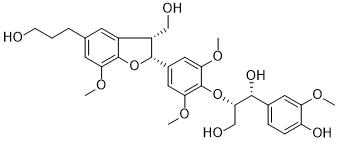
| Cas No. | 623584-31-6 | SDF | File under preparation. |
| PubChem ID | N/A | Appearance | Powder |
| Formula | C31H38O11 | M.Wt | 586.7 |
| Type of Compound | N/A | Storage | Desiccate at -20°C |
| Solubility | Soluble in Chloroform,Dichloromethane,Ethyl Acetate,DMSO,Acetone,etc. | ||
| General tips | For obtaining a higher solubility , please warm the tube at 37 ℃ and shake it in the ultrasonic bath for a while.Stock solution can be stored below -20℃ for several months. We recommend that you prepare and use the solution on the same day. However, if the test schedule requires, the stock solutions can be prepared in advance, and the stock solution must be sealed and stored below -20℃. In general, the stock solution can be kept for several months. Before use, we recommend that you leave the vial at room temperature for at least an hour before opening it. |
||
| About Packaging | 1. The packaging of the product may be reversed during transportation, cause the high purity compounds to adhere to the neck or cap of the vial.Take the vail out of its packaging and shake gently until the compounds fall to the bottom of the vial. 2. For liquid products, please centrifuge at 500xg to gather the liquid to the bottom of the vial. 3. Try to avoid loss or contamination during the experiment. |
||
| Shipping Condition | Packaging according to customer requirements(5mg, 10mg, 20mg and more). Ship via FedEx, DHL, UPS, EMS or other couriers with RT, or blue ice upon request. | ||
Quality Control & MSDS
Package In Stock

Number of papers citing our products


Acernikol Dilution Calculator
Acernikol Molarity Calculator
| 1 mg | 5 mg | 10 mg | 20 mg | 25 mg | |
| 1 mM | 1.7044 mL | 8.5222 mL | 17.0445 mL | 34.089 mL | 42.6112 mL |
| 5 mM | 0.3409 mL | 1.7044 mL | 3.4089 mL | 6.8178 mL | 8.5222 mL |
| 10 mM | 0.1704 mL | 0.8522 mL | 1.7044 mL | 3.4089 mL | 4.2611 mL |
| 50 mM | 0.0341 mL | 0.1704 mL | 0.3409 mL | 0.6818 mL | 0.8522 mL |
| 100 mM | 0.017 mL | 0.0852 mL | 0.1704 mL | 0.3409 mL | 0.4261 mL |
| * Note: If you are in the process of experiment, it's necessary to make the dilution ratios of the samples. The dilution data above is only for reference. Normally, it's can get a better solubility within lower of Concentrations. | |||||
- 3-O-Methylshancigusin D
Catalog No.:BCX2668
CAS No.:2086662-46-4
- Dshamirone
Catalog No.:BCX2667
CAS No.:62561-19-7
- Idescarpin
Catalog No.:BCX2666
CAS No.:188557-53-1
- Vanicoside A
Catalog No.:BCX2665
CAS No.:155179-22-9
- Evofolin B
Catalog No.:BCX2664
CAS No.:138171-64-9
- Shancigusin D
Catalog No.:BCX2663
CAS No.:1174157-28-8
- 12β,17β-Dihydroxyandrosta-1,4-dien-3-one
Catalog No.:BCX2662
CAS No.:80227-48-1
- 12β,17β-Dihydroxyandrosta-1,4,6-trien-3-one
Catalog No.:BCX2661
CAS No.:88378-70-5
- 1-(4-Hydroxybenzyl)-4-methoxypenanthrene-2,7-diol
Catalog No.:BCX2660
CAS No.:133740-30-4
- 3-Hydroxy-2-(4-hydroxy-3-methoxyphenyl)-1-(4-hydroxyphenyl)propan-1-one
Catalog No.:BCX2659
CAS No.:3037164-85-2
- Baigene C methyl ether
Catalog No.:BCX2658
CAS No.:263746-22-1
- 2-epi-Baigene C methyl ether
Catalog No.:BCX2657
CAS No.:263746-21-0
- Iturin A3
Catalog No.:BCX2670
CAS No.:64642-38-2
- Iturin A4
Catalog No.:BCX2671
CAS No.:83777-00-8
- Iturin A6
Catalog No.:BCX2672
CAS No.:83777-02-0
- Iturin A7
Catalog No.:BCX2673
CAS No.:83777-03-1
- Juglanoside E
Catalog No.:BCX2674
CAS No.:725265-67-8
- Gymconopin D
Catalog No.:BCX2675
CAS No.:847670-85-3
- Bulbocol
Catalog No.:BCX2676
CAS No.:210231-51-9
- 7,4'-Dihydroxy-3'-methoxyflavan
Catalog No.:BCX2677
CAS No.:95587-88-5
- Sisymbrifolin
Catalog No.:BCX2678
CAS No.:173936-61-3
- Evofolin B 4-O-(threo-β-guaiacylglyceryl) ether
Catalog No.:BCX2679
CAS No.:1621072-58-9
- threo-Acernikol
Catalog No.:BCX2680
CAS No.:1313434-76-2
- Funingensin A
Catalog No.:BCX2681
CAS No.:939377-87-4
[Lignan glycosides and sucrose esters from roots of Securidaca inappendiculata].[Pubmed:28822186]
Zhongguo Zhong Yao Za Zhi. 2017 Jun;42(12):2318-2322.
Nine compounds, including five lignan glycosides (1-5), three sucrose esters (6-8), and one organic acid ester (9), were isolated from the ethanol extract of the roots of Securidaca inappendiculata by various chromatographic methods including silica gel, MPLC and preparative HPLC. Their structures were elucidated as Acernikol-4''-O-beta-D-glucopyranoside (1), (7R, 8S)-dihydrodehydrodiconiferyl alcohol 9-O-beta-D-glucopyranoside (2), (7R, 8S)-dihydrodehydrodiconiferyl alcohol 4-O-beta-D-glucopyranoside (3), (7R, 8S)-dihydrodehydrodiconiferyl alcohol 9'-O-beta-D-glucopyranoside (4), (7R, 8S)-5-methoxydihydrodehy-drodiconiferyl alcohol 4-O-beta-D-glucopyranoside (5), 3, 6'-O-diferuloylsucrose (6), 3-O-feruloyl-6'-O-sinapoylsucrose (7), sibricose A5 (8), and mehyl ferulate (9) on the basis of 1H-, 13C-NMR and MS experiments. Compounds 1-5, 8, and 9 were isolated from the Securidaca genus for the first time. Compounds 2, 3, and 7 exhibited weak cytotoxic activities against Hela and MCF-7 cell lines.
[Studies on chemical constituents of Illicium simonsii].[Pubmed:21837972]
Zhongguo Zhong Yao Za Zhi. 2011 May;36(10):1311-5.
OBJECTIVE: To study the chemical constituents of the Illicium simonsii. METHOD: The stems and leaves of I. simonsii were extracted with 95% EtOH. The EtOH extract was dispersed in H2O and extracted with petroleum, CHCl3 and BuOH, successively. The CHCl3 and BuOH fractions were isolated and purified by column chromatography on silica gel, Sephadex LH-20, Rp-C8 and Rp-C18. The isolated compounds were identified on the basis of spectral analyses (including MS, 1H-NMR, 13C-NMR). RESULT: Fourteen compounds were isolated from the stems and leaves of I. simonsii, which were characterized as ficusesquilignan A (1), buddlenol C (2), buddlenol D (3), leptolepisol A (4), Acernikol (5), aviculin (6), kaempferol (7), quercetin (8), quercetin 3-O-alpha-L-rhamnopyranosyl-(1 --> 6) -beta-D-glucopyranoside (9), taxifolin-3-O-beta-D-xylopyranoside (10), benzyl-2-O-beta-D-glucopyranosyl-2,6-dihydroxybenzoate (11), 2,4-dihydroxy-3,6-dimethyl-methylbenzoate (12), biondinin C (13), shikimic acid (14). CONCLUSION: Except compounds 9 and 14, all the other compounds were obtained from I. simonsii for the first time.
Further investigation into maple syrup yields 3 new lignans, a new phenylpropanoid, and 26 other phytochemicals.[Pubmed:21675726]
J Agric Food Chem. 2011 Jul 27;59(14):7708-16.
Maple syrup is made by boiling the sap collected from certain maple ( Acer ) species. During this process, phytochemicals naturally present in tree sap are concentrated in maple syrup. Twenty-three phytochemicals from a butanol extract of Canadian maple syrup (MS-BuOH) had previously been reported; this paper reports the isolation and identification of 30 additional compounds (1-30) from its ethyl acetate extract (MS-EtOAc) not previously reported from MS-BuOH. Of these, 4 compounds are new (1-3, 18) and 20 compounds (4-7, 10-12, 14-17, 19, 20, 22-24, 26, and 28-30) are being reported from maple syrup for the first time. The new compounds include 3 lignans and 1 phenylpropanoid: 5-(3'',4''-dimethoxyphenyl)-3-hydroxy-3-(4'-hydroxy-3'-methoxybenzyl)-4-(hydroxymethyl)dihydrofuran-2-one (1), (erythro,erythro)-1-[4-[2-hydroxy-2-(4-hydroxy-3-methoxyphenyl)-1-(hydroxymethyl)ethoxy]-3,5-dimethoxyphenyl]-1,2,3-propanetriol (2), (erythro,threo)-1-[4-[2-hydroxy-2-(4-hydroxy-3-methoxyphenyl)-1-(hydroxymethyl)ethoxy]-3,5-dimethoxyphenyl]-1,2,3-propanetriol (3), and 2,3-dihydroxy-1-(3,4- dihydroxyphenyl)-1-propanone (18), respectively. In addition, 25 other phenolic compounds were isolated including (threo,erythro)-1-[4-[(2-hydroxy-2-(4-hydroxy-3-methoxyphenyl)-1-(hydroxymethyl)ethoxy]-3-methoxyphenyl]-1,2,3-propanetriol (4), (threo,threo)-1-[4-[(2-hydroxy-2-(4-hydroxy-3-methoxyphenyl)-1-(hydroxymethyl)ethoxy]-3-methoxyphenyl]-1,2,3-propanetriol (5), threo-guaiacylglycerol-beta-O-4'-dihydroconiferyl alcohol (6), erythro-1-(4-hydroxy-3-methoxyphenyl)-2-[4-(3-hydroxypropyl)-2,6-dimethoxyphenoxy]-1,3-propanediol (7), 2-[4-[2,3-dihydro-3-(hydroxymethyl)-5-(3-hydroxypropyl)-7-methoxy-2-benzofuranyl]-2,6-dimethoxyphenoxy]-1-(4-hydroxy-3-methoxyphenyl)-1,3-propanediol (8), Acernikol (9), leptolepisol D (10), buddlenol E (11), (1S,2R)-2-[2,6-dimethoxy-4-[(1S,3aR,4S,6aR)-tetrahydro-4-(4-hydroxy-3,5-dimethoxyphenyl)-1H,3H-furo[3,4-c]furan-1-yl]phenoxy]-1-(4-hydroxy-3-methoxyphenyl)-1,3-propanediol (12), syringaresinol (13), isolariciresinol (14), icariside E4 (15), sakuraresinol (16), 1,2-diguaiacyl-1,3-propanediol (17), 2,3-dihydroxy-1-(4-hydroxy-3,5-dimethoxyphenyl)-1-propanone (19), 3-hydroxy-1-(4-hydroxy-3,5-dimethoxyphenyl)propan-1-one (20), dihydroconiferyl alcohol (21), 4-acetylcatechol (22), 3',4',5'-trihydroxyacetophenone (23), 3,4-dihydroxy-2-methylbenzaldehyde (24), protocatechuic acid (25), 4-(dimethoxymethyl)pyrocatechol (26), tyrosol (27), isofraxidin (28), and 4-hydroxycatechol (29). One sesquiterpene, phaseic acid (30), which is a known metabolite of the phytohormone abscisic acid, was also isolated from MS-EtOAc. The antioxidant activities of MS-EtOAc (IC(50) = 75.5 mug/mL) and the pure isolates (IC(50) ca. 68-3000 muM) were comparable to that of vitamin C (IC(50) = 40 muM) and the synthetic commercial antioxidant butylated hydroxytoluene (IC(50) = 3000 muM), in the diphenylpicrylhydrazyl radical scavenging assay. The current study advances scientific knowledge of maple syrup constituents and suggests that these diverse phytochemicals may impart potential health benefits to this natural sweetener.
Medicinal foodstuffs. XXXI. Structures of new aromatic constituents and inhibitors of degranulation in RBL-2H3 cells from a Japanese folk medicine, the stem bark of Acer nikoense.[Pubmed:12520130]
Chem Pharm Bull (Tokyo). 2003 Jan;51(1):62-7.
Four new aromatic constituents, rhododendroketoside, (-)-sakuraresinoside, Acernikol, and nikoenoside, were isolated from a Japanese folk medicine, the stem bark of Acer nikoense MAXIM. The structures of the new constituents were determined on the basis of chemical and physicochemical evidence. The principle cyclic diarylheptanoids were found to show inhibitory effects on the release of beta-hexosaminidase in RBL-2H3 cells.

Calcutta University

University of Minnesota

University of Maryland School of Medicine

University of Illinois at Chicago

The Ohio State University

University of Zurich

Harvard University

Colorado State University

Auburn University

Yale University

Worcester Polytechnic Institute

Washington State University

Stanford University

University of Leipzig

Universidade da Beira Interior

The Institute of Cancer Research

Heidelberg University

University of Amsterdam

University of Auckland

TsingHua University

The University of Michigan

Miami University

DRURY University

Jilin University

Fudan University

Wuhan University

Sun Yat-sen University

Universite de Paris

Deemed University

Auckland University

The University of Tokyo

Korea University



