
IdescarpinCAS# 188557-53-1 |
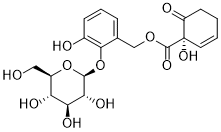
| Cas No. | 188557-53-1 | SDF | File under preparation. |
| PubChem ID | N/A | Appearance | Powder |
| Formula | C20H24O11 | M.Wt | 440.4 |
| Type of Compound | N/A | Storage | Desiccate at -20°C |
| Solubility | Soluble in Chloroform,Dichloromethane,Ethyl Acetate,DMSO,Acetone,etc. | ||
| General tips | For obtaining a higher solubility , please warm the tube at 37 ℃ and shake it in the ultrasonic bath for a while.Stock solution can be stored below -20℃ for several months. We recommend that you prepare and use the solution on the same day. However, if the test schedule requires, the stock solutions can be prepared in advance, and the stock solution must be sealed and stored below -20℃. In general, the stock solution can be kept for several months. Before use, we recommend that you leave the vial at room temperature for at least an hour before opening it. |
||
| About Packaging | 1. The packaging of the product may be reversed during transportation, cause the high purity compounds to adhere to the neck or cap of the vial.Take the vail out of its packaging and shake gently until the compounds fall to the bottom of the vial. 2. For liquid products, please centrifuge at 500xg to gather the liquid to the bottom of the vial. 3. Try to avoid loss or contamination during the experiment. |
||
| Shipping Condition | Packaging according to customer requirements(5mg, 10mg, 20mg and more). Ship via FedEx, DHL, UPS, EMS or other couriers with RT, or blue ice upon request. | ||
Quality Control & MSDS
Package In Stock

Number of papers citing our products


Idescarpin Dilution Calculator
Idescarpin Molarity Calculator
| 1 mg | 5 mg | 10 mg | 20 mg | 25 mg | |
| 1 mM | 2.2707 mL | 11.3533 mL | 22.7066 mL | 45.4133 mL | 56.7666 mL |
| 5 mM | 0.4541 mL | 2.2707 mL | 4.5413 mL | 9.0827 mL | 11.3533 mL |
| 10 mM | 0.2271 mL | 1.1353 mL | 2.2707 mL | 4.5413 mL | 5.6767 mL |
| 50 mM | 0.0454 mL | 0.2271 mL | 0.4541 mL | 0.9083 mL | 1.1353 mL |
| 100 mM | 0.0227 mL | 0.1135 mL | 0.2271 mL | 0.4541 mL | 0.5677 mL |
| * Note: If you are in the process of experiment, it's necessary to make the dilution ratios of the samples. The dilution data above is only for reference. Normally, it's can get a better solubility within lower of Concentrations. | |||||
- Vanicoside A
Catalog No.:BCX2665
CAS No.:155179-22-9
- Evofolin B
Catalog No.:BCX2664
CAS No.:138171-64-9
- Shancigusin D
Catalog No.:BCX2663
CAS No.:1174157-28-8
- 12β,17β-Dihydroxyandrosta-1,4-dien-3-one
Catalog No.:BCX2662
CAS No.:80227-48-1
- 12β,17β-Dihydroxyandrosta-1,4,6-trien-3-one
Catalog No.:BCX2661
CAS No.:88378-70-5
- 1-(4-Hydroxybenzyl)-4-methoxypenanthrene-2,7-diol
Catalog No.:BCX2660
CAS No.:133740-30-4
- 3-Hydroxy-2-(4-hydroxy-3-methoxyphenyl)-1-(4-hydroxyphenyl)propan-1-one
Catalog No.:BCX2659
CAS No.:3037164-85-2
- Baigene C methyl ether
Catalog No.:BCX2658
CAS No.:263746-22-1
- 2-epi-Baigene C methyl ether
Catalog No.:BCX2657
CAS No.:263746-21-0
- Fukanedone III
Catalog No.:BCX2656
CAS No.:219595-68-3
- Fukanedone II
Catalog No.:BCX2655
CAS No.:219595-70-7
- Ferulacoumarin C
Catalog No.:BCX2654
CAS No.:263746-12-9
- Dshamirone
Catalog No.:BCX2667
CAS No.:62561-19-7
- 3-O-Methylshancigusin D
Catalog No.:BCX2668
CAS No.:2086662-46-4
- Acernikol
Catalog No.:BCX2669
CAS No.:623584-31-6
- Iturin A3
Catalog No.:BCX2670
CAS No.:64642-38-2
- Iturin A4
Catalog No.:BCX2671
CAS No.:83777-00-8
- Iturin A6
Catalog No.:BCX2672
CAS No.:83777-02-0
- Iturin A7
Catalog No.:BCX2673
CAS No.:83777-03-1
- Juglanoside E
Catalog No.:BCX2674
CAS No.:725265-67-8
- Gymconopin D
Catalog No.:BCX2675
CAS No.:847670-85-3
- Bulbocol
Catalog No.:BCX2676
CAS No.:210231-51-9
- 7,4'-Dihydroxy-3'-methoxyflavan
Catalog No.:BCX2677
CAS No.:95587-88-5
- Sisymbrifolin
Catalog No.:BCX2678
CAS No.:173936-61-3
Decoding the bitter taste of Idesia polycarpa var. vestita Diels fruit: Bitterness contribution and mechanisms.[Pubmed:39094345]
Food Chem. 2024 Dec 1;460(Pt 2):140609.
To comprehensively explore the contribution and mechanisms of identified low-threshold bitter substances in Idesia polycarpa var. vestita Diels (I. vestita) fruit, we performed quantification and elucidated their interactions with main bitter taste receptors through molecular docking. The established method for quantifying bitter compounds in I. vestita fruit was validated, yielding satisfactory parameters for linearity, stability, and accuracy. Idescarpin (17.71-101.05 mg/g) and idesin (7.88-77.14 mg/g) were the predominant bitter compounds in terms of content. Taste activity values (TAVs) exceeded 10 for the bitter substances, affirming their pivotal role as major contributors to overall bitterness of I. vestita fruit. Notably, Idescarpin with the highest TAV, played a crucial role in generating the bitterness of I. vestita fruit. Hydrogen bonds and hydrophobic interactions were the main driving forces. This study holds potential implications for industrial development of I. vestita fruit by providing novel insights into the mechanism underlying its bitterness formation.
The absolute configuration of salicortin, HCH-salicortin and tremulacin from Populus trichocarpa x deltoides Beaupre.[Pubmed:25830788]
Molecules. 2015 Mar 30;20(4):5566-73.
The absolute configuration of salicortin, HCH-salicortin and tremulacin, isolated from leaves of Populus trichocarpa x deltoides Beaupre, was determined by comparing spectroscopic data of these compounds with those of Idescarpin, isolated from leaves of Idesia polycarpa. All compounds were characterized by nuclear magnetic resonance spectroscopy, high-resolution mass spectrometry, and circular dichroism spectroscopy. It was found that the hydroxy cyclohexenonoyl (HCH) moiety in all compounds is (S)-configured. In addition, it was shown that leaves of Idesia polycarpa contain high amounts of (-)-Idescarpin (1.1%, based on dry weight).
Anti-adipogenic activity of compounds isolated from Idesia polycarpa on 3T3-L1 cells.[Pubmed:23628332]
Bioorg Med Chem Lett. 2013 Jun 1;23(11):3170-4.
Recently, obesity is a complex multifactorial chronic disease increasing the risk for type 2 diabetes, coronary heart disease and hypertension, and has become a major worldwide health problem. In the course of screening natural products employing 3T3-L1 cells as an in vitro system, the methanol extract of Idesia polycarpa Maxim. Fruits (Flacourtiaceae) significantly inhibited adipocyte differentiation by measuring lipid contents using oil red O staining. One new compound, 6-(oxymethyl)-2-hydroxyphenyl-O-beta-D-glucopyranosyl-(1-->6)-beta-D-glucopyranoside (8), was isolated along with nine known compounds (1-7 and 9-10) from CHCl3 and n-BuOH fractions of the methanol extract of I. polycarpa fruits. Among them, Idescarpin (1) with 1-hydroxy-6-oxo-2-cyclohexenecarboxylate moiety showed the most potent inhibitory activity on adipocyte differentiation with IC50 values of 23.2 muM. Idescarpin (1) dramatically suppressed the induction of C/EBPalpha expression, whereas it significantly increased the induction of PPARgamma expression, supported by quantitative real time PCR and Western blot analysis. The down-regulation in mRNA levels of SREBP1c, SCD-1, and FAS by Idescarpin (1) during adipocyte differentiation revealed that the inhibition of adipocyte differentiation was mediated by the regulation of lipogenesis. Taken together, we suggest that Idescarpin (1) shows a great potential against obesity and diabetes though the anti-adipogenic activity and the up-regulation of PPARgamma.
Inhibitory activity of phenolic glycosides from the fruits of Idesia polycarpa on lipopolysaccharide-induced nitric oxide production in BV2 microglia.[Pubmed:17128390]
Planta Med. 2007 Feb;73(2):167-9.
Two new phenolic glycosides characterized as idesin salicylate (1) and 2-hydroxyphenol-1-O-beta-D-glucopyranosyl-(6-->1)- alpha-L-rhamnopyranoside (2) were isolated with four known compounds, Idescarpin (3), idesin (4), 1-hydroxy-6-oxocyclohex-2-enecarboxylic acid methyl ester (5) and salirepin (6), from the fruits of IDESIA POLYCARPA. All six compounds significantly inhibited lipopolysaccharide-induced nitric oxide production in BV2 microglia at concentrations from 1 microM to 100 microM.

Calcutta University

University of Minnesota

University of Maryland School of Medicine

University of Illinois at Chicago

The Ohio State University

University of Zurich

Harvard University

Colorado State University

Auburn University

Yale University

Worcester Polytechnic Institute

Washington State University

Stanford University

University of Leipzig

Universidade da Beira Interior

The Institute of Cancer Research

Heidelberg University

University of Amsterdam

University of Auckland

TsingHua University

The University of Michigan

Miami University

DRURY University

Jilin University

Fudan University

Wuhan University

Sun Yat-sen University

Universite de Paris

Deemed University

Auckland University

The University of Tokyo

Korea University



