Chemokine CC Receptor
Chemokine CC receptors (CCRs) predominantly recognize CC chemokines. CC chemokines are distinguished by having four conserved cysteines, with the first two cysteines being adjacent to each other. There are 10 chemokine CC receptors.
Products for Chemokine CC Receptor
- Cat.No. Product Name Information/Activity
-
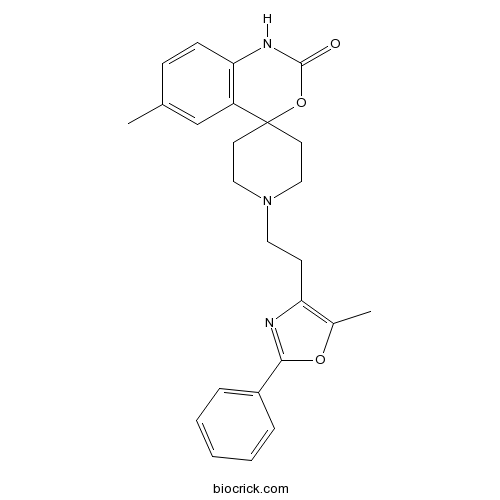
BCC7413
ZK 756326
874911-96-3

-
BCC7572
BMS CCR2 22
BMS CCR2 22 is a potent, specific and high affinity CC-type chemokine receptor 2 (CCR2) antagonist with excellent binding affinity (binding IC50 of 5.1 nM) and potent functional antagonism (calcium flux IC50 of 18 nM and chemotaxis IC50 of 1 nM).

-
BCC6029
BX 471
BX471 (ZK-811752) is an orally active, potent and selective non-peptide CCR1 antagonist with a Ki of 1 nM, and exhibits 250-fold selectivity for CCR1 over CCR2, CCR5 and CXCR4.

-
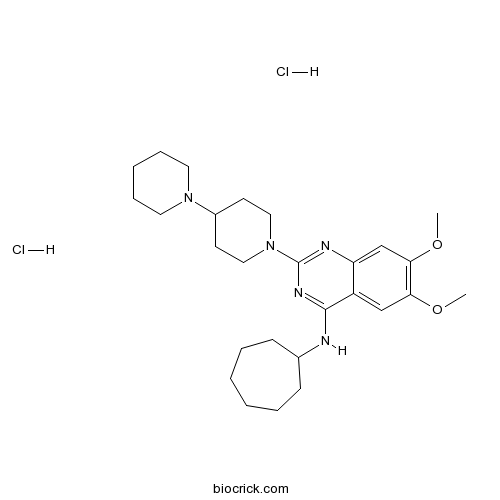
BCC6047
C 021 dihydrochloride
Potent CCR4 antagonist
-
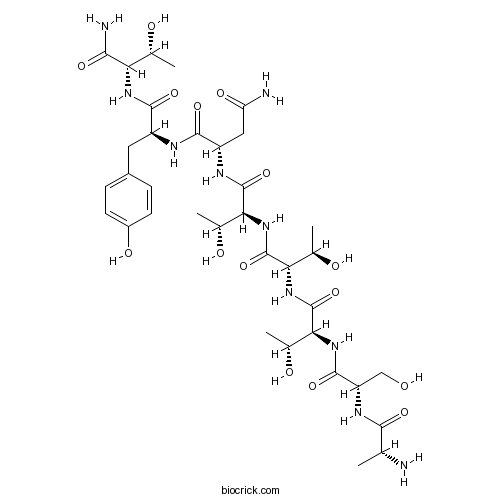
BCC5909
DAPTA
DAPTA is a synthetic peptide, functions as a viral entry inhibitor by targeting selectively CCR5, and shows potent anti-HIV activities.
-
BCC1646
INCB 3284 dimesylate
INCB 3284 dimesylate is a potent, selective and orally bioavailable human CCR2 antagonist, inhibiting monocyte chemoattractant protein-1 binding to hCCR2, with an IC50 of 3.7 nM. INCB 3284 dimesylate can be used in the research of acute liver failure.

-
BCC7422
J 113863
J-113863 is a potent and selective CCR1 (CD18) antagonist with IC50 values of 0.9 nM and 5.8 nM for human and mouse CCR1 receptors, respectively. J-113863 is also a potent antagonist of the human CCR3 (IC50 of 0.58 nM) , but a weak antagonist of the mouse CCR3 (IC50 of 460 nM). J-113863 is inactive against CCR2, CCR4 and CCR5, as well as the LTB4 or TNF-α receptors. Anti-inflammatory effect.

-
BCC3675
Maraviroc
Maraviroc (UK-427857) is a selective CCR5 antagonist with activity against human HIV.

-
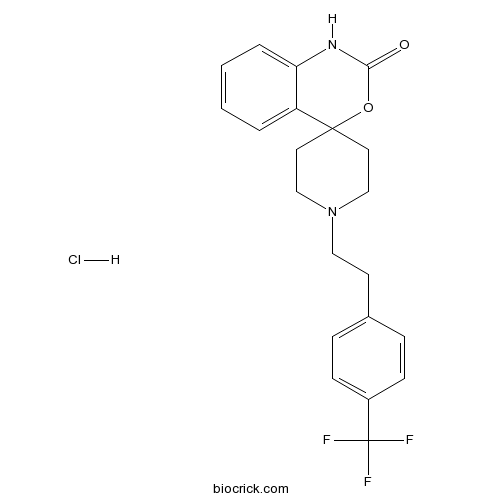
BCC7260
RS 102895 hydrochloride
RS102895 hydrochloride is a potent CCR2 antagonist, with an IC50 of 360 nM, and shows no effect on CCR1.
-
BCC1910
RS 504393
RS 504393 is a selective CCR2 chemokine receptor antagonist (IC50 values are 89 nM and > 100 μM for inhibition of human recombinant CCR2 and CCR1 receptors respectively).