Neurotransmission
Neurotransmission, or synaptic transmission, involves the passage of signals by electrical or chemical means from one neuron to another. It allows communication between nerve cells for the propagation of electrical impulses to and from the central nervous system leading to the co-ordination of secretion, muscle contraction and organ function.
Neurotransmission Products Targets
- GABAB Receptor (28)
- Others (20)
- Nucleoside Transporter (5)
- Glycine Transporter (6)
- GABA (10)
- Cannabinoid Transporter (10)
- Acetylcholine Transporter (1)
- D4 Receptor (12)
- 5-HT7 Receptor (11)
- 5-HT6 Receptor (14)
- 5-ht5 Receptor (2)
- 5-HT4 Receptor (17)
- NOP Receptor (21)
- Mu-Opioid Receptors (15)
- Kappa Opioid Receptors (14)
- Glutamate (Metabotropic) Group III Receptor (26)
- Glutamate (Metabotropic) Group II Receptor (33)
- Glutamate (Metabotropic) Group I Receptor (54)
- AMPA Receptor (45)
- GABAA-ρ Receptor (8)
- GABAA Receptor (66)
- GPR55 (8)
- CB2 Receptor (6)
- CB1 Receptor (17)
- Nicotinic (α7) Receptor (25)
- Nicotinic (α4β2) Receptor (14)
- Purinergic (P2Y) Receptors (31)
- Purinergic (P2X) Receptors (32)
- Glycine Receptors (6)
- D3 Receptor (12)
- Vesicular Monoamine Transporter (4)
- NMDA Receptor (87)
- Kainate Receptor (22)
- D2 Receptor (14)
- D1 and D5 Receptor (16)
- Glutamate Transporter (18)
- Dopamine Transporter (20)
- Histamine H4 Receptor (12)
- Histamine H3 Receptor (22)
- Histamine H2 Receptor (10)
- Histamine H1 Receptor (17)
- Adrenergic Transporter (23)
- 5-HT Transporter (30)
- NO donors and precursors (9)
- nNOS (5)
- iNOS (11)
- eNOS (1)
- M5 Receptor (2)
- M4 Receptor (3)
- M3 Receptor (4)
- M2 Receptor (5)
- M1 Receptor (8)
- Delta opioid receptor (16)
- Adrenergic α2 Receptor (33)
- Adrenergic α1 Receptor (22)
- Adrenergic β3 Receptor (12)
- Adrenergic β2 Receptor (6)
- Adrenergic β1 Receptor (7)
Products for Neurotransmission - Page 54
- Cat.No. Product Name Information/Activity
-
BCC5982
Ketamine hydrochloride
1867-66-9

-
BCC7930
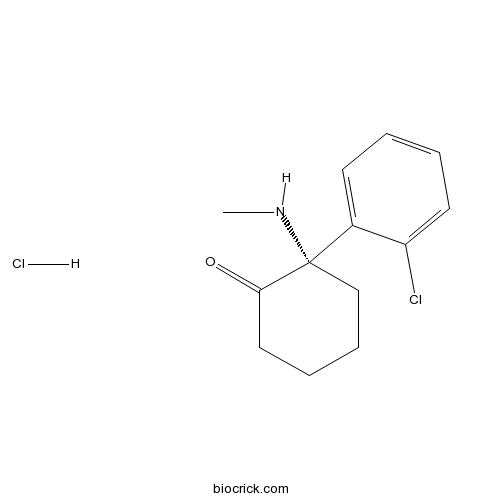
(S)-(+)-Ketamine hydrochloride
33643-47-9
-
BCC6774
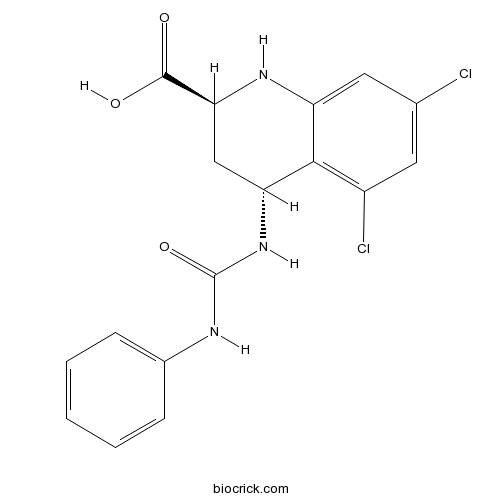
L-689,560
L-689560 is a potent N-methyl-D-aspartate (NMDA) receptor antagonist at the GluN1 glycine binding site. L-689560 is widely used as a radiolabeled ligand in binding studies and used for study the roles of NMDA receptors in normal neurological processes as well as in diseases.
-
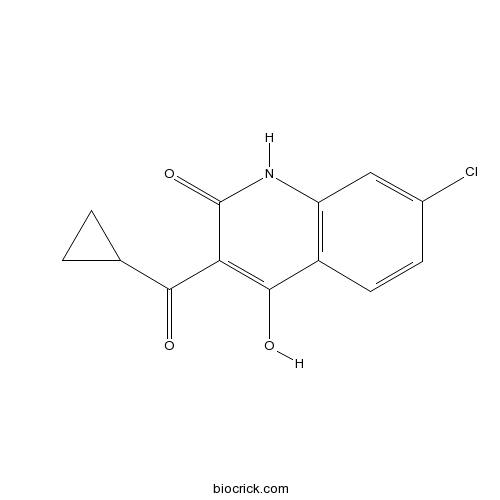
BCC6755
L-701,252
151057-13-5
-
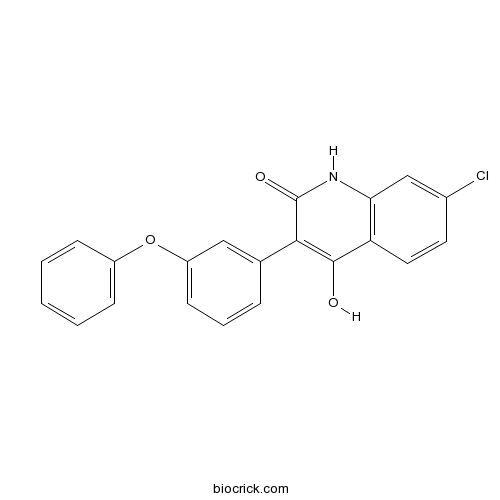
BCC6842
L-701,324
L-701324 is an orally active and long acting anticonvulsant with high affinity and selectivity for the glycine site on the NMDA receptor.
-
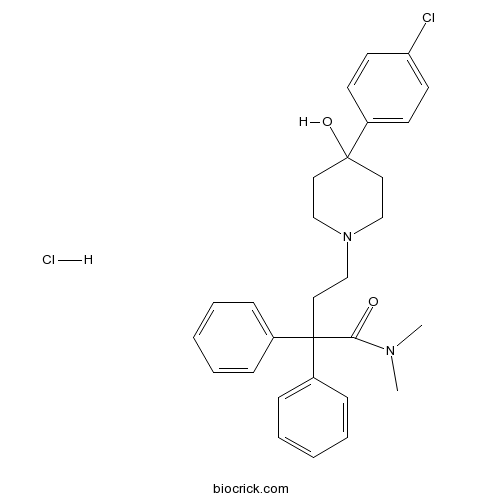
BCC4380
Loperamide HCl
Loperamide (hydrochloride) (R-18553 (hydrochloride)) is an opioid receptor agonist. Loperamide hydrochloride is a selective and competitive
-
BCC5771
LY 233053
125546-04-5

-
BCC6892
LY 235959
137433-06-8

-
BCC4593
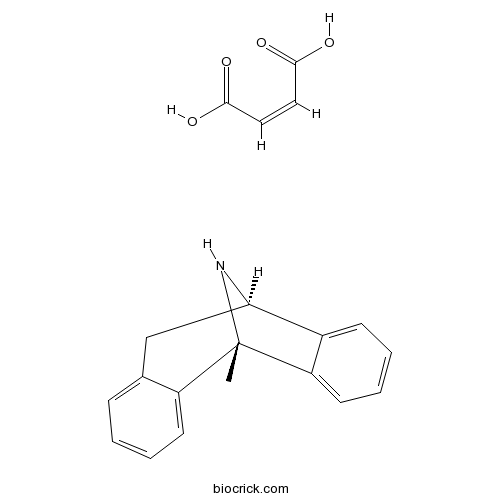
(-)-MK 801
(-)-Dizocilpine maleate ((-)-MK-801 maleate) is a less active (-)-enantiomer of Dizocilpine. (-)-Dizocilpine maleate is a selective and non-competitive N-methyl-D-aspartate (NMDA) receptor antagonist with a Ki of 211.7 nM. (-)-Dizocilpine maleate has antidepressant effects.

-
BCC4014
(+)-MK 801 Maleate
Dizocilpine maleate (MK-801 maleate) is a potent, selective and non-competitive NMDA receptor antagonist with Kd of 37.2 nM in rat brain membranes.