
LiriodendritolCAS# 22006-88-8 |
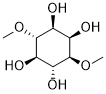
| Cas No. | 22006-88-8 | SDF | File under preparation. |
| PubChem ID | N/A | Appearance | Powder |
| Formula | C8H16O6 | M.Wt | 208.2 |
| Type of Compound | N/A | Storage | Desiccate at -20°C |
| Solubility | Soluble in Chloroform,Dichloromethane,Ethyl Acetate,DMSO,Acetone,etc. | ||
| General tips | For obtaining a higher solubility , please warm the tube at 37 ℃ and shake it in the ultrasonic bath for a while.Stock solution can be stored below -20℃ for several months. We recommend that you prepare and use the solution on the same day. However, if the test schedule requires, the stock solutions can be prepared in advance, and the stock solution must be sealed and stored below -20℃. In general, the stock solution can be kept for several months. Before use, we recommend that you leave the vial at room temperature for at least an hour before opening it. |
||
| About Packaging | 1. The packaging of the product may be reversed during transportation, cause the high purity compounds to adhere to the neck or cap of the vial.Take the vail out of its packaging and shake gently until the compounds fall to the bottom of the vial. 2. For liquid products, please centrifuge at 500xg to gather the liquid to the bottom of the vial. 3. Try to avoid loss or contamination during the experiment. |
||
| Shipping Condition | Packaging according to customer requirements(5mg, 10mg, 20mg and more). Ship via FedEx, DHL, UPS, EMS or other couriers with RT, or blue ice upon request. | ||
Quality Control & MSDS
Package In Stock

Number of papers citing our products


Liriodendritol Dilution Calculator
Liriodendritol Molarity Calculator
| 1 mg | 5 mg | 10 mg | 20 mg | 25 mg | |
| 1 mM | 4.8031 mL | 24.0154 mL | 48.0307 mL | 96.0615 mL | 120.0768 mL |
| 5 mM | 0.9606 mL | 4.8031 mL | 9.6061 mL | 19.2123 mL | 24.0154 mL |
| 10 mM | 0.4803 mL | 2.4015 mL | 4.8031 mL | 9.6061 mL | 12.0077 mL |
| 50 mM | 0.0961 mL | 0.4803 mL | 0.9606 mL | 1.9212 mL | 2.4015 mL |
| 100 mM | 0.048 mL | 0.2402 mL | 0.4803 mL | 0.9606 mL | 1.2008 mL |
| * Note: If you are in the process of experiment, it's necessary to make the dilution ratios of the samples. The dilution data above is only for reference. Normally, it's can get a better solubility within lower of Concentrations. | |||||
- Isoarctigenin
Catalog No.:BCX2577
CAS No.:119030-66-9
- Brevianamide X
Catalog No.:BCX2576
CAS No.:2315237-30-8
- Anhydromevalonolactone
Catalog No.:BCX2575
CAS No.:2381-87-5
- 2-O-Methylbrevianamide M
Catalog No.:BCX2574
CAS No.:3025731-58-9
- Epipodophyllotoxin glucoside
Catalog No.:BCX2573
CAS No.:22352-79-0
- Funingenoside O
Catalog No.:BCX2572
CAS No.:744229-50-3
- 7-Methoxy-9-oxo-de-O-methyllasiodiplodin
Catalog No.:BCX2571
CAS No.:196874-05-2
- 7-Methoxy-9-oxo-de-O-methyllasiodiplodin
Catalog No.:BCX2570
CAS No.:196874-06-3
- Brevianamide K
Catalog No.:BCX2569
CAS No.:1174538-66-9
- (±)-Yangambin
Catalog No.:BCX2568
CAS No.:14759-14-9
- (-)-Sclerone
Catalog No.:BCX2567
CAS No.:1932527-53-1
- 5,8-Dihydroxy-4-methoxy-α-tetralone
Catalog No.:BCX2566
CAS No.:868834-51-9
- Ethyl α-D-fructofuranoside
Catalog No.:BCX2579
CAS No.:81024-99-9
- (E)-1-(3,4-Dimethoxyphenyl)buta-1,3-diene
Catalog No.:BCX2580
CAS No.:75560-74-6
- N-Formylanonaine
Catalog No.:BCX2581
CAS No.:83459-45-4
- (E)-4-(3,4-Dimethoxyphenyl)but-3-en-1-yl acetate
Catalog No.:BCX2582
CAS No.:69768-98-5
- 5-(3-Hydroxyphenyl)dihydrofuran-2(3H)-one
Catalog No.:BCX2583
CAS No.:1270584-13-8
- trans-Cassumunene
Catalog No.:BCX2584
CAS No.:76318-79-1
- Cassumunene
Catalog No.:BCX2585
CAS No.:73573-81-6
- Methyl 4-acetamidobutanoate
Catalog No.:BCX2586
CAS No.:32039-11-5
- Juglanin B
Catalog No.:BCX2587
CAS No.:958365-42-9
- Gymnetinoside B
Catalog No.:BCX2588
CAS No.:1588477-86-4
- 3-Methoxy-N-acetylnornantenine
Catalog No.:BCX2589
CAS No.:53452-28-1
- 4'-Demethylpodophyllotoxin 7-O-glucoside
Catalog No.:BCX2590
CAS No.:40505-30-4
Antioxidant, Antimicrobial, and Anti-Inflammatory Effects of Liriodendron chinense Leaves.[Pubmed:38947843]
ACS Omega. 2024 Jun 10;9(25):27002-27016.
Liriodendron chinense has been widely utilized in traditional Chinese medicine to treat dispelling wind and dampness and used for alleviating cough and diminishing inflammation. However, the antioxidant, antimicrobial, and anti-inflammatory effects of L. chinense leaves and the key active constituents remained elusive. So, we conducted some experiments to support the application of L. chinense in traditional Chinese medicine by investigating the antioxidant, antibacterial, and anti-inflammatory abilities, and to identify the potential key constituents responsible for the activities. The ethanol extract of L. chinense leaves (LCLE) was isolated and extracted, and assays measuring ferric reducing antioxidant power, total reducing power, DPPH(*), ABTS(*+), and (*)OH were used to assess its in vitro antioxidant capacities. Antimicrobial activities of LCLE were investigated by minimal inhibitory levels, minimum antibacterial concentrations, disc diffusion test, and scanning electron microscope examination. Further, in vivo experiments including macro indicators examination, histopathological examination, and biochemical parameters measurement were conducted to investigate the effects of LCLE on lipopolysaccharide (LPS)-induced acute lung injury (ALI) in mice. LCLE was further isolated and purified through column chromatography, and LPS-induced RAW264.7 cells were constructed to assess the diminished inflammation potential of the identified chemical composites. ABTS(*+) and (*)OH radicals were extensively neutralized by the LCLE treatment. LCLE administration also presented broad-spectrum antimicrobial properties, especially against Staphylococcus epidermidis by disrupting cell walls. LPS-induced ALI in mice was significantly ameliorated by LCLE intervention, as evidenced by the histological changes in the lung and liver tissues as well as the reductions of nitric oxide (NO), TNF-alpha, and IL-6 production. Furthermore, three novel compounds including fragransin B2, Liriodendritol, and rhamnocitrin were isolated, purified, and identified from LCLE. These three compounds exhibited differential regulation on NO accumulation and IL-10, IL-1beta, IL-6, TNF-alpha, COX-2, and iNOS mRNA expression in RAW264.7 cells induced by LPS. Fragransin B2 was more effective in inhibiting TNF-alpha mRNA expression, while rhamnocitrin was more powerful in inhibiting IL-6 mRNA expression. LCLE had significant antioxidant, antimicrobial, and anti-inflammatory effects. Fragransin B2, Liriodendritol, and rhamnocitrin were probably key active constituents of LCLE, which might act synergistically to treat inflammatory-related disorders. This study provided a valuable view of the healing potential of L. chinense leaves in curing inflammatory diseases.
Allelochemicals in foliage of unfavored tree hosts of the gypsy moth,Lymantria dispar L. : 1. Alkaloids and other components ofLiriodendron tulipifera L. (Magnoliaceae),Acer rubrum L. (Aceraceae), andCornus florida L. (Cornaceae).[Pubmed:24263840]
J Chem Ecol. 1990 May;16(5):1719-30.
Early theories on plant chemical defense against herbivory emphasized that apparent and unapparent plants were primarily defended by different types of compounds. More and more evidence suggests that both quantitative and qualitative defenses are found in apparent plants and that they can play a defensive role against herbivores. A survey of the literature on the gypsy moth suggests not only that there is a large variety of qualitative compounds, as well as the expected quantitative ones, but that unfavored hosts of the gypsy moth are associated with the presence of alkaloids. Foliage of three tree species,Liriodendron tulipifera L.,Acer rubrum L., andCornus florida L., was examined to confirm the presence of alkaloids and other major secondary metabolites. The known sesquiterpene lactone, lipiferolide, and the sugar derivative, Liriodendritol, were components ofL. tulipifera leaves, along with a bisphenylpropanoid previously found only in nutmeg. Alkaloid content [i.e., (-)-N-methylcrotsparine content] was low and leaves tested positive for HCN. Leaves ofA. rubrum L. were examined for the presence of gramme, but none could be detected. No alkaloids were detected inCornus florida.

Calcutta University

University of Minnesota

University of Maryland School of Medicine

University of Illinois at Chicago

The Ohio State University

University of Zurich

Harvard University

Colorado State University

Auburn University

Yale University

Worcester Polytechnic Institute

Washington State University

Stanford University

University of Leipzig

Universidade da Beira Interior

The Institute of Cancer Research

Heidelberg University

University of Amsterdam

University of Auckland

TsingHua University

The University of Michigan

Miami University

DRURY University

Jilin University

Fudan University

Wuhan University

Sun Yat-sen University

Universite de Paris

Deemed University

Auckland University

The University of Tokyo

Korea University



