
Angiogenesis
Angiogenesis (also known as neovascularization) is the generation of new blood vessels from pre-existing vasculature. It is a normal process in growth and development and is required for the formation of arteries, veins, and capillaries in an embryo.Angiogenesis has become an important target for cancer research with the recognition that it is one of the critical events necessary for cancer growth and metastasis. As a tumor develops, its size is limited by the diffusion of metabolites from existing blood vessels. Tumor angiogenesis, the growth of the new blood vessels, is essential for cancerous tumors to keep growing and spreading.As a tumor grows, cells at the center become starved of oxygen, inducing the expression of a transcription factor - hypoxia inducible factor-1 (HIF-1) - which upregulates the expression of a range of angiogenic factors. Growth factor signaling also initiates HIF-1 activity, pre-empting the need for growing cells to maintain oxygen homeostasis. As a result, HIF-1 itself has been isolated as a therapeutic target for cancer. More than a dozen different proteins, as well as several smaller molecules, have been identified as angiogenic meaning that they are released by tumors as signals for angiogenesis. Inhibitors of angiogenesis (antiangiogenics) are currently the focus of intense cancer research.As well as its detrimental effects in tumor growth and inflammatory disorders, the generation of new blood vessels is a vital process in the context of stroke, cardiovascular disease and diabetes. Many of the pathologies associated with diabetes, such diabetic neuropathy, reduced wound healing and diabetic ulcers, are caused by a reduced blood supply to the downstream tissue. Therefore, promoting angiogenesis in diabetic patients may represent an important strategy in reducing morbidity. Recent work using adenovirus-mediated transfer of VEGF165 showed that promoting angiogenesis significantly accelerated wound healing.
Angiogenesis Products Targets
Products for Angiogenesis - Page 9
- Cat.No. Product Name Information/Activity
-
BCC6196
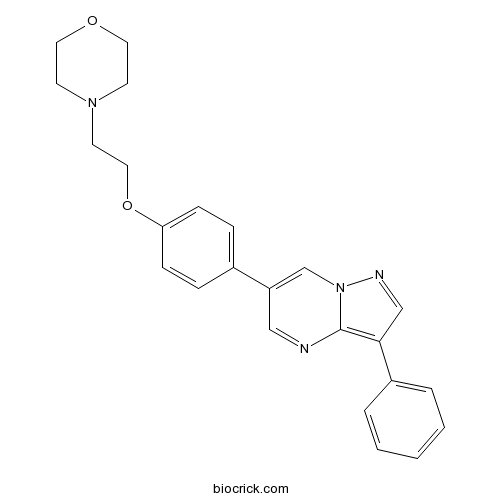
DMH4
515880-75-8
-
BCC6078
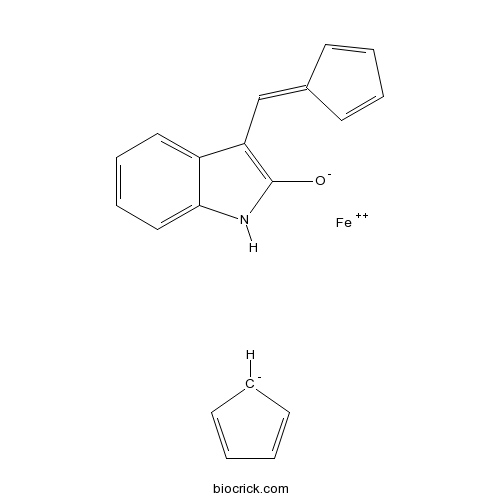
(E)-FeCP-oxindole
884338-18-5

-
BCC6079
(Z)-FeCP-oxindole
1137967-28-2
-
BCC1116
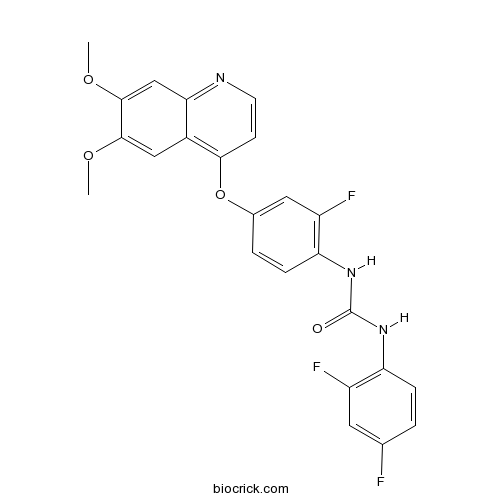
Ki8751
Ki8751 is a potent VEGFR2 inhibitor with an IC50 of 0.9 nM.
-
BCC7073
SU 4312
5812-07-7

-
BCC1974
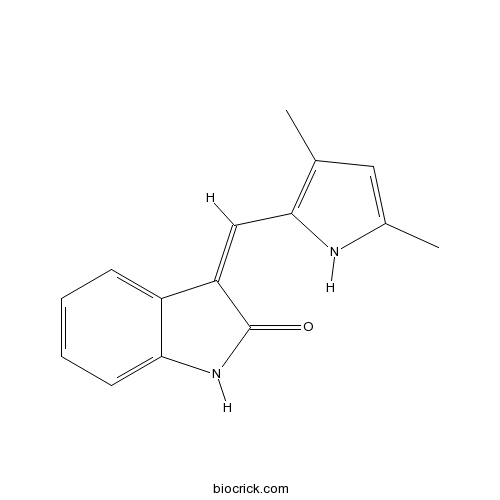
SU5416
Semaxinib (SU5416) is a potent and selective inhibitor of VEGFR (Flk-1/KDR) with an IC50 of 1.23 μM.
-
BCC1264
Cabozantinib (XL184, BMS-907351)
Cabozantinib is a potent multiple receptor tyrosine kinases (RTKs) inhibitor that inhibits VEGFR2, c-Met, Kit, Axl and Flt3 with IC50s of 0.035, 1.3, 4.6, 7 and 11.3 nM, respectively.

-
BCC5098
ZM 323881 HCl
ZM323881 hydrochloride is a potent and selective VEGFR2 inhibitor with an IC50 of less than 2 nM.