Angiogenesis
Angiogenesis (also known as neovascularization) is the generation of new blood vessels from pre-existing vasculature. It is a normal process in growth and development and is required for the formation of arteries, veins, and capillaries in an embryo.Angiogenesis has become an important target for cancer research with the recognition that it is one of the critical events necessary for cancer growth and metastasis. As a tumor develops, its size is limited by the diffusion of metabolites from existing blood vessels. Tumor angiogenesis, the growth of the new blood vessels, is essential for cancerous tumors to keep growing and spreading.As a tumor grows, cells at the center become starved of oxygen, inducing the expression of a transcription factor - hypoxia inducible factor-1 (HIF-1) - which upregulates the expression of a range of angiogenic factors. Growth factor signaling also initiates HIF-1 activity, pre-empting the need for growing cells to maintain oxygen homeostasis. As a result, HIF-1 itself has been isolated as a therapeutic target for cancer. More than a dozen different proteins, as well as several smaller molecules, have been identified as angiogenic meaning that they are released by tumors as signals for angiogenesis. Inhibitors of angiogenesis (antiangiogenics) are currently the focus of intense cancer research.As well as its detrimental effects in tumor growth and inflammatory disorders, the generation of new blood vessels is a vital process in the context of stroke, cardiovascular disease and diabetes. Many of the pathologies associated with diabetes, such diabetic neuropathy, reduced wound healing and diabetic ulcers, are caused by a reduced blood supply to the downstream tissue. Therefore, promoting angiogenesis in diabetic patients may represent an important strategy in reducing morbidity. Recent work using adenovirus-mediated transfer of VEGF165 showed that promoting angiogenesis significantly accelerated wound healing.
Angiogenesis Products Targets
Products for Angiogenesis - Page 6
- Cat.No. Product Name Information/Activity
-
BCC2508
TSU-68 (SU6668,Orantinib)
Orantinib (SU6668; TSU-68) is a multi-targeted receptor tyrosine kinase inhibitor with Kis of 2.1 μM, 8 nM and 1.2 μM for Flt-1, PDGFRβ and FGFR1, respectively.

-
BCC2433
DMOG
DMOG (Dimethyloxallyl Glycine) is a cell permeable and competitive inhibitor of HIF-PH, which results in HIF-1α stabilisation and accmulation in vitro and in vivo. DMOG is an α-ketoglutarate analogue and inhibits α-KG-dependent hydroxylases. DMOG acts as a pro-angiogenic agent and plays a protective role in experimental model of colitis and diarrhoea via HIF-1related signal. DMOG induces cell autophagy.

-
BCC2229
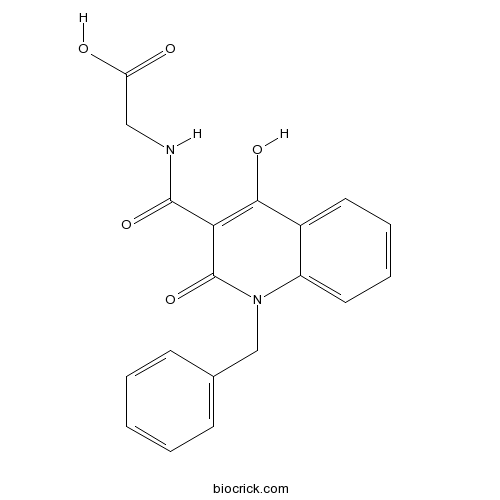
IOX2(Glycine)
IOX2 is a specific prolyl hydroxylase-2 (PHD2) inhibitor with IC50 of 22 nM.
-
BCC2434
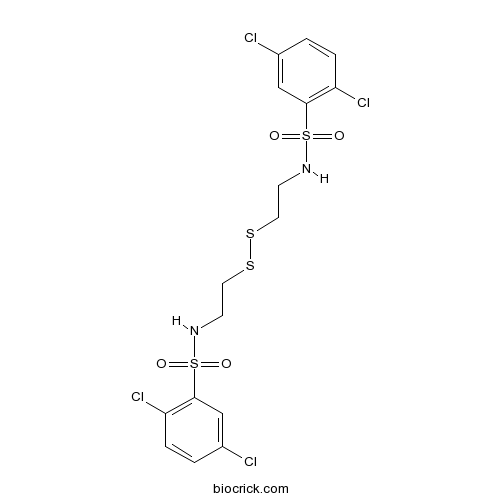
KC7F2
KC7F2 is a potent hypoxia inducible factor-1 (HIF-1) pathway inhibitor with an IC50 of 20 μM in LN229-HRE-AP cells, and with potential as a cancer therapy agent.
-
BCC2435
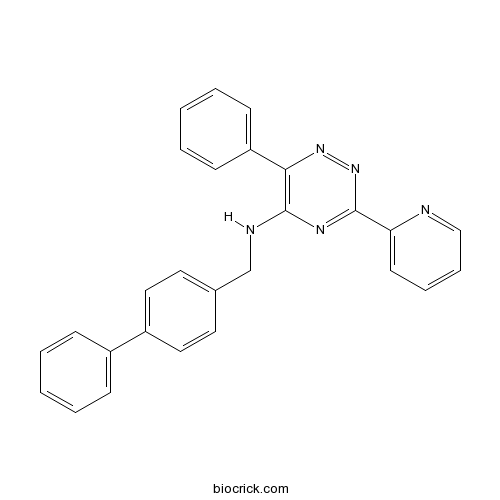
ML 228
ML228 (CID-46742353) is a potent the Hypoxia Inducible Factor (HIF) pathway activator with EC50 of 1 μM. ML228 potently activates HIF in vitro as well as its downstream target VEGF.
-
BCC2370
ARP 100
ARP-100 is a potent and selective matrix metalloproteinase MMP-2 inhibitor (IC50=12 nM). ARP-100 interacts with S1' pocket of MMP-2 and shows anti-invasive properties in an in vitro model of invasion on matrigel. ARP-100 shows the less inhibitory activity towards MMP-1 (>50 μM), MMP-3 (4.5 μM), MMP-7 (>50 μM), and MMP-9 (0.2 μM).

-
BCC2371
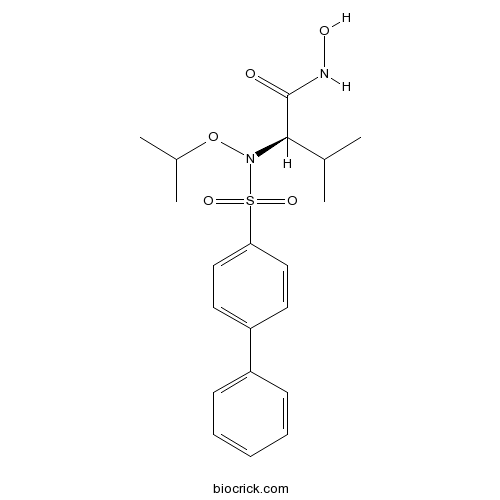
ARP 101
Inhibitor of MMP-2
-
BCC1223
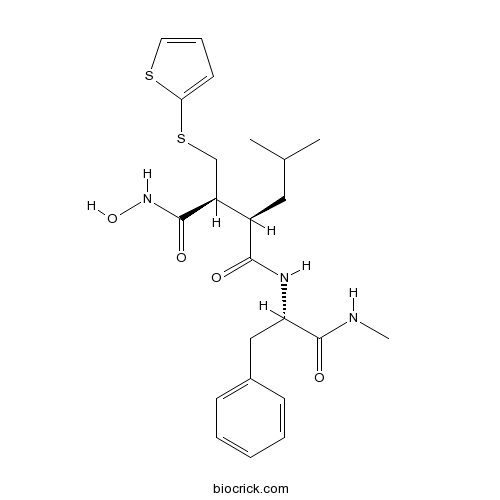
Batimastat (BB-94)
Batimastat is a potent broad spectrum MMP inhibitor with IC50 of 3, 4, 4, 6, and 20 nM for MMP-1, MMP-2, MMP-9, MMP-7 and MMP-3, respectively.
-
BCC2373
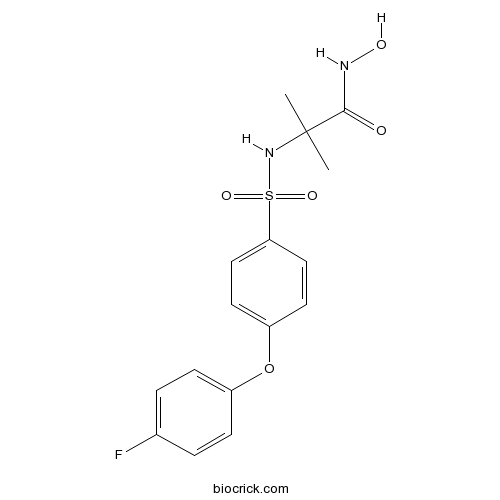
CP 471474
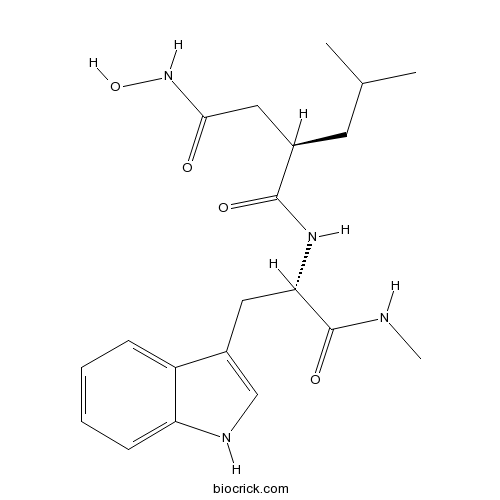
210755-45-6
-
BCC2119
GM 6001
Ilomastat (GM6001) is a potent and broad spectrum matrix metalloprotease (MMP) inhibitor, inhibits MMPs (IC50s, 1.5 nM for MMP-1; 1.1 nM for MMP-2; 1.9 nM for MMP-3; 0.5 nM for MMP-9), with a Ki of 0.4 nM for human skin fibroblast collagenase (MMP-1).