Angiogenesis
Angiogenesis (also known as neovascularization) is the generation of new blood vessels from pre-existing vasculature. It is a normal process in growth and development and is required for the formation of arteries, veins, and capillaries in an embryo.Angiogenesis has become an important target for cancer research with the recognition that it is one of the critical events necessary for cancer growth and metastasis. As a tumor develops, its size is limited by the diffusion of metabolites from existing blood vessels. Tumor angiogenesis, the growth of the new blood vessels, is essential for cancerous tumors to keep growing and spreading.As a tumor grows, cells at the center become starved of oxygen, inducing the expression of a transcription factor - hypoxia inducible factor-1 (HIF-1) - which upregulates the expression of a range of angiogenic factors. Growth factor signaling also initiates HIF-1 activity, pre-empting the need for growing cells to maintain oxygen homeostasis. As a result, HIF-1 itself has been isolated as a therapeutic target for cancer. More than a dozen different proteins, as well as several smaller molecules, have been identified as angiogenic meaning that they are released by tumors as signals for angiogenesis. Inhibitors of angiogenesis (antiangiogenics) are currently the focus of intense cancer research.As well as its detrimental effects in tumor growth and inflammatory disorders, the generation of new blood vessels is a vital process in the context of stroke, cardiovascular disease and diabetes. Many of the pathologies associated with diabetes, such diabetic neuropathy, reduced wound healing and diabetic ulcers, are caused by a reduced blood supply to the downstream tissue. Therefore, promoting angiogenesis in diabetic patients may represent an important strategy in reducing morbidity. Recent work using adenovirus-mediated transfer of VEGF165 showed that promoting angiogenesis significantly accelerated wound healing.
Angiogenesis Products Targets
Products for Angiogenesis - Page 7
- Cat.No. Product Name Information/Activity
-
BCC2118
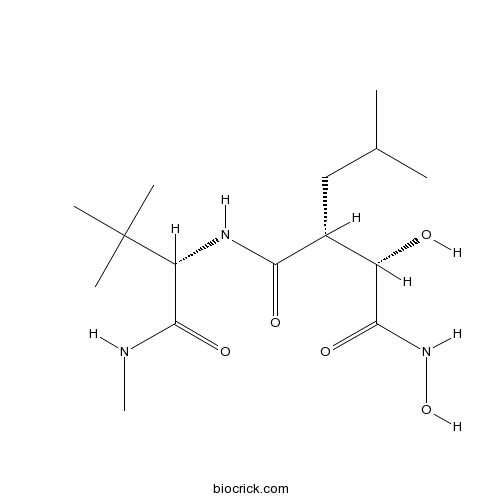
Marimastat
Marimastat (BB2516) is a broad spectrum and orally bioavailable inhibitor of MMPs, with potent activity against MMP-9 (IC50=3 nM), MMP-1 (IC50=5 nM), MMP-2 (IC50=6 nM), MMP-14 (IC50=9 nM) and MMP-7 (IC50=13 nM), used in the treatment of cancer. Marimastat (BB2516) is an angiogenesis and metastasis inhibitor, which limits the growth and production of blood vessels. As an antimetatstatic agent it prevents malignant cells from breaching the basement membranes.
-
BCC4679
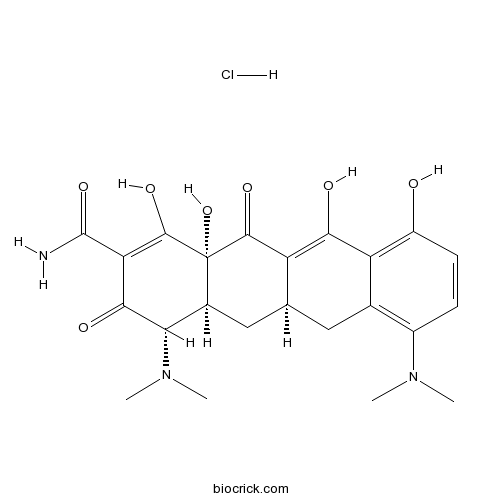
Minocycline HCl
Minocycline hydrochloride is a broad-spectrum tetracycline antibiotic, acting by binding to the bacterial 30S ribosomal subunit and inhibiting protein synthesis.
-
BCC2120
NSC 405020
NSC 405020 is a novel small molecule inhibitor of MT1-MMP that specifically targets PEX domain rather than the catalytic domain of MT1-MMP with IC50 >100 μM and does not inhibit the catalytic activity of MT1-MMP or MMP-2.

-
BCC2375
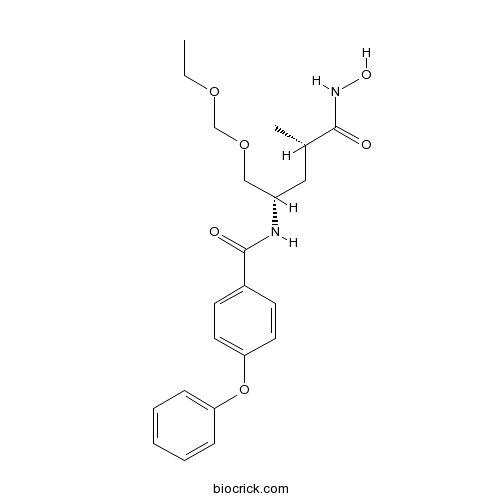
ONO 4817
Broad spectrum MMP inhibitor
-
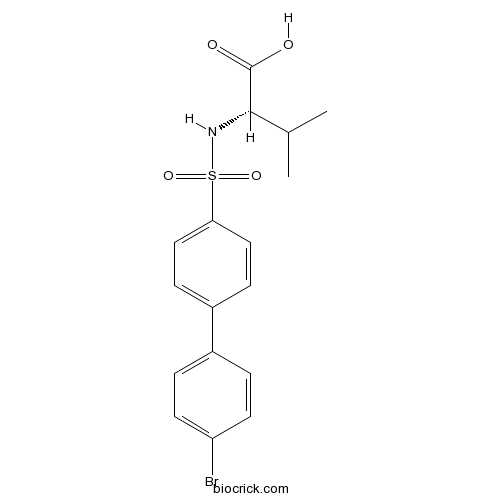
BCC2376
PD 166793
Broad spectrum MMP inhibitor
-
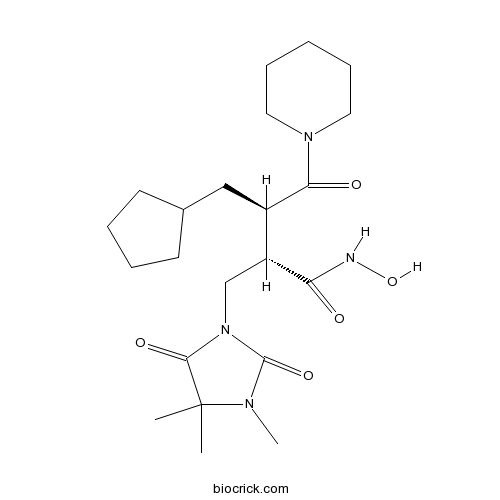
BCC2377
Ro 32-3555
Cipemastat is a potent, competitive inhibitor of human collagenases 1, 2 and 3 with Kis of 3.0, 4.4 and 3.4 nM, respectively.
-
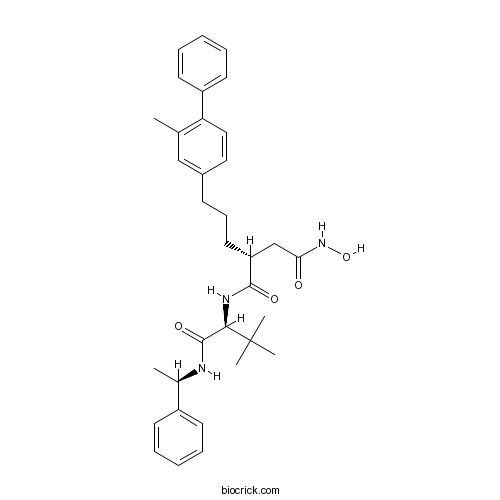
BCC2378
UK 356618
UK 356618 (Compound 4j) is a potent and selective inhibitor of matrix metalloprotease-3 (MMP-3) with an IC50 of 5.9 nM. UK 356618 is less potent against MMP-1, MMP-2, MMP-9, MMP-13 and MMP-14 compared with MMP-3.
-
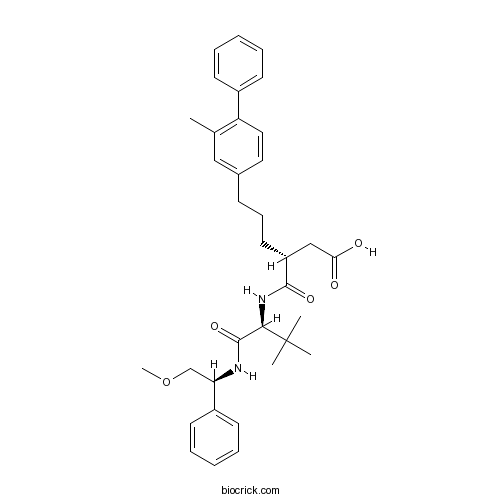
BCC2379
UK 370106
UK-370106 is a potent and highly selective MMP-3 (IC50 of 23 nM) and MMP-12 (IC50 of 42 nM) inhibitor with >1200-fold higher potency than MMP-1, MMP-2, MMP-9, and MMP-14, and about 100-fold than MMP-13 and MMP-8. UK-370106 potently inhibits cleavage of [3H]-fibronectin by MMP-3 (IC50 of 320 nM) and has little effect on keratinocyte migration in vitro.
-
BCC2308
UK 383367
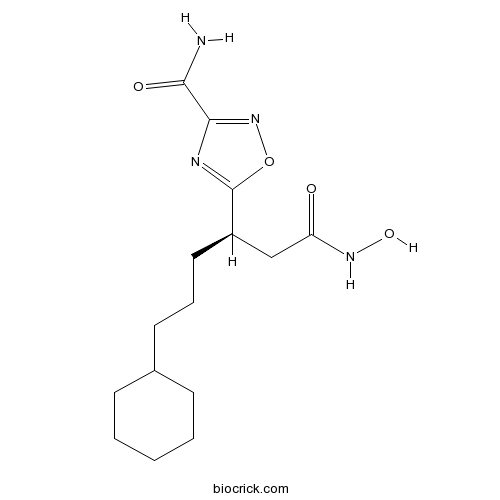
UK-383367 (UK 383367) is a potent and selective inhibitor of BMP-1 (procollagen C-proteinase) with IC50 of 44 nM; Selective for BMP-1 over MMPs 1, 2, 3, 9 and 14 (IC50 values are >10,000 nM for listed MMPs).
-
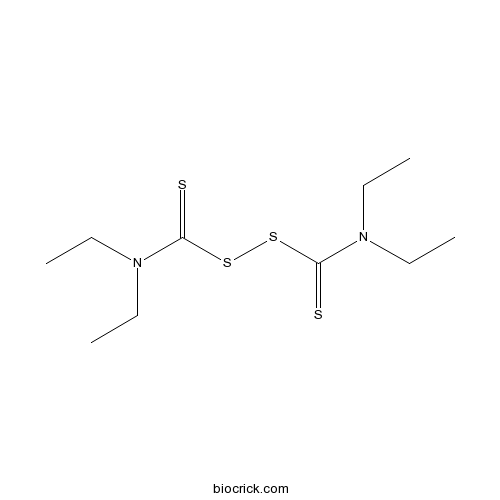
BCC2098
Disulfiram
Disulfiram (Tetraethylthiuram disulfide) is a specific inhibitor of aldehyde-dehydrogenase (ALDH1), used for the treatment of chronic alcoholism by producing an acute sensitivity to alcohol. Disulfiram inhibits gasdermin D (GSDMD) pore formation in liposomes and inflammasome-mediated pyroptosis and IL-1β secretion in human and mouse cells[1-4].