Epigenetics in Cancer
Dysregulation of epigenetic modifications has been shown to result in oncogenesis and cancer progression. Unlike genetic mutations, epigenetic alterations are considered to be reversible, and thus make a promising therapeutic target.
Epigenetics in Cancer Products Targets
- 14.3.3 Protein (1)
- RNA Polymerase (5)
- Protein Tyrosine Phosphatases (5)
- Protein serine and threonine phosphatase (16)
- Protein Arginine Methyltransferase (2)
- MBT Domain (1)
- Lysine Methyltransferase (10)
- Histone Demethylase (9)
- Histone Deacetylase (19)
- Histone Acetyltransferase (4)
- DNA Methyltransferase (9)
- Bromodomain (12)
- Aurora Kinase (9)
- Poly(ADP-Ribose) Polymerase (12)
Products for Epigenetics in Cancer - Page 3
- Cat.No. Product Name Information/Activity
-
BCC2062
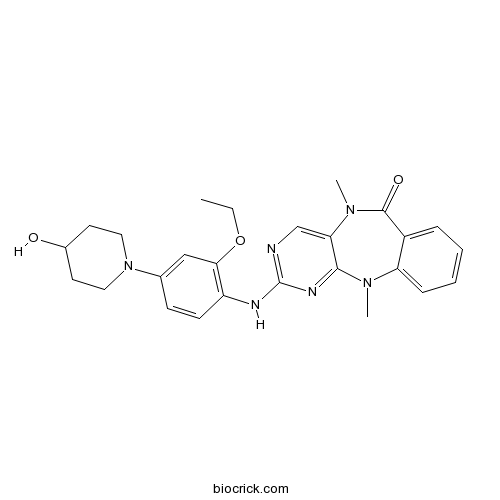
XMD8-92
XMD8-92 is a highly selective ERK5/BMK1 inhibitor with dissociation constant (Kd) value of 80 nM.
-
BCC3603
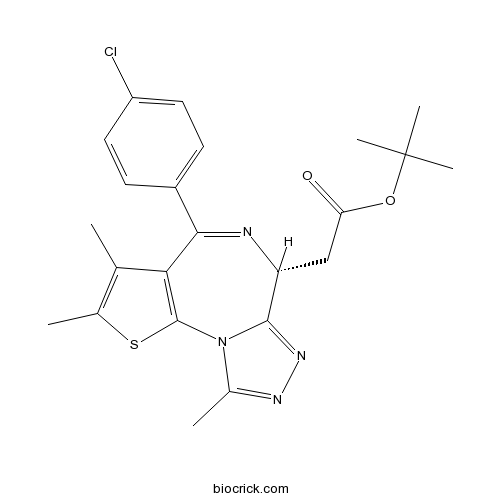
(-)-JQ1
(R)-(-)-JQ1 Enantiomer is the stereoisomer of (+)-JQ1. (+)-JQ1 potently decreases expression of both BRD4 target genes, whereas (R)-(-)-JQ1 Enantiomer has no effect.
-
BCC1130
5-Azacytidine
5-Azacytidine (Azacitidine; 5-AzaC; Ladakamycin) is a nucleoside analogue of cytidine that specifically inhibits DNA methylation. 5-Azacytidine is incorporated into DNA to covalently trap DNA methyltransferases and contributes to reverse epigenetic changes. 5-Azacytidine induces cell autophagy.

-
BCN2169
5-Aza-2'-deoxycytidine
Decitabine (5-Aza-2'-deoxycytidine) is a deoxycytidine analogue antimetabolite and a DNA methyltransferase inhibitor. Decitabine incorporates into DNA in place of cytosine can covalently trap DNA methyltransferase to DNA causing irreversible inhibition of the enzyme. Decitabine induces cell G2/M arrest and cell apoptosis. Decitabine has potent anticancer activity.

-
BCN6326
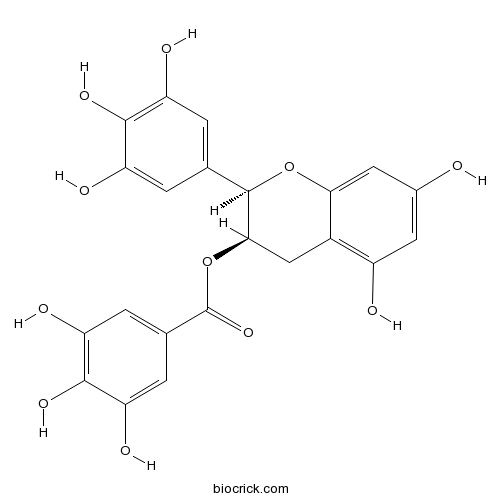
(-)-Epigallocatechin gallate
(-)-Epigallocatechin Gallate is a tea flavonoid with potent antioxidant, antiinflammatory, and anticarcinogenic properties. (-)-Epigallocatechin Gallate is reported to inhibit EGFR signaling and thereby exert anticancer effects. (-)-Epigallocatechin Gallate (EGCG) is a glutamate dehydrogenase 1/2 (GDH1/2, GLUD1/2) inhibitor. Epigallocatechin-3-gallate induces oxidative phosphorylation by activating cytochrome c oxidase.
-
BCN5024
Fisetin
Fisetin is a natural flavonol found in many fruits and vegetables with various benefits, such as antioxidant, anticancer, neuroprotection effects.

-
BCC1133
Lomeguatrib
Lomeguatrib is a O6-methylguanine-DNA methyltransferase (MGMT) inhibitor, with IC50s of 9 nM in cell-free assay and ∼6 nM in MCF-7 cells.

-
BCC1134
RG 108
RG108 (N-Phthalyl-L-tryptophan) is a non-nucleoside DNA methyltransferases (DNMTs) inhibitor (IC50=115 nM) that blocks the DNMTs active site. RG108 (N-Phthalyl-L-tryptophan) causes demethylation and reactivation of tumor suppressor genes, but it does not affect the methylation of centromeric satellite sequences.

-
BCC1136
Zebularine
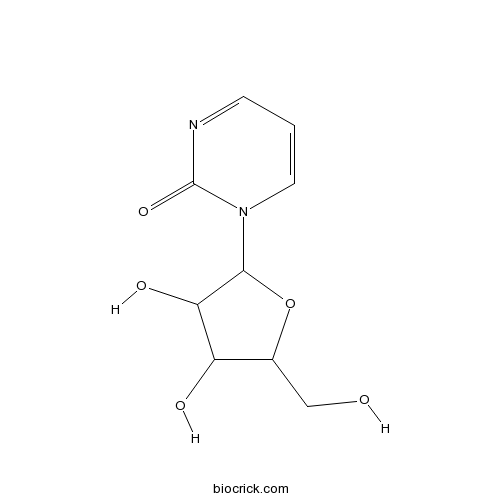
Zebularine (NSC309132; 4-Deoxyuridine) is a DNA methyltransferase inhibitor. Zebularine also inhibits cytidine deaminase with a Ki of 0.95 μM.
-
BCC1312
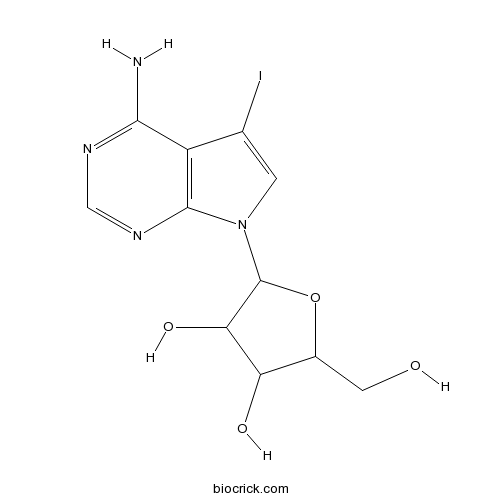
5-Iodotubercidin
5-Iodotubercidin (NSC 113939), an ATP mimetic, is a potent adenosine kinase inhibitor with an IC50 of 26 nM. 5-Iodotubercidin (NSC 113939) initiates glycogen synthesis in isolated hepatocytes by causing inactivation of phosphorylase and activation of glycogen synthase. 5-Iodotubercidin (NSC 113939) also inhibits CK1, insulin receptor tyrosine kinase, phosphorylase kinase, PKA, CK2, PKC and Haspin.