Epigenetics in Cancer
Dysregulation of epigenetic modifications has been shown to result in oncogenesis and cancer progression. Unlike genetic mutations, epigenetic alterations are considered to be reversible, and thus make a promising therapeutic target.
Epigenetics in Cancer Products Targets
- 14.3.3 Protein (1)
- RNA Polymerase (5)
- Protein Tyrosine Phosphatases (5)
- Protein serine and threonine phosphatase (16)
- Protein Arginine Methyltransferase (2)
- MBT Domain (1)
- Lysine Methyltransferase (10)
- Histone Demethylase (9)
- Histone Deacetylase (19)
- Histone Acetyltransferase (4)
- DNA Methyltransferase (9)
- Bromodomain (12)
- Aurora Kinase (9)
- Poly(ADP-Ribose) Polymerase (12)
Products for Epigenetics in Cancer - Page 9
- Cat.No. Product Name Information/Activity
-
BCC3995
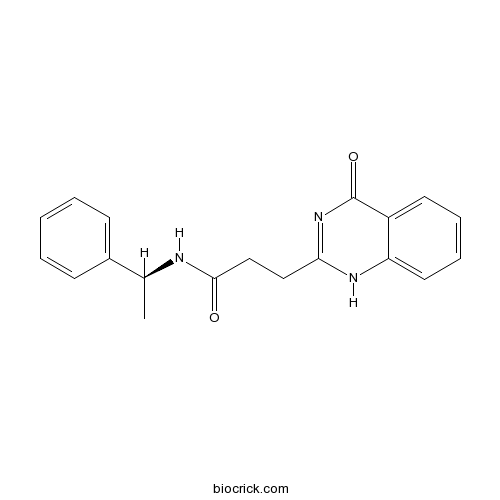
ME0328
ME0328 is a potent and selective ARTD3/PARP3 inhibitor with an IC50 of 0.89±0.28 μM.
-
BCN1025
Nicotinamide
Nicotinamide is a form of vitamin B3 that plays essential roles in cell physiology through facilitating NAD+ redox homeostasis and providing NAD+ as a substrate to a class of enzymes that catalyze non-redox reactions. Nicotinamide is an inhibitor of SIRT1.

-
BCC2454
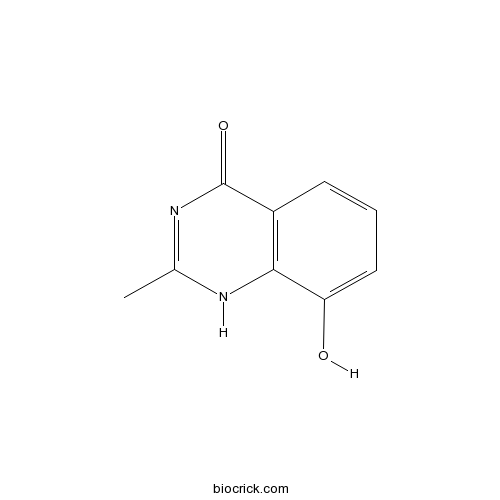
NU 1025
NU1025 is a potent PARP inhibitor with an IC50 of 400 nM and a Ki of 48 nM. NU1025 potentiates the cytotoxicity of ionizing radiation and anticancer drugs. NU1025 has anti-cancer and neuroprotective activity.
-
BCC2210
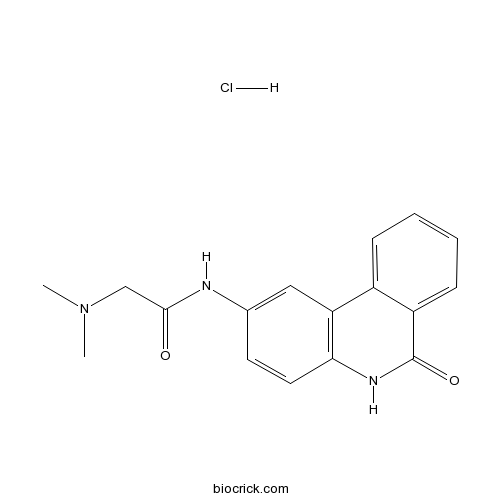
PJ34 hydrochloride
PJ34 hydrochloride is an inhibitor of PARP1/2 with IC50 of 110 nM and 86 nM, respectively.
-
BCC2213
UPF 1069
UPF 1069 is a PARP inhibitor, with IC50s of 8 and 0.3 μM for PARP-1 and PARP-2, respectively.
-
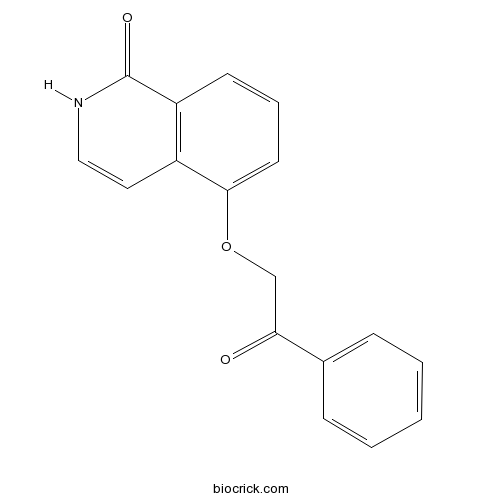
BCC8013
C 21
Selective PRMT1 inhibitor
-
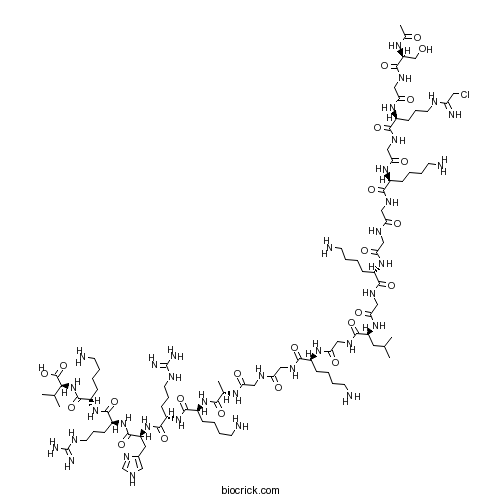
BCC8008
TC-E 5003
Selective PRMT1 inhibitor

-
BCC2459
DL-AP3
Phosphoserine phosphatase inhibitor

-
BCC2456
Calcineurin Autoinhibitory Peptide
Selective calcineurin inhibitor

-
BCC2457
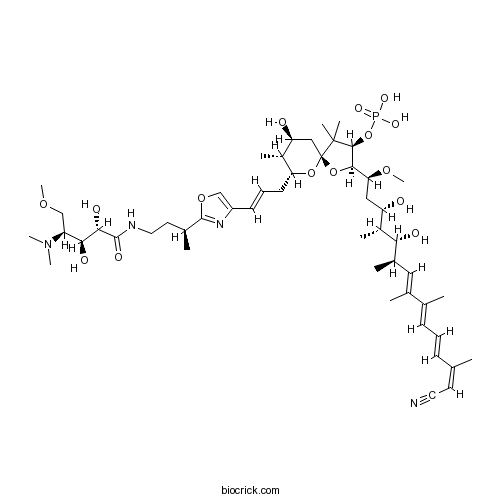
Calyculin A
Calyculin A is a potent and cell-permeable protein phosphatase 1 (PP1) and protein phosphatase 2A (PP2A) inhibitor with IC50s of 2 nM and 0.5-1 nM.