Cardiovascular System Research
The cardiovascular, or circulatory, system is a closed elastic circuit consisting of the heart, blood vessels (arteries, capillaries and veins) and the blood. The primary function is to pump oxygenated blood to the tissues throughout the body and reabsorb waste carbon dioxide for its removal. This function is performed by the use of pulmonary and systemic circulation.
Cardiovascular System Research Products Areas
Products for Cardiovascular System Research - Page 67
- Cat.No. Product Name Information/Activity
-
BCC4677
Mexiletine HCl
Mexiletine hydrochloride (KOE-1173 hydrochloride), a Class IB antianhythmic, is a non-selective voltage-gated sodium channel blocker.

-
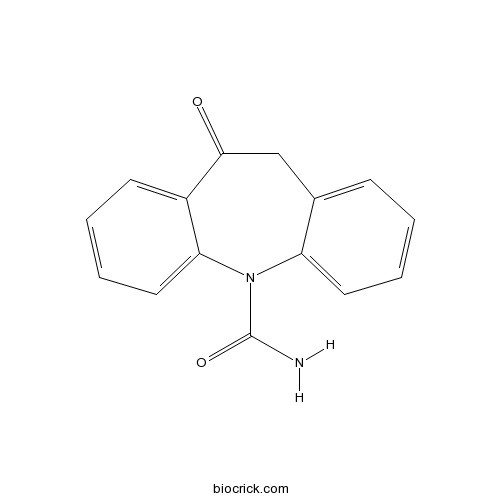
BCC5077
Oxcarbazepine
Oxcarbazepine (GP 47680) inhibits the binding of [3H]BTX to sodium channels with IC50 of 160 μM and also inhibits the influx of 22Na+ into rat brain synaptosomes with IC50 about 100 μM.
-
BCC6328
Phrixotoxin 3
880886-00-0

-
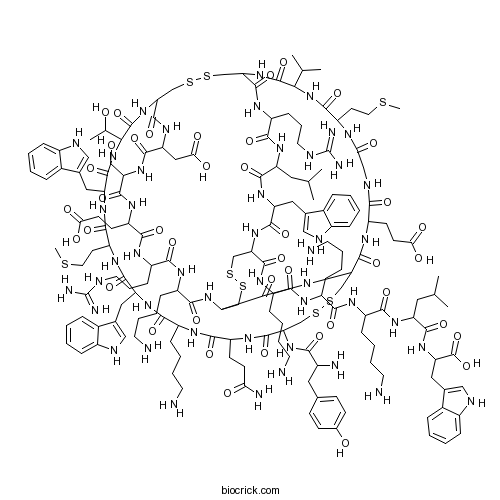
BCC6103
ProTx II
ProTx II is a selective blocker of Nav1.7 sodium channels with an IC50 of 0.3 nM, and is at least 100-fold selective for Nav1.7 over other sodium channel subtypes. ProTx-II inhibits sodium channels by decreasing channel conductance and shifting activation to more positive potentials and blocks action potential propagation in nociceptors.
-
BCC6906
QX 222
5369-00-6

-
BCC6889
QX 314 bromide
QX-314 bromide is a membrane-impermeable permanently charged sodium channel blocker.

-
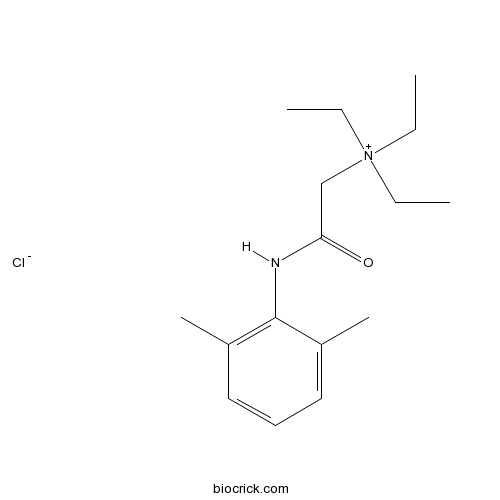
BCC7326
QX 314 chloride
QX-314 chloride is a membrane-impermeable permanently charged sodium channel blocker.
-
BCC7844
Ralfinamide mesylate
Ralfinamide mesylate (FCE-26742A mesylate) is an orally available Na+ channel blocker derived from α-aminoamide, with function of suppressing pain.

-
BCC7847
Sipatrigine
Sipatrigine, a neuroprotective agent, is a glutamate release inhibitor, voltage-dependent sodium channel and calcium channel inhibitor, penetrating the central nervous system. Has potential to treat focal cerebral ischemia and stroke.

-
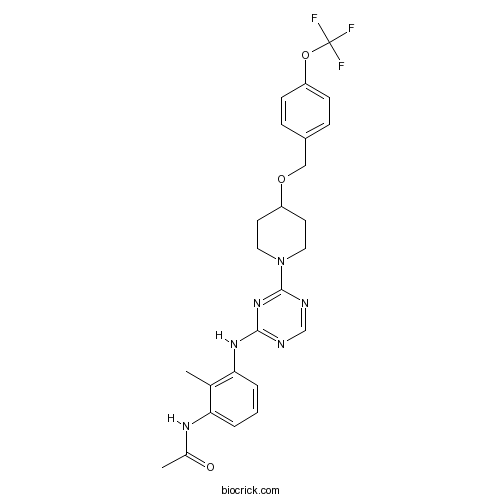
BCC6179
TC-N 1752
1211866-85-1