Neurotransmission
Neurotransmission, or synaptic transmission, involves the passage of signals by electrical or chemical means from one neuron to another. It allows communication between nerve cells for the propagation of electrical impulses to and from the central nervous system leading to the co-ordination of secretion, muscle contraction and organ function.
Neurotransmission Products Targets
- GABAB Receptor (28)
- Others (20)
- Nucleoside Transporter (5)
- Glycine Transporter (6)
- GABA (10)
- Cannabinoid Transporter (10)
- Acetylcholine Transporter (1)
- D4 Receptor (12)
- 5-HT7 Receptor (11)
- 5-HT6 Receptor (14)
- 5-ht5 Receptor (2)
- 5-HT4 Receptor (17)
- NOP Receptor (21)
- Mu-Opioid Receptors (15)
- Kappa Opioid Receptors (14)
- Glutamate (Metabotropic) Group III Receptor (26)
- Glutamate (Metabotropic) Group II Receptor (33)
- Glutamate (Metabotropic) Group I Receptor (54)
- AMPA Receptor (45)
- GABAA-ρ Receptor (8)
- GABAA Receptor (66)
- GPR55 (8)
- CB2 Receptor (6)
- CB1 Receptor (17)
- Nicotinic (α7) Receptor (25)
- Nicotinic (α4β2) Receptor (14)
- Purinergic (P2Y) Receptors (31)
- Purinergic (P2X) Receptors (32)
- Glycine Receptors (6)
- D3 Receptor (12)
- Vesicular Monoamine Transporter (4)
- NMDA Receptor (87)
- Kainate Receptor (22)
- D2 Receptor (14)
- D1 and D5 Receptor (16)
- Glutamate Transporter (18)
- Dopamine Transporter (20)
- Histamine H4 Receptor (12)
- Histamine H3 Receptor (22)
- Histamine H2 Receptor (10)
- Histamine H1 Receptor (17)
- Adrenergic Transporter (23)
- 5-HT Transporter (30)
- NO donors and precursors (9)
- nNOS (5)
- iNOS (11)
- eNOS (1)
- M5 Receptor (2)
- M4 Receptor (3)
- M3 Receptor (4)
- M2 Receptor (5)
- M1 Receptor (8)
- Delta opioid receptor (16)
- Adrenergic α2 Receptor (33)
- Adrenergic α1 Receptor (22)
- Adrenergic β3 Receptor (12)
- Adrenergic β2 Receptor (6)
- Adrenergic β1 Receptor (7)
Products for Neurotransmission - Page 4
- Cat.No. Product Name Information/Activity
-
BCC2946
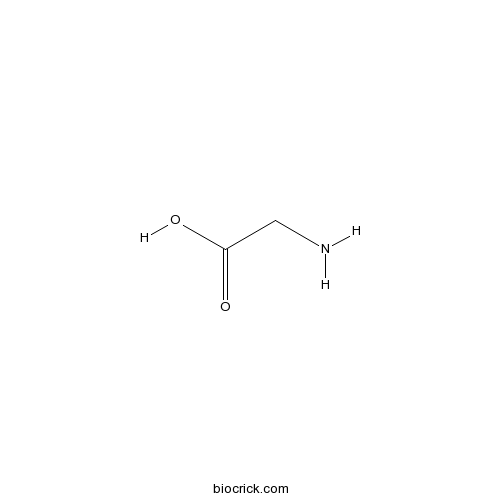
H-Gly-OH
Glycine is an inhibitory neurotransmitter in the CNS and also acts as a co-agonist along with glutamate, facilitating an excitatory potential at the glutaminergic N-methyl-D-aspartic acid (NMDA) receptors.
-
BCN1749
Hypotaurine
Hypotaurine (2-aminoethanesulfinic acid), an intermediate in taurine biosynthesis from cysteine in astrocytes, is an endogenous inhibitory amino acid of the glycine receptor.

-
BCC3028
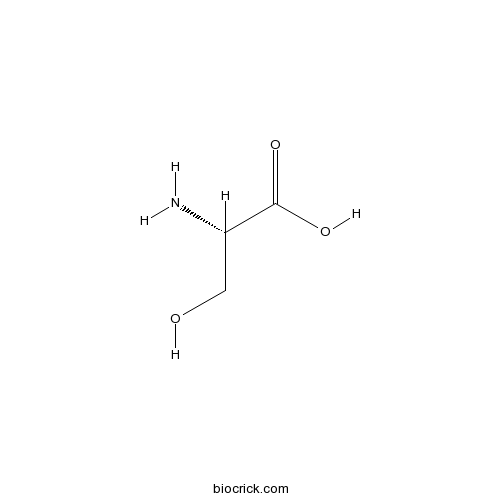
H-Ser-OH
L-Serine ((-)-Serine; (S)-Serine), one of the so-called non-essential amino acids, plays a central role in cellular proliferation.
-
BCN1750
Taurine
Taurine is an organic acid widely distributed in animal tissues.

-
BCC5160
ATP disodium salt
ATP disodium salt is a phosphate-group donor for substrate activation in metabolic reactions and the coenzyme for a large number of kinases.

-
BCC7855
ATPγS tetralithium salt
93839-89-5

-
BCC7643
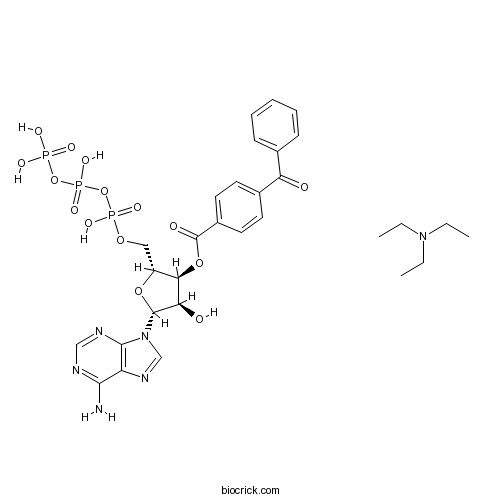
BzATP triethylammonium salt
112898-15-4
-
BCC7603
alpha,beta-Methyleneadenosine 5'-triphosphate trisodium salt
α,β-Methylene ATP trisodium, a phosphonic analog of ATP, is a P2X3 and P2X7 receptor ligand.

-
BCC6918
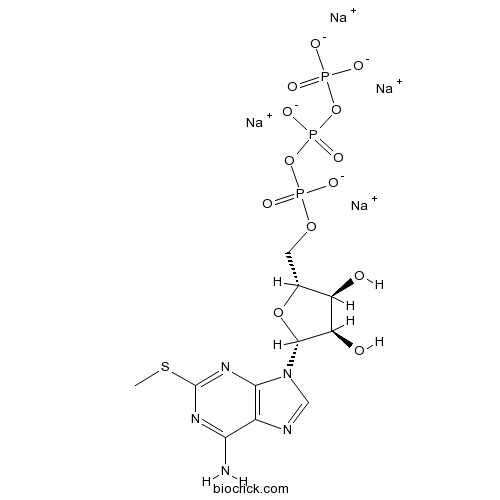
2-Methylthioadenosine triphosphate tetrasodium salt
100020-57-3
-
BCC1317
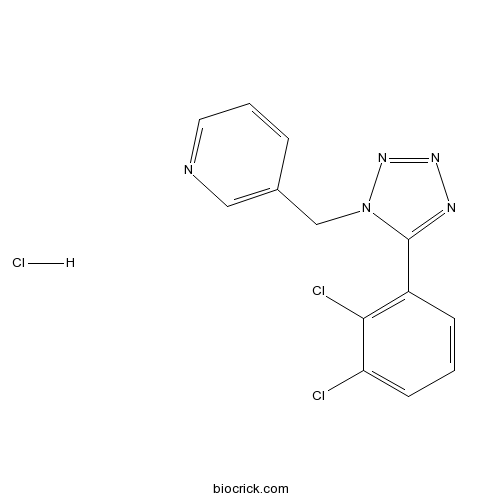
A 438079 hydrochloride
A 438079 (hydrochloride) is a potent, and selective P2X7 receptor antagonist with pIC50 of 6.9.