Neurotransmission
Neurotransmission, or synaptic transmission, involves the passage of signals by electrical or chemical means from one neuron to another. It allows communication between nerve cells for the propagation of electrical impulses to and from the central nervous system leading to the co-ordination of secretion, muscle contraction and organ function.
Neurotransmission Products Targets
- GABAB Receptor (28)
- Others (20)
- Nucleoside Transporter (5)
- Glycine Transporter (6)
- GABA (10)
- Cannabinoid Transporter (10)
- Acetylcholine Transporter (1)
- D4 Receptor (12)
- 5-HT7 Receptor (11)
- 5-HT6 Receptor (14)
- 5-ht5 Receptor (2)
- 5-HT4 Receptor (17)
- NOP Receptor (21)
- Mu-Opioid Receptors (15)
- Kappa Opioid Receptors (14)
- Glutamate (Metabotropic) Group III Receptor (26)
- Glutamate (Metabotropic) Group II Receptor (33)
- Glutamate (Metabotropic) Group I Receptor (54)
- AMPA Receptor (45)
- GABAA-ρ Receptor (8)
- GABAA Receptor (66)
- GPR55 (8)
- CB2 Receptor (6)
- CB1 Receptor (17)
- Nicotinic (α7) Receptor (25)
- Nicotinic (α4β2) Receptor (14)
- Purinergic (P2Y) Receptors (31)
- Purinergic (P2X) Receptors (32)
- Glycine Receptors (6)
- D3 Receptor (12)
- Vesicular Monoamine Transporter (4)
- NMDA Receptor (87)
- Kainate Receptor (22)
- D2 Receptor (14)
- D1 and D5 Receptor (16)
- Glutamate Transporter (18)
- Dopamine Transporter (20)
- Histamine H4 Receptor (12)
- Histamine H3 Receptor (22)
- Histamine H2 Receptor (10)
- Histamine H1 Receptor (17)
- Adrenergic Transporter (23)
- 5-HT Transporter (30)
- NO donors and precursors (9)
- nNOS (5)
- iNOS (11)
- eNOS (1)
- M5 Receptor (2)
- M4 Receptor (3)
- M3 Receptor (4)
- M2 Receptor (5)
- M1 Receptor (8)
- Delta opioid receptor (16)
- Adrenergic α2 Receptor (33)
- Adrenergic α1 Receptor (22)
- Adrenergic β3 Receptor (12)
- Adrenergic β2 Receptor (6)
- Adrenergic β1 Receptor (7)
Products for Neurotransmission - Page 86
- Cat.No. Product Name Information/Activity
-
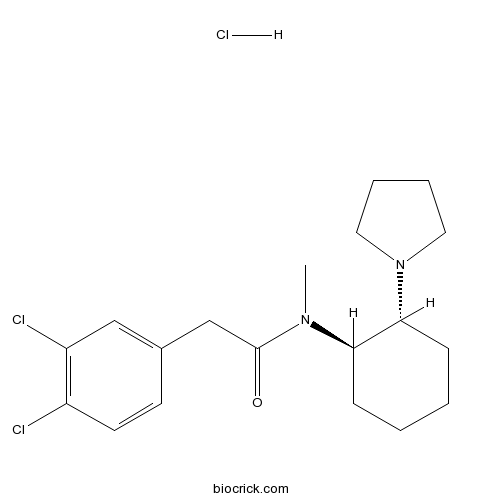
BCC6656
(+)-U-50488 hydrochloride
114528-81-3
-
BCC6665
(±)-U-50488 hydrochloride
67197-96-0

-
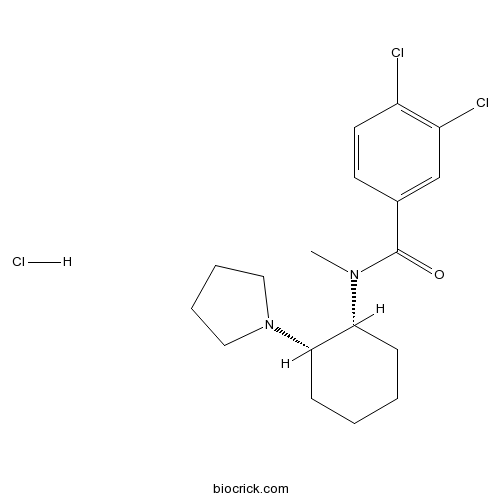
BCC6668
U-54494A hydrochloride
112465-94-8
-
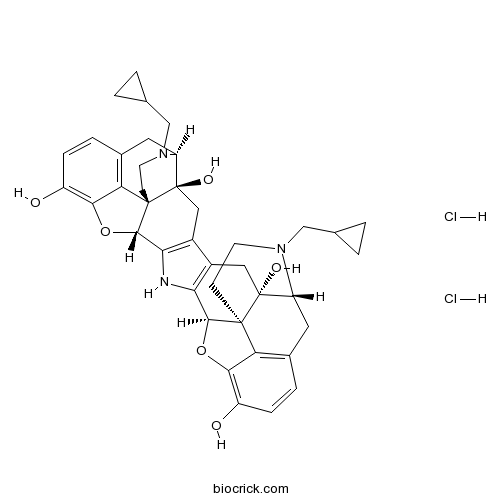
BCC6614
nor-Binaltorphimine dihydrochloride
Norbinaltorphimine dihydrochloride is a potent and selective κ opioid receptor antagonist.
-
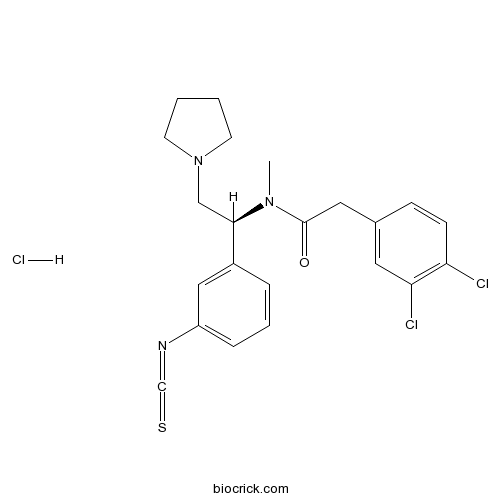
BCC6799
DIPPA hydrochloride
155512-52-0
-
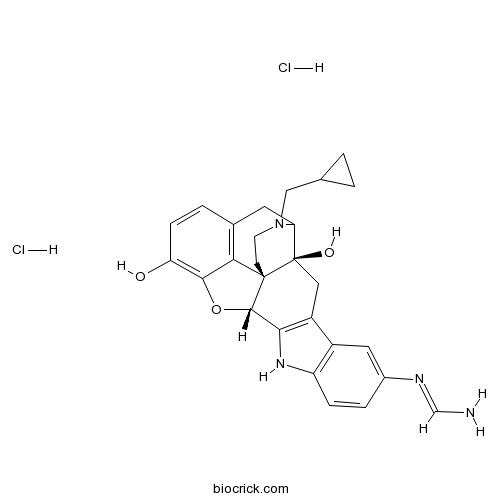
BCC7003
GNTI dihydrochloride
351183-88-5
-
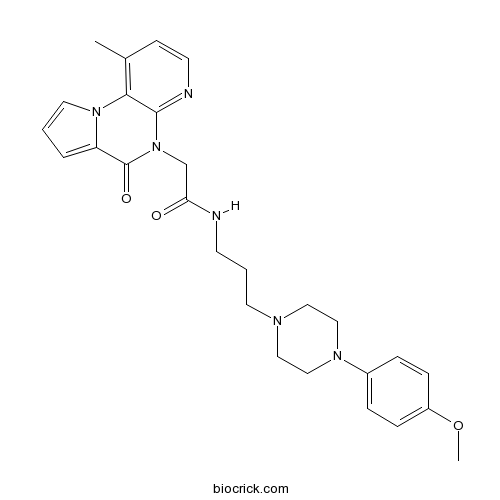
BCC6308
ML 190
1355244-02-8
-
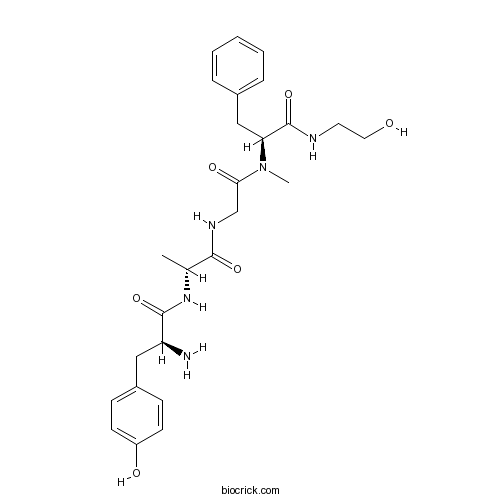
BCC6958
DAMGO
DAMGO is a μ-opioid receptor (μ-OPR ) selective agonist with a Kd of 3.46 nM for native μ-OPR.
-
BCC1008
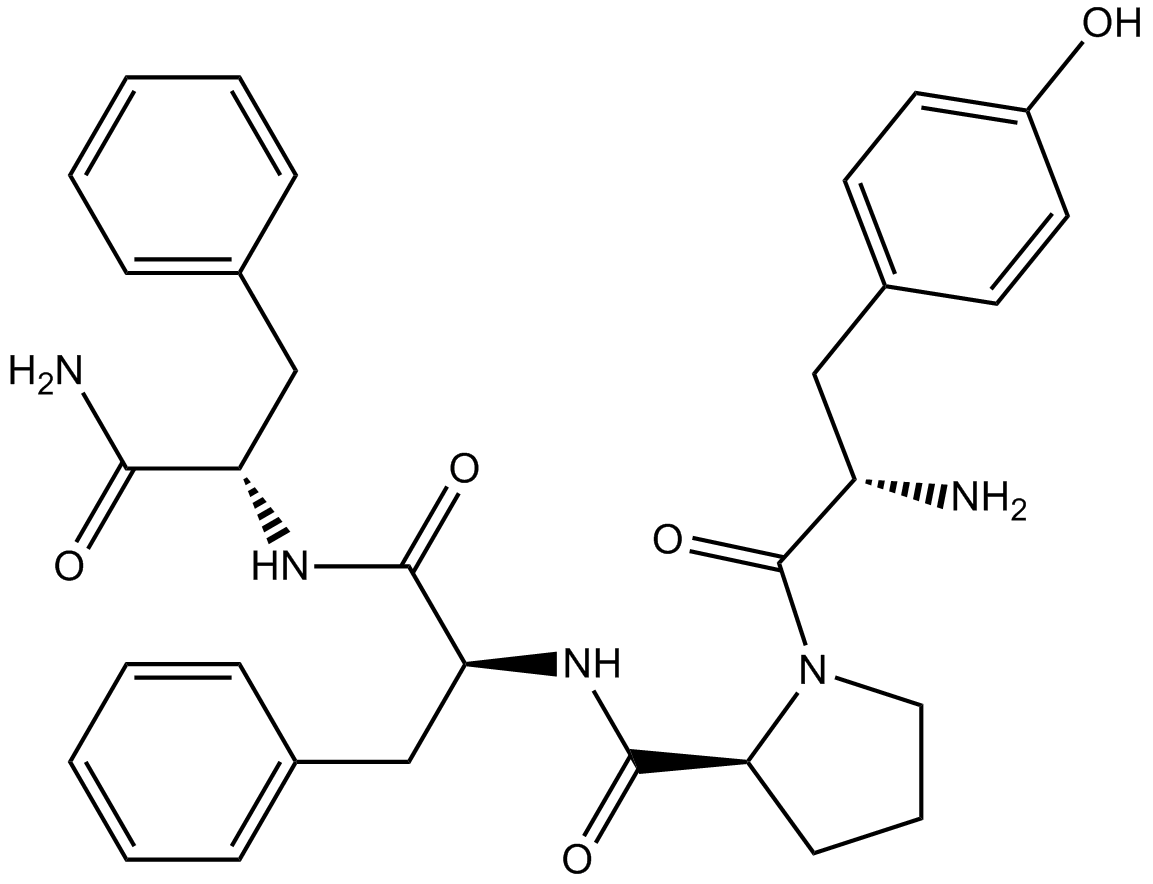
Endomorphin-1
Endomorphin 1, a high affinity, highly selective agonist of the μ-opioid receptor, displays reasonable affinities for kappa3 binding sites, with Ki value between 20 and 30 nM.

-
BCC5697
Endomorphin-2
Endomorphin 2, a high affinity, highly selective agonist of the μ-opioid receptor, displays reasonable affinities for kappa3 binding sites, with Ki value between 20 and 30 nM.