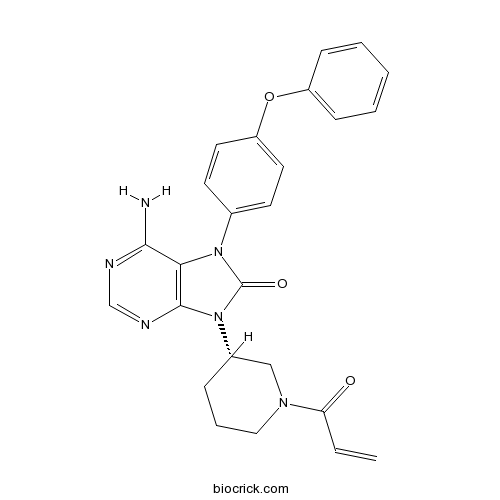
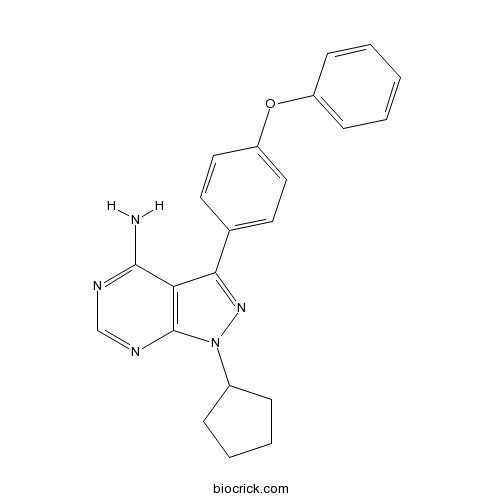
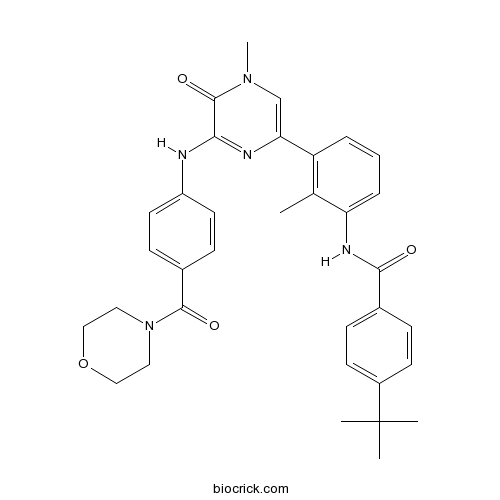
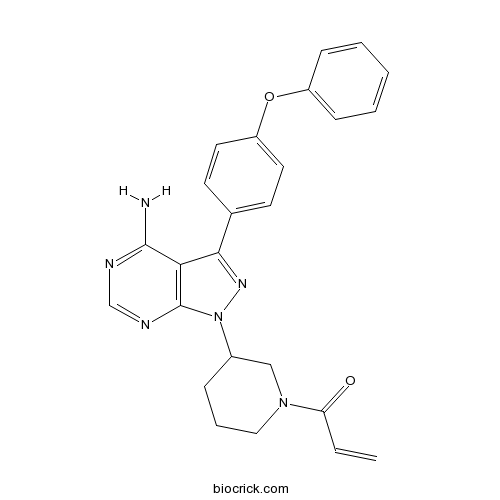
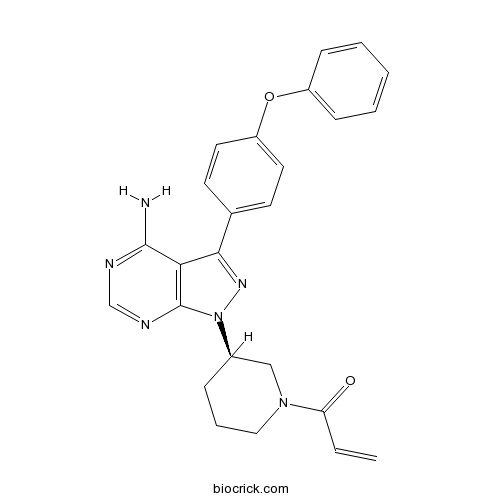
BCC5125
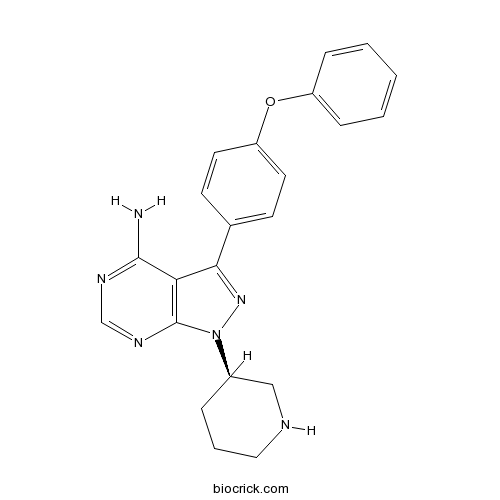
Btk inhibitor 1 R enantiomer
IBT6A is an impurity of Ibrutinib. IBT6A can be used in synthesis of IBT6A Ibrutinib dimer and IBT6A adduct. Ibrutinib is a selective, irreversible Btk inhibitor with an IC50 of 0.5 nM.
BCC1385
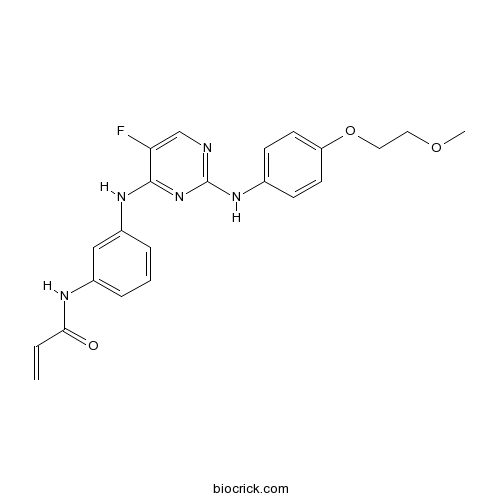
AVL-292
Spebrutinib (AVL-292; CC-292) is a covalent, orally active, and highly selective with an IC50 of 0.5 nM.
BCC4394
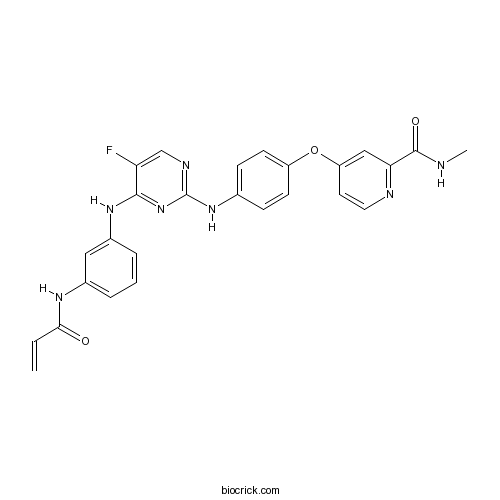
CNX-774
CNX-774 is a potent, selective, and orally available small molecule inhibitor of Btk (IC50< 1 nM) that forms a ligand-directed covalent bond with Cys-481, a non-conserved amino acid within the active site of the enzyme.
BCC3921
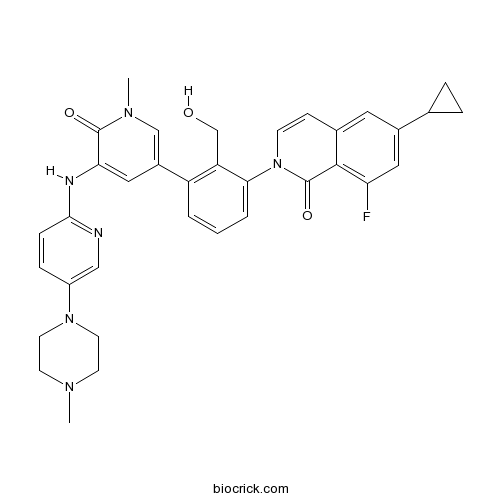
RN486
RN486 is a selective Btk inhibitor with an IC50 Value of 4.0 nM.
BCC6463
ONO-4059
ONO-4059 analog is the analog of ONO-4059, ONO-4059 is a highly potent and selective Btk inhibitor.
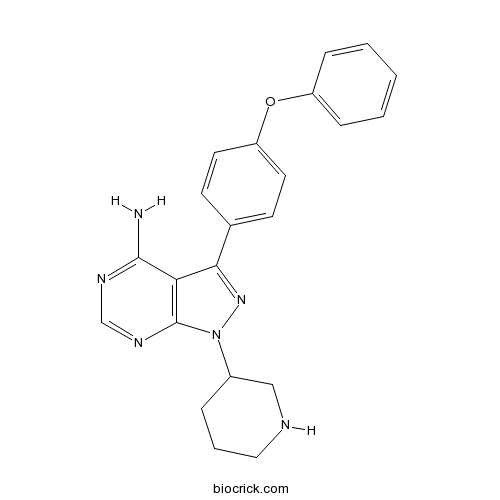
BCC4238
Btk inhibitor 1
(Rac)-IBT6A is a racemate of IBT6A. IBT6A is an impurity of Ibrutinib. IBT6A can be used in synthesis of IBT6A Ibrutinib dimer and IBT6A adduct. Ibrutinib is a selective, irreversible Btk inhibitor with an IC50 of 0.5 nM.
BCC3920
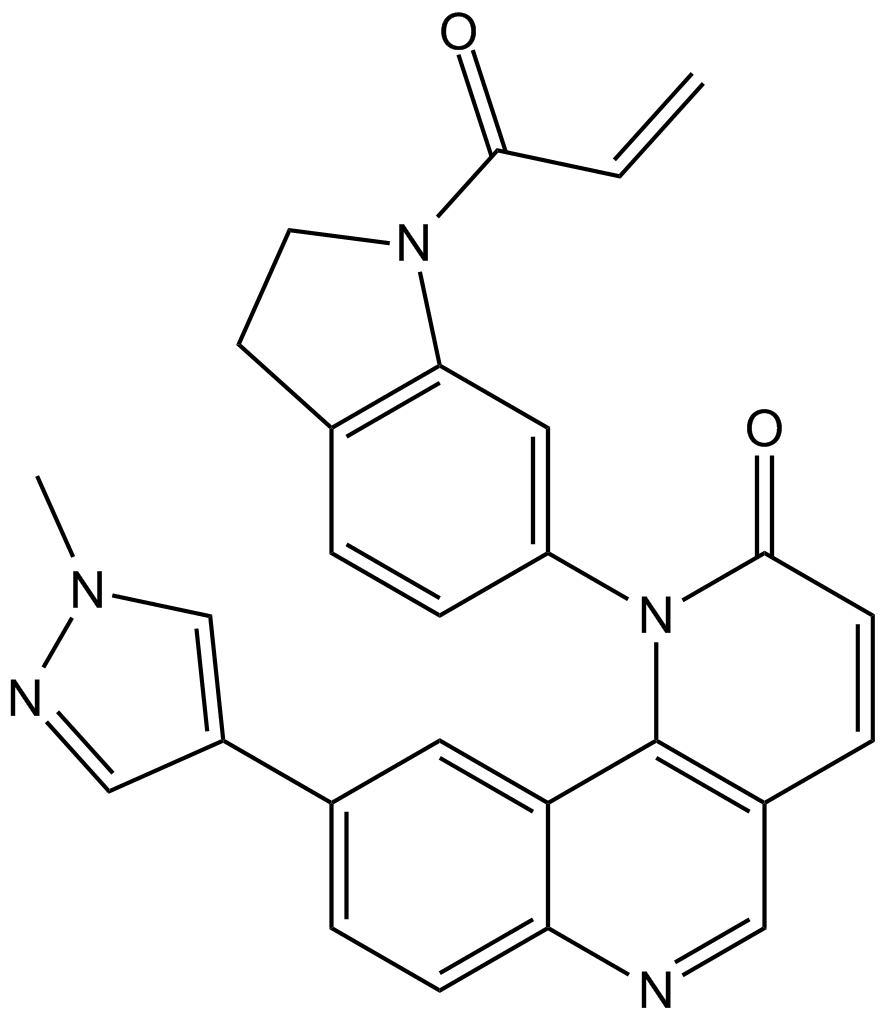
QL47
QL47 is a potent, selective and irreversible BTK kinase inhibitor with IC50 of 7 nM.
BCC6472
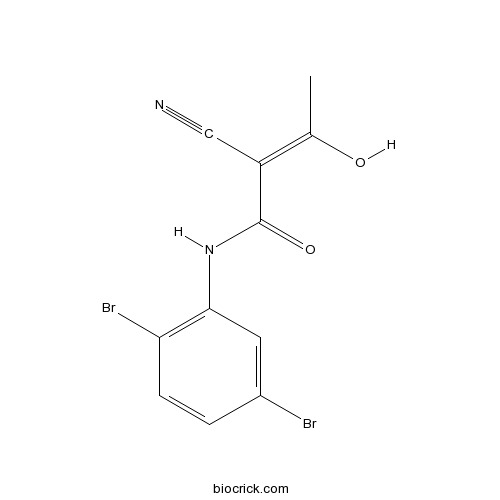
LFM-A13
LFM-A13 is a potent BTK, JAK2, PLK inhibitor, inhibits recombinant BTK, Plx1 and PLK3 with IC50s of 2.5 μM, 10 μM and 61 μM; LFM-A13 shows no effects on JAK1 and JAK3, Src family kinase HCK, EGFR and IRK.
BCC4100
PCI 29732
PCI 29732 is a selective and irreversible Btk inhibitor with IC50 of 8.2 nM in a FRET based biochemical enzymology assay.
BCC1473
CGI-1746
CGI-1746 is a potent and highly selective inhibitor of the Btk with IC50 of 1.9 nM.
BCC5124
PCI-32765 Racemate
Ibrutinib Racemate (PCI-32765 Racemate) is the racemate of Ibrutinib. Ibrutinib is a selective, irreversible Btk inhibitor with IC50 value of 0.5 nM.
BCC1266
PCI-32765 (Ibrutinib)
Ibrutinib (PCI-32765) is a selective, irreversible Btk inhibitor with an IC50 of 0.5 nM. Ibrutinib can be used as a Btk ligand in the synthesis of a series of PROTACs, such as P13I. P13I induces 73% degradation of Btk at 10 nM and 89% at 100 nM in human Burkitt’s lymphoma, RAMOS cells.