
Majonoside R2CAS# 81534-63-6 |
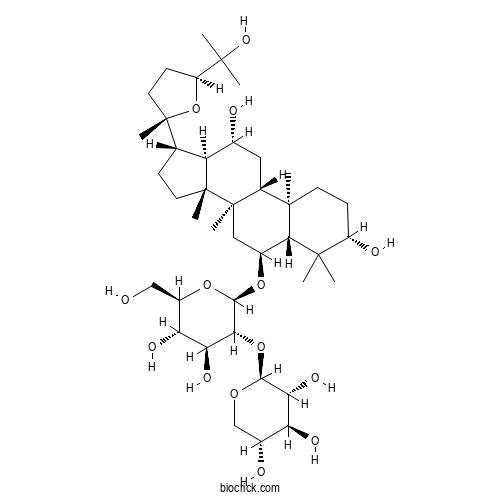
| Cas No. | 81534-63-6 | SDF | File under preparation. |
| PubChem ID | 9962384.0 | Appearance | Powder |
| Formula | C41H70O14 | M.Wt | 787.0 |
| Type of Compound | N/A | Storage | Desiccate at -20°C |
| Solubility | Soluble in Chloroform,Dichloromethane,Ethyl Acetate,DMSO,Acetone,etc. | ||
| Chemical Name | (2S,3R,4S,5R)-2-[(2R,3R,4S,5S,6R)-2-[[(3S,5R,6S,8R,9R,10R,12R,13R,14R,17S)-3,12-dihydroxy-17-[(2S,5S)-5-(2-hydroxypropan-2-yl)-2-methyloxolan-2-yl]-4,4,8,10,14-pentamethyl-2,3,5,6,7,9,11,12,13,15,16,17-dodecahydro-1H-cyclopenta[a]phenanthren-6-yl]oxy]-4,5-dihydroxy-6-(hydroxymethyl)oxan-3-yl]oxyoxane-3,4,5-triol | ||
| SMILES | CC1(C(CCC2(C1C(CC3(C2CC(C4C3(CCC4C5(CCC(O5)C(C)(C)O)C)C)O)C)OC6C(C(C(C(O6)CO)O)O)OC7C(C(C(CO7)O)O)O)C)O)C | ||
| Standard InChIKey | UGMDQWNVJMIQKD-ANASGOQFSA-N | ||
| Standard InChI | InChI=1S/C41H70O14/c1-36(2)25(45)10-12-38(5)24-15-20(43)27-19(41(8)14-11-26(55-41)37(3,4)50)9-13-39(27,6)40(24,7)16-22(33(36)38)52-35-32(30(48)29(47)23(17-42)53-35)54-34-31(49)28(46)21(44)18-51-34/h19-35,42-50H,9-18H2,1-8H3/t19-,20+,21+,22-,23+,24+,25-,26-,27-,28-,29+,30-,31+,32+,33-,34-,35+,38+,39+,40+,41-/m0/s1 | ||
| General tips | For obtaining a higher solubility , please warm the tube at 37 ℃ and shake it in the ultrasonic bath for a while.Stock solution can be stored below -20℃ for several months. We recommend that you prepare and use the solution on the same day. However, if the test schedule requires, the stock solutions can be prepared in advance, and the stock solution must be sealed and stored below -20℃. In general, the stock solution can be kept for several months. Before use, we recommend that you leave the vial at room temperature for at least an hour before opening it. |
||
| About Packaging | 1. The packaging of the product may be reversed during transportation, cause the high purity compounds to adhere to the neck or cap of the vial.Take the vail out of its packaging and shake gently until the compounds fall to the bottom of the vial. 2. For liquid products, please centrifuge at 500xg to gather the liquid to the bottom of the vial. 3. Try to avoid loss or contamination during the experiment. |
||
| Shipping Condition | Packaging according to customer requirements(5mg, 10mg, 20mg and more). Ship via FedEx, DHL, UPS, EMS or other couriers with RT, or blue ice upon request. | ||
Quality Control & MSDS
3D structure
Package In Stock

Number of papers citing our products


Majonoside R2 Dilution Calculator
Majonoside R2 Molarity Calculator
-
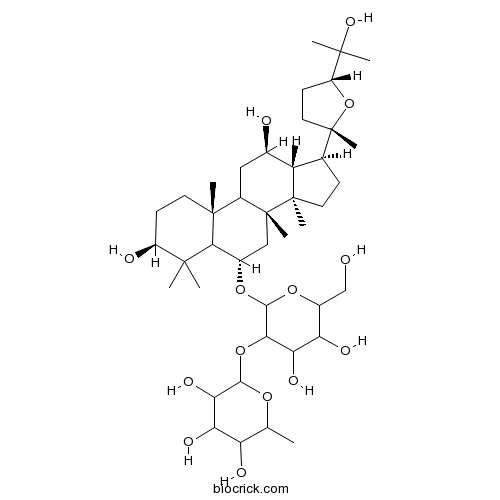 Pseudoginsenoside F11Catalog No.: BCN1062CAS No.: 69884-00-0
-
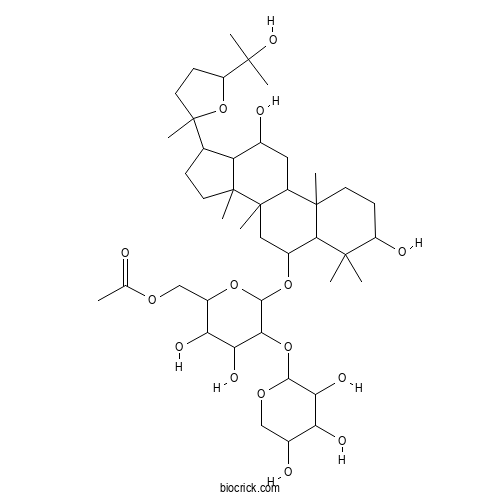 Vinaginsenoside R2Catalog No.: BCX2529CAS No.: 156980-42-6
-
 Pseudoginsenoside RT5Catalog No.: BCN1076CAS No.: 98474-78-3
-
 20(R)-Notoginsenoside R2Catalog No.: BCN3864CAS No.: 948046-15-9
-
 Notoginsenoside R2Catalog No.: BCN3328CAS No.: 80418-25-3
-
 Notoginsenoside R1Catalog No.: BCN1097CAS No.: 80418-24-2
-
 Notoginsenoside T5Catalog No.: BCN3727CAS No.: 769932-34-5
-
 Ginsenoside RfCatalog No.: BCN1075CAS No.: 52286-58-5
| 1 mg | 5 mg | 10 mg | 20 mg | 25 mg | |
| 1 mM | 1.2706 mL | 6.3532 mL | 12.7065 mL | 25.413 mL | 31.7662 mL |
| 5 mM | 0.2541 mL | 1.2706 mL | 2.5413 mL | 5.0826 mL | 6.3532 mL |
| 10 mM | 0.1271 mL | 0.6353 mL | 1.2706 mL | 2.5413 mL | 3.1766 mL |
| 50 mM | 0.0254 mL | 0.1271 mL | 0.2541 mL | 0.5083 mL | 0.6353 mL |
| 100 mM | 0.0127 mL | 0.0635 mL | 0.1271 mL | 0.2541 mL | 0.3177 mL |
| * Note: If you are in the process of experiment, it's necessary to make the dilution ratios of the samples. The dilution data above is only for reference. Normally, it's can get a better solubility within lower of Concentrations. | |||||
- Vinaginsenoside R2
Catalog No.:BCX2529
CAS No.:156980-42-6
- Ginsenoside Rs2
Catalog No.:BCX2528
CAS No.:87733-66-2
- Xanthohumol
Catalog No.:BCX2527
CAS No.:6754-58-1
- 5-Methoxyjatrointelignan D
Catalog No.:BCX2526
CAS No.:2170998-22-6
- Jatrointelignan D
Catalog No.:BCX2525
CAS No.:1621072-64-7
- N-(2-Hydroxy-3-methylbutyl)adenine
Catalog No.:BCX2524
CAS No.:22662-00-6
- Cepharanthine 2'-β-N-oxide
Catalog No.:BCX2523
CAS No.:104386-92-7
- N-Lauryldiethanolamine
Catalog No.:BCX2522
CAS No.:1541-67-9
- Scutolide K
Catalog No.:BCX2521
CAS No.:1651888-30-0
- Scutebata L
Catalog No.:BCX2520
CAS No.:1369525-17-6
- Pinobanksin 3-O-caffeate
Catalog No.:BCX2519
CAS No.:1220531-15-6
- Glucoindol B
Catalog No.:BCX2518
CAS No.:23099-32-3
- Majonoside R1
Catalog No.:BCX2531
CAS No.:81534-62-5
- Notoginsenoside SFt3
Catalog No.:BCX2532
CAS No.:1351360-27-4
- Eudesmane-1β, 6α,11-triol
Catalog No.:BCX2533
CAS No.:1804930-14-0
- 12α-Hydroxyamoorastatone
Catalog No.:BCX2534
CAS No.:152013-84-8
- Homoaromoline
Catalog No.:BCX2535
CAS No.:17132-74-0
- 1-O-Linolenoylglycerol
Catalog No.:BCX2536
CAS No.:18465-99-1
- Methyl 6-methoxycarbazole-3-carboxylate
Catalog No.:BCX2537
CAS No.:132922-58-8
- 1-Monolinolein
Catalog No.:BCX2538
CAS No.:2277-28-3
- Desinapoylhazaleanin A
Catalog No.:BCX2539
CAS No.:147742-26-5
- 11,13-Dehydrolanuginolide
Catalog No.:BCX2540
CAS No.:50764-09-5
- Trichotomoside
Catalog No.:BCX2541
CAS No.:881421-12-1
- Bisnorponcitrin
Catalog No.:BCX2542
CAS No.:158443-92-6
Alleviation of Helicobacter pylori-Induced Pathogenicity and Gastric Inflammation by Majonoside-R2- and Ginsenoside Rg1-Rich Fractions From Panax vietnamensis Ha Et Grushv.: A Metabolomics-Guided Investigation.[Pubmed:42109191]
Mol Nutr Food Res. 2026 May;70(9):e70493.
Helicobacter pylori infection remains a major global health concern due to its association with gastric inflammation, ulceration, and gastric malignancies. This study evaluated the effects of Ngoc Linh ginseng (Panax vietnamensis Ha et Grushv.) root fractions on H. pylori virulence and host inflammatory responses. UHPLC-MS/MS-based metabolomic profiling coupled with feature-based molecular networking was employed to characterize the chemical profiles of different solvent fractions, identifying the dichloromethane (DCM) fraction as enriched in ginsenosides, particularly the ocotillol-type saponin Majonoside R2 (MR2). In vitro assays showed that, despite minimal direct antibacterial activity, the DCM fraction at sub-inhibitory concentrations significantly reduced urease activity, acid tolerance, biofilm formation, and the expression of major virulence genes, including vacA and cagA. In H. pylori-infected AGS gastric epithelial cells, the DCM fraction and MR2 decreased VacA and CagA translocation, suppressed pro-inflammatory signaling and cytokine production, restored antioxidant defenses, and alleviated mitochondrial apoptosis. By contrast, ginsenoside Rg1 selectively modulated host inflammatory and oxidative stress responses without affecting bacterial virulence gene expression. These results demonstrate that Ngoc Linh ginseng root fractions mitigate H. pylori-induced pathogenic effects primarily through anti-virulence and host-directed mechanisms, highlighting their potential relevance for the development of gastric health-promoting functional products.
Recombinant single-chain variable fragment-based immunoassay for the authentication of Vietnamese ginseng via quantitative detection of majonoside R2.[Pubmed:41788576]
J Ginseng Res. 2026 Mar;50(2):100974.
BACKGROUND: Majonoside R2 (MR2) is an ocotillol-type saponin found at 3 %-5 % (w/w) in Panax vietnamensis that serves as a critical biomarker for authenticating sought-after Vietnamese ginseng varieties, such as Ngoc Linh and Lai Chau. However, widespread adulteration with morphologically similar species has created an urgent need for high-throughput, cost-effective authentication methods beyond chromatographic or deoxyribonucleic acid-based techniques. METHODS: A single-chain variable fragment (scFv) antibody against MR2 was recombinantly expressed in Escherichia coli, purified, and functionally validated. Using this antibody, an indirect competitive enzyme-linked immunosorbent assays (icELISA) approach was optimized for MR2 quantification in complex herbal matrices. The performance of this novel assay was benchmarked against that of a previously validated method using monoclonal antibody (mAb)-based ELISA and verified using authentic Panax spp. and Randia siamensis samples. RESULTS AND CONCLUSION: The scFv-based icELISA demonstrated a detection range of 31.25-1000 ng/mL for MR2, with high reproducibility and accuracy (CV <12.4 %, recovery 90.6 %-116.7 %). The assay was found to reliably distinguish authentic Ngoc Linh and Lai Chau ginsengs from other Panax species with high specificity. Recombinant expression in E. coli enables scalable, animal-free production, facilitating the broader adoption of this icELISA across laboratories equipped with standard molecular biology infrastructure. These findings support the integration of scFv-based assays into regulatory frameworks for authenticating Vietnamese ginseng.
Fermentation of Ngoc Linh ginseng (Panax vietnamensis Ha et Grushv.) root extract using Levilactobacillus brevis QD-1: Changes in majonoside R2 content and pharmacological activities.[Pubmed:40263859]
Food Res Int. 2025 May;208:116275.
This study investigated the biotransform beneficial effects of Levilactobacillus brevis QD-1 fermentation on the bioactive compounds and pharmacological activities of Ngoc Linh ginseng root extract through in silico and in vitro analyses. Whole-genome sequencing revealed that L. brevis QD-1 lacks virulence factors and biogenic amine synthesis genes, confirming its safety for food and pharmaceutical applications. Genome annotation identified beta-glucosidase from glycoside hydrolase families (GH1, GH2, GH3, and GH30), suggesting its potential role in ginsenoside biotransformation. In vitro study demonstrated that L. brevis QD-1 might proliferate in Ngoc Linh ginseng extract and express beta-glucosidase after 24 h of fermentation. Fermentation significantly altered the ginsenoside profile, notably increasing the rare saponin Majonoside R2 from 479.65 mg/L to 649.32 mg/L after 48 h. Additionally, fermentation enhanced total phenolic content and facilitated the release of essential and non-essential amino acids, particularly threonine, valine, lysine, and histidine, which were initially undetectable in the raw extract. These compositional changes correlated with improved pharmacological properties, as the fermented extract exhibited significantly stronger antioxidant, anti-inflammatory, and DNA-protective activities compared to the raw extract. These findings highlight the potential of L. brevis QD-1 as a safe and effective microbial agent for enhancing the bioactivity of Ngoc Linh ginseng, paving the way for its applications in functional foods and natural therapeutics.
LC-MS/MS analysis and alpha-glucosidase inhibitory effect of majonoside R2 in Vietnamese ginseng (Panax vietnamensis Ha & Grushv.).[Pubmed:39560108]
Nat Prod Res. 2026 Mar;40(6):1605-1611.
Majonoside R2 (MR2), the principal saponin of Vietnamese ginseng (Panax vietnamensis Ha & Grushv.), has the unique structure of ocotillol-type dammarane and showed remarkable biological activities. This paper deals with the new findings in the chemical analysis MR2 by the tandem LC-MS/MS and, especially, its inhibitory activities on alpha-glucosidase for diabetic management. The developed LC-MS/MS method revealed advantages of high selectivity with specific mass transition from precursor [M + H](+) ion (m/z 784.4) into product ion (m/z 475.1), high sensitivity (calibration range: 5-250 ppb; LOD: 1.5 ppb; LOQ: 5.0 ppb), and high accuracy to support further pharmaceutical analysis of MR2. MR2 and its aglycone ocotillol relatively showed certain inhibitory effects on alpha-glucosidase in vitro with the IC(50) values of 353.05 and 219.64 microg/mL and supported by molecular docking analysis, in which MR2 and ocotillol could play as allosteric inhibitors with high binding affinity (-7.8 and -8.1 kcal/mol) evidenced by bonding interactions.
Dammarane-Type Saponins from the Leaves of Vietnamese Ginseng (Panax vietnamensis Ha & Grushv.) and Their Acetylcholinesterase Inhibition In Vitro and In Silico.[Pubmed:39363736]
Chem Biodivers. 2025 Feb;22(2):e202401329.
Vietnamese ginseng (Panax vietnamensis Ha & Grushv.) represents one of the famous Panax spp. for valuable applications in both traditional and modern medicine; in which, its rhizome part has mainly been used as the medicinal materials based on the bioactive ginsenosides such as ginsenoside Rb1, ginsenoside Rg1, ginsenoside Rd, and Majonoside R2. In modern medicine, the development of medicinal materials and utilization of medicinal plants are crucially based on standard bioactive ingredients, so this study to evaluate the leaves of Vietnamese ginseng as source of bioactive ginsenoside led to the identification of seven ginsenosides (1-7). Of them, ginsenoside Rd (2) and pseudoginsenoside RS1 (5) showed inhibitory effects on acetylcholinesterase in vitro with the IC(50) values of 47.13 and 79.58 muM and supported by molecular docking analysis, in which ginsenoside Rd (2) and pseudoginsenoside RS1 (5) could play as allosteric inhibitors with high binding affinity (-8.5 and -9.4 kcal/mol) as evidenced by hydrogen bonding and hydrophobic interactions. The findings provided the scientific evidence for using the leaves of Vietnamese ginseng as an alternative source to the roots to enhance memory in traditional medicine as well as for further research on the anti-dementia effects of 2 and 5.
Monoclonal antibody-based enzyme-linked immunosorbent assay for quantification of majonoside R2 as an authentication marker for Nngoc Linh and Lai Chau ginsengs.[Pubmed:39263304]
J Ginseng Res. 2024 Sep;48(5):474-480.
BACKGROUND: Recent years have witnessed increasing interest in the high amount of ocotillol-type saponin in Panax vietnamensis, particularly in relation to Majonoside R2 (MR2). This unique 3%-5% MR2 content impart Ngoc Linh and Lai Chau ginsengs with unique pharmacological activities. However, in the commercial domain, unauthentic species have infiltrated and significantly hindered access to the authentic, efficacious variety. Thus, suitable analytical techniques for distinguishing authentic Vietnamese ginseng species from others is becoming increasingly crucial. Therefore, MR2 is attracting considerable attention as a target requiring effective management measures. METHODS: An enzyme-linked immunosorbent assay (ELISA) was developed by producing monoclonal antibodies against MR2 (mAb 16E11). The method was thoroughly validated, and the potential of the immunoassay was confirmed by high-performance liquid chromatography with ultraviolet spectroscopy. Furthermore, ELISA was applied to the assessment of the MR2 concentrations of various Panax spp., including Korean, American, and Japanese ginsengs. RESULTS AND CONCLUSIONS: An icELISA using mAb 16E11 exhibited linearity between 3.91 and 250 ng/mL of MR2, with detection and quantification limits of 1.53 and 2.50 - 46.6 ng/mL, respectively. Based on this study, the developed icELISA using mAb 16E11 could be a valuable tool for analyzing MR2 level to distinguish authentic Ngoc Linh and Lai Chau ginsengs from unauthentic ones. Furthermore, the analysis of the samples demonstrated that Ngoc Linh and Lai Chau ginsengs exhibit a notably higher MR2 value than all other Panax spp. Thus, MR2 might be their ideal marker compound, and various bioactivities of this species should be explored.
Antimelanogenic Activity of Ocotillol-Type Saponins from Panax vietnamensis.[Pubmed:32163220]
Chem Biodivers. 2020 May;17(5):e2000037.
The ocotillol (OCT)-type saponins have been known as a tetracyclic triterpenoid, possessing five- or six-membered epoxy ring in the side chain. Interestingly, this type saponin was mostly found in Panax vietnamensis Ha et Grushv., Araliaceae (VG), hence making VG unique from the other Panax spp. Five OCT-type saponins, Majonoside R2, vina-ginsenoside R2, majonoside R1, pseudoginsenoside RT4, vina-ginsenoside R11, together with three protopanaxadiol (PPD)-type saponins and four protopanaxatriol (PPT)-type saponins from VG were evaluated for their antimelanogenic activity. All of isolates were found to be active. More importantly, the five OCT-type saponins inhibited melanin production in B16-F10 mouse melanoma cells, without showing any cytotoxicity. Besides ginsenoside Rd and ginsenoside Rg3 in PPD and notoginsenoside R1 in PPT-type saponins, Majonoside R2 was the most potent melanogenesis inhibitory activity in OCT-type saponins. In this article, we highlighted antimelanogenic activity of OCT-type saponins and potential structure-activity relationship (SAR) of ginsenosides. Our results suggested that OCT-type saponins could be used as a depigmentation agent.
In silico studies for the interaction of tumor necrosis factor-alpha (TNF-alpha) with different saponins from Vietnamese ginseng (Panax vietnamesis).[Pubmed:27924272]
Biophys Physicobiol. 2016 Jul 14;13:173-180.
Tumor necrosis factor-alpha (TNF-alpha) is a cytokine that plays an important role in inflammatory process and tumor development. Recent studies demonstrate that triterpene saponins from Vietnamese ginseng are efficient inhibitors of TNF-alpha. But the interactions between TNF-alpha and the saponins are still unclear. In this study, molecular docking and molecular dynamics simulations of TNF-alpha with three different triterpene saponins (Majonoside R2, vina-ginsenoside R1 and vina-ginsenoside R2) were performed to evaluate their binding ability. Our results showed that the triterpene saponins have a good binding affinity with protein TNF-alpha. The saponins were docked to the pore at the top of the "bell" or "cone" shaped TNF-alpha trimer and the complexes were structurally stable during 100 ns molecular dynamics simulation. The predicted binding sites would help to subsequently investigate the inhibitory mechanism of triterpene saponins.
Anti-inflammatory effects of vina-ginsenoside R2 and majonoside R2 isolated from Panax vietnamensis and their metabolites in lipopolysaccharide-stimulated macrophages.[Pubmed:26256699]
Int Immunopharmacol. 2015 Sep;28(1):700-6.
Panax vietnamensis Ha et Grushv., with its main constituents vina-ginsenoside R2 (VR2) and Majonoside R2 (MR2), is used in traditional folk medicine in the hill tribes of Vietnam for anti-fatigue, anti-inflammatory, and life-saving purposes. In a preliminary study, VR2 and MR2 were shown to be metabolized to pseudoginsenoside RT4 (PRT4) and ocotillol by human gut microbiota. Therefore, we measured the anti-inflammatory effects of VR2, MR2, and their metabolites in lipopolysaccharide (LPS)-stimulated mouse peritoneal macrophages. Among these ginsenosides, only VR2 exhibited cytotoxicity against peritoneal macrophages. MR2, PRT4, and ocotillol inhibited LPS-stimulated transcription factor (NF)-kappaB activation, and expression of the proinflammatory cytokines tumor necrosis factor-alpha and interleukin (IL)-1. However, these ginsenosides did not inhibit peptidoglycan-induced NF-kappaB activation in the macrophages. These three ginsenosides also inhibited LPS-stimulated cyclooxygenase-2 and inducible NO synthase expression, and phosphorylation of NF-kappaB signal molecules IL-1 receptor-associated kinase 1 and tumor growth factor-beta-activated kinase 1 in peritoneal macrophages. Treatment with either PRT4 or ocotillol inhibited the Alexa Fluor 488-conjugated LPS-mediated shift of macrophages, as observed by flow cytometry. They also potently inhibited the binding of LPS to TLR4 on peritoneal macrophages, both with and without transfected MyD88 siRNA. Among the tested ginsenosides, ocotillol exhibited the strongest inhibitory effect on inflammation in LPS-stimulated macrophages via the NF-kappaB signaling pathway. Based on these findings, orally administered VR2 and MR2 of P. vietnamensis may be metabolized to ocotillol via PRT4, and the metabolites, particularly ocotillol, may inhibit inflammation by inhibiting the binding of LPS to TLR4 on macrophages.
Ocotillol, a Majonoside R2 Metabolite, Ameliorates 2,4,6-Trinitrobenzenesulfonic Acid-Induced Colitis in Mice by Restoring the Balance of Th17/Treg Cells.[Pubmed:26194345]
J Agric Food Chem. 2015 Aug 12;63(31):7024-31.
In a preliminary experiment, Majonoside R2 (MR2), isolated from Vietnamese ginseng (Panax vietnamensis Ha et Grushv.), inhibited differentiation to Th17 cells and was metabolized to ocotillol via pseudoginsenoside RT4 (PRT4) by gut microbiota. Therefore, we examined the inhibitory effects of MR2 and its metabolites PRT4 and ocotillol against Th17 cell differentiation. These ginsenosides significantly suppressed interleukin (IL)-6/tumor growth factor beta-induced differentiation of splenic CD4(+) T cells into Th17 cells and expression of IL-17 in vitro. Among these ginsenosides, ocotillol showed the highest inhibitory effect. We also examined the anti-inflammatory effect of ocotillol in mice with 2,4,6-trinitrobenzenesulfonic acid (TNBS)-induced colitis. Oral administration of ocotillol significantly suppressed TNBS-induced colon shortening, macroscopic score, myeloperoxidase activity, and production of nitric oxide and prostaglandin E2. Ocotillol treatment increased TNBS-suppressed expression of tight junction proteins ZO-1, occludin, and claudin-1 in the colon. Treatment with ocotillol inhibited TNBS-induced expression of tumor necrosis factor (TNF)-alpha and IL-1beta, as well as activation of NF-kappaB and MAPKs. Moreover, treatment with ocotillol inhibited TNBS- induced differentiation to Th17 cells in the lamina propria of colon, as well as expression of T-bet, RORgammat, IL-17, and IL-23. Ocotillol treatment also increased Treg cell differentiation and Foxp3 and IL-10 expression. These findings suggest that orally administered MR2 may be metabolized to ocotillol in the intestine by gut microbiota and the transformed ocotillol may ameliorate inflammatory diseases such as colitis by restoring the balance of Th17/Treg cells.
Transcriptome analysis of Panax vietnamensis var. fuscidicus discovers putative ocotillol-type ginsenosides biosynthesis genes and genetic markers.[Pubmed:25765814]
BMC Genomics. 2015 Mar 8;16(1):159.
BACKGROUND: P. vietnamensis var. fuscidiscus, called "Yesanqi" in Chinese, is a new variety of P. vietnamensis, which was first found in Jinping County, the southern part of Yunnan Province, China. Compared with other Panax plants, this species contains higher content of ocotillol-type saponin, Majonoside R2. Despite the pharmacological importance of ocotillol-type saponins, little is known about their biosynthesis in plants. Hence, P. vietnamensis var. fuscidiscus is a suitable medicinal herbal plant species to study biosynthesis of ocotillol-type saponins. In addition, the available genomic information of this important herbal plant is lacking. RESULTS: To investigate the P. vietnamensis var. fuscidiscus transcriptome, Illumina HiSeq 2000 sequencing platform was employed. We produced 114,703,210 clean reads, assembled into 126,758 unigenes, with an average length of 1,304 bp and N50 of 2,108 bp. Among these 126,758 unigenes, 85,214 unigenes (67.23%) were annotated based on the information available from the public databases. The transcripts encoding the known enzymes involved in triterpenoid saponins biosynthesis were identified in our Illumina dataset. A full-length cDNA of three Squalene epoxidase (SE) genes were obtained using reverse transcription PCR (RT-PCR) and the expression patterns of ten unigenes were analyzed by reverse transcription quantitative real-time PCR (RT-qPCR). Furthermore, 15 candidate cytochrome P450 genes and 17 candidate UDP-glycosyltransferase genes most likely to involve in triterpenoid saponins biosynthesis pathway were discovered from transcriptome sequencing of P. vietnamensis var. fuscidiscus. We further analyzed the data and found 21,320 simple sequence repeats (SSRs), 30 primer pairs for SSRs were randomly selected for validation of the amplification and polymorphism in 13 P. vietnamensis var. fuscidiscus accessions. Meanwhile, five major triterpene saponins in roots of P. vietnamensis var. fuscidicus were determined using high performance liquid chromatography (HPLC) and evaporative light scattering detector (ELSD). CONCLUSIONS: The genomic resources generated from P. vietnamensis var. fuscidiscus provide new insights into the identification of putative genes involved in triterpenoid saponins biosynthesis pathway. This will facilitate our understanding of the biosynthesis of triterpenoid saponins at molecular level. The SSR markers identified and developed in this study show genetic diversity for this important crop and will contribute to marker-assisted breeding for P. vietnamensis var. fuscidiscus.

Calcutta University

University of Minnesota

University of Maryland School of Medicine

University of Illinois at Chicago

The Ohio State University

University of Zurich

Harvard University

Colorado State University

Auburn University

Yale University

Worcester Polytechnic Institute

Washington State University

Stanford University

University of Leipzig

Universidade da Beira Interior

The Institute of Cancer Research

Heidelberg University

University of Amsterdam

University of Auckland

TsingHua University

The University of Michigan

Miami University

DRURY University

Jilin University

Fudan University

Wuhan University

Sun Yat-sen University

Universite de Paris

Deemed University

Auckland University

The University of Tokyo

Korea University



