Cell Cycle
The cell cycle consists of a regulatory network of proteins that controls the order and timing of cellular proliferation events. It is divided into four stages, G1-S-G2-M. The G1 and G2 stages stands for 'GAP 1' and 'GAP 2' respectively. The S stage stands for 'Synthesis' and is the stage when DNA replication occurs. The M stage stands for 'mitosis', and is when nuclear and cytoplasmic division occurs, halving the genome.
Cell Cycle Products Targets
Products for Cell Cycle - Page 2
- Cat.No. Product Name Information/Activity
-
BCN5590
Daidzein
Daidzein is a soy isoflavone, which acts as a PPAR activator.

-
BCC1306
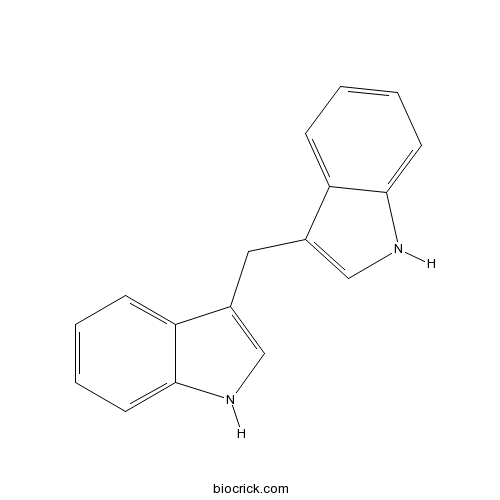
3,3'-Diindolylmethane
3,3'-Diindolylmethane is a strong, pure androgen receptor (AR) antagonist.
-
BCC1092
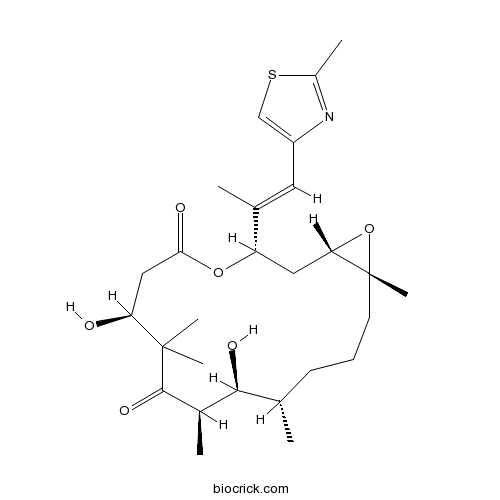
Epothilone B (EPO906, Patupilone)
Epothilone B is a microtubule stabilizer with a Ki of 0.71μM. It acts by binding to the αβ-tubulin heterodimer subunit which causes decreasing of αβ-tubulin dissociation.
-
BCC7185
Indirubin-3'-oxime
Indirubin-3'-monoxime is a potent GSK-3β inhibitor, and weakly inhibits 5-Lipoxygenase, with IC50s of 22 nM and 7.8-10 µM, respectively; Indirubin-3'-monoxime also shows inhibitory activities against CDK5/p25 and CDK1/cyclin B, with IC50s of 100 and 180 nM.

-
BCC2301
Methotrexate
Methotrexate (Amethopterin) is an antimetabolite and antifolate agent that inhibits the enzyme dihydrofolate reductase, thereby preventing the conversion of folic acid into tetrahydrofolate, and inhibiting DNA synthesis. Methotrexate (Amethopterin) is the disease-modifying antirheumatic drug (DMARD) of first choice for the treatment of RA in most countries worldwide. Methotrexate is an antineoplastic agent used to fight a number of different cancers, such as acute lymphoblastic leukemia and solid cancers.

-
BCC8040
MPC 6827 hydrochloride
Verubulin hydrochloride (MPC-6827 hydrochloride) is a blood brain barrier permeable microtubule-disrupting agent, with potent and broad-spectrum in vitro and in vivo cytotoxic activities. Verubulin hydrochloride (MPC-6827 hydrochloride) exhibits potent anticancer activity in human MX-1 breast and other mouse xenograft cancer models. Verubulin hydrochloride (MPC 6827 hydrochloride) is a promising candidate for the treatment of multiple cancer types.

-
BCN4732
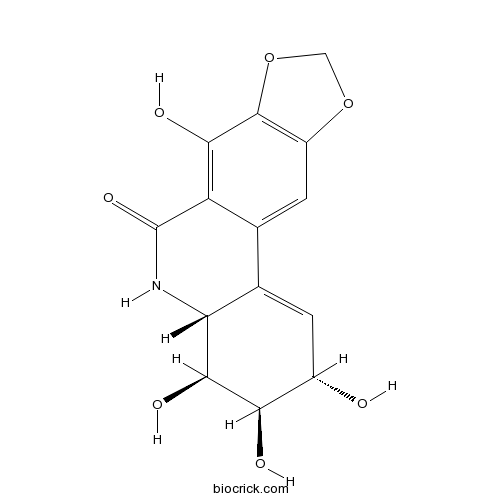
Narciclasine
Narciclasine is a plant growth modulator. Narciclasine modulates the Rho/Rho kinase/LIM kinase/cofilin signaling pathway, greatly increasing GTPase RhoA activity as well as inducing actin stress fiber formation in a RhoA-dependent manner.
-
BCN2586
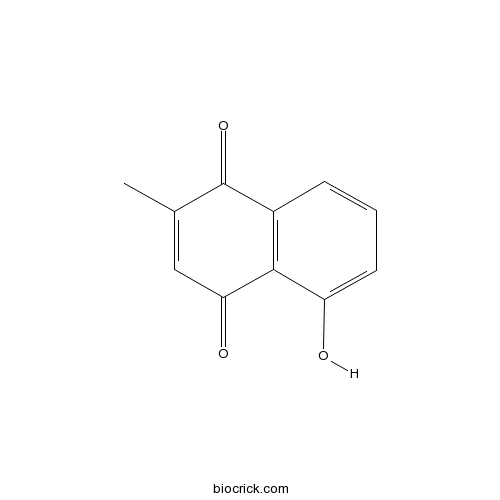
Plumbagin
Plumbagin (2-Methyljuglone) is a naphthoquinone isolated from Plumbago zeylanica L, exhibits anticancer and antiproliferative activities.
-
BCC6298
Skp2 Inhibitor C1
Skp2 Inhibitor C1(SKPin C1) is a specific small molecule inhibitor of Skp2-mediated p27 degradation, selectively inhibited Skp2-mediated p27 degradation by reducing p27 binding through key compound-receptor contacts.

-
BCC3678
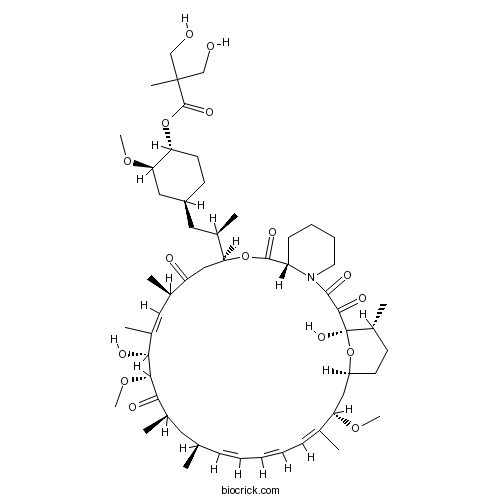
Temsirolimus
Temsirolimus is an inhibitor of mTOR with an IC50 of 1.76 μM.