Protein Kinase A
Protein kinase A (PKA, aka cAMP-dependent protein kinase) is involved in the regulation of lipid and glucose metabolism and is a component of the signal transduction mechanism of certain GPCRs. PKA is composed of two regulatory subunits and two catalytic subunits.
Products for Protein Kinase A
- Cat.No. Product Name Information/Activity
-
BCC8082
cAMPS-Rp, triethylammonium salt
Rp-cAMPS triethylammonium salt is an analog of cAMP which acts as a potent, competitive and cell-permeable antagonist of cAMP-induced activation of cAMP-dependent PKA I and II (Kis of 6.05 µM and 9.75 µM, respectively). Rp-cAMPS triethylammonium salt is resistant to hydrolysis by phosphodiesterases.
-
BCC2542
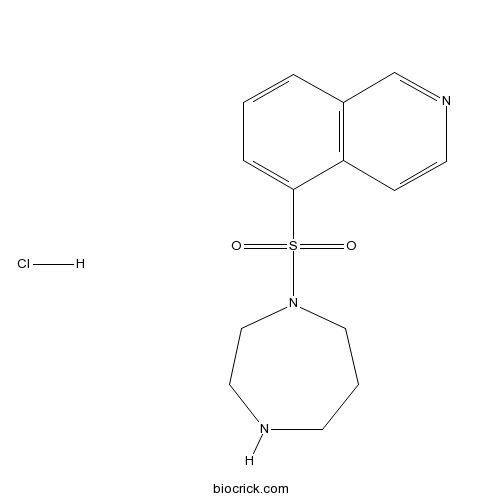
Fasudil (HA-1077) HCl
Fasudil Hydrochloride (HA-1077 Hydrochloride; AT877 Hydrochloride), is a nonspecific ROCK inhibitor and also has inhibitory effect on protein kinases, with an Ki of 0.33 μM for ROCK1, IC50s of 0.158 μM and 4.58 μM, 12.30 μM, 1.650 μM for ROCK2 and PKA, PKC, PKG, respectively. Fasudil Hydrochloride is also a potent Ca2+ channel antagonist and vasodilator.
-
BCC8084
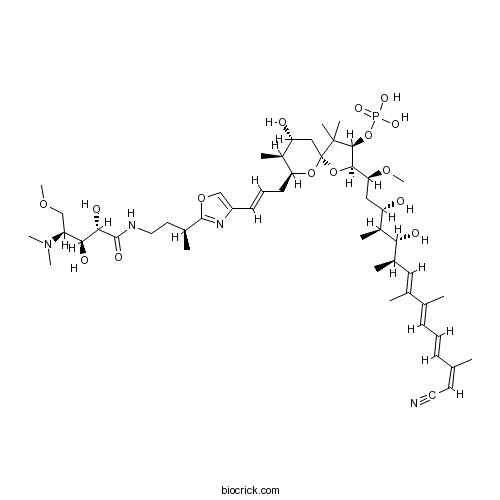
cGMP Dependent Kinase Inhibitor Peptide
82801-73-8

-
BCC4997
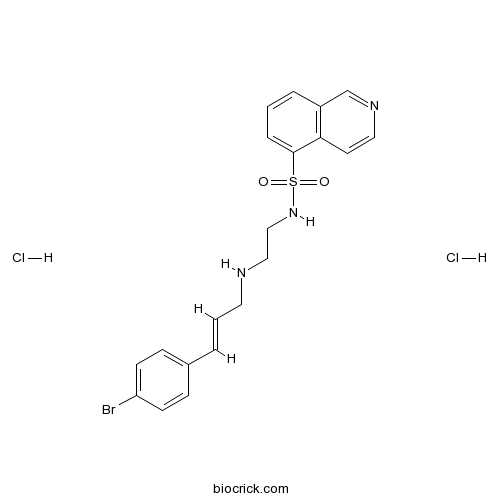
H 89 2HCl
H-89 dihydrochloride is a potent and selective inhibitor of protein kinase A (PKA) with an IC50 of 48 nM and has weak inhibition on PKG, PKC, Casein Kinase.
-
BCC8080
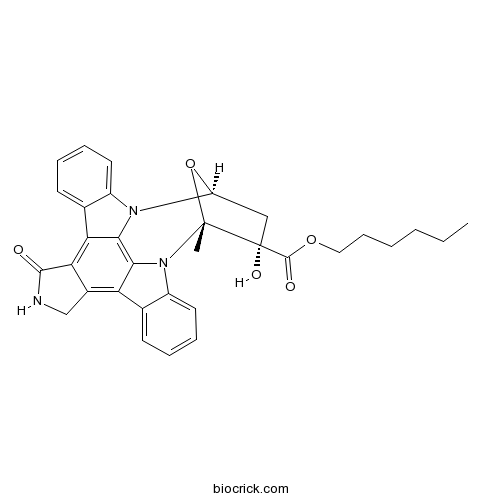
KT 5720
KT5720 is a cell-permeable, potent, specific, reversible, ATP-competitive inhibitor of protein kinase A (PKA), with a Ki of 60 nM.
-
BCC1042
PKA inhibitor fragment (6-22) amide
Potent protein kinase A inhibitor

-
BCC8087
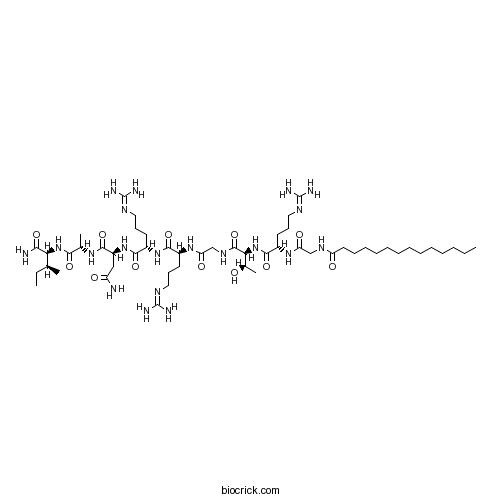
PKI 14-22 amide, myristoylated
Cell-permeable protein kinase A inhibitor
-
BCC8081
cAMPS-Sp, triethylammonium salt
93602-66-5

-
BCC8078
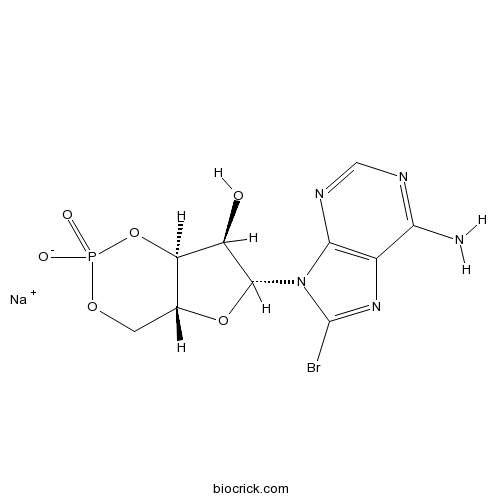
8-Bromo-cAMP, sodium salt
8-Bromo-cAMP sodium salt (8-Br-Camp sodium salt), a cyclic AMP analog, is an activator of cyclic AMP-dependent protein kinase (PKA).