Products for
Others
- Page 27
-
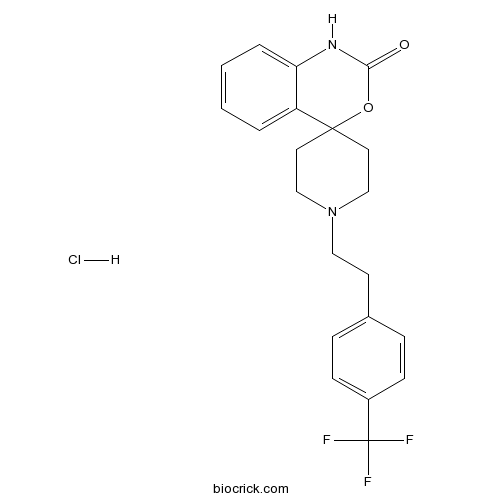
BCC7238
PSB 10 hydrochloride
591771-91-4
-
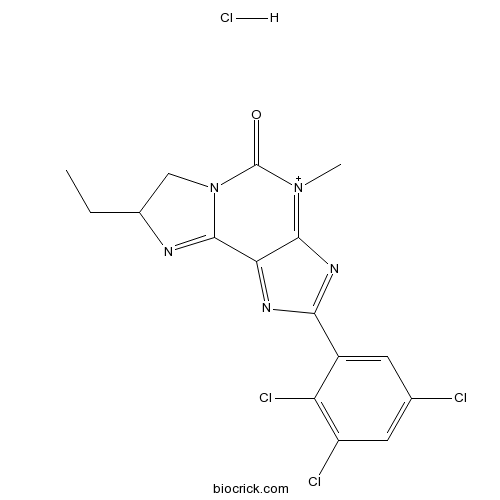
BCC7239
PSB 11 hydrochloride
453591-58-7
-
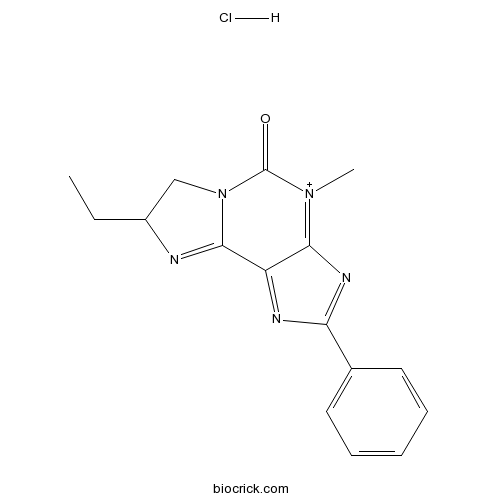
BCC7030
VUF 5574
280570-45-8

-
BCC7413
ZK 756326
874911-96-3

-
BCC7572
BMS CCR2 22
BMS CCR2 22 is a potent, specific and high affinity CC-type chemokine receptor 2 (CCR2) antagonist with excellent binding affinity (binding IC50 of 5.1 nM) and potent functional antagonism (calcium flux IC50 of 18 nM and chemotaxis IC50 of 1 nM).

-
BCC6029
BX 471
BX471 (ZK-811752) is an orally active, potent and selective non-peptide CCR1 antagonist with a Ki of 1 nM, and exhibits 250-fold selectivity for CCR1 over CCR2, CCR5 and CXCR4.

-
BCC6047
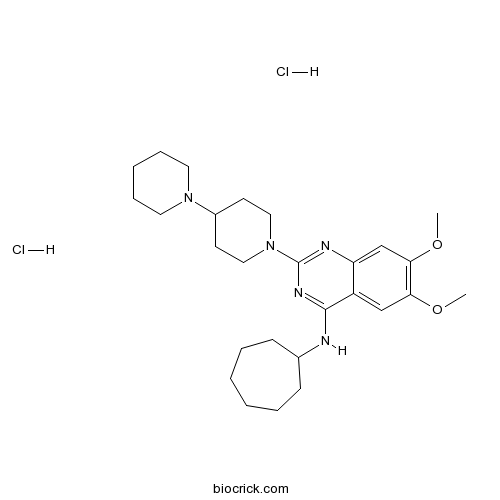
C 021 dihydrochloride
Potent CCR4 antagonist
-
BCC1646
INCB 3284 dimesylate
INCB 3284 dimesylate is a potent, selective and orally bioavailable human CCR2 antagonist, inhibiting monocyte chemoattractant protein-1 binding to hCCR2, with an IC50 of 3.7 nM. INCB 3284 dimesylate can be used in the research of acute liver failure.

-
BCC7422
J 113863
J-113863 is a potent and selective CCR1 (CD18) antagonist with IC50 values of 0.9 nM and 5.8 nM for human and mouse CCR1 receptors, respectively. J-113863 is also a potent antagonist of the human CCR3 (IC50 of 0.58 nM) , but a weak antagonist of the mouse CCR3 (IC50 of 460 nM). J-113863 is inactive against CCR2, CCR4 and CCR5, as well as the LTB4 or TNF-α receptors. Anti-inflammatory effect.

-
BCC7260
RS 102895 hydrochloride
RS102895 hydrochloride is a potent CCR2 antagonist, with an IC50 of 360 nM, and shows no effect on CCR1.