Addiction Research
According to the World Health Organization (WHO), addiction is 'a chronic disease of the central nervous system that is characterized by a loss of control over impulsive behavior that leads to compulsive drug seeking and taking, and to relapses even after months of abstinence'. Addiction is a complex neuroadaptive process, where drugs of abuse alter cellular and molecular aspects of neural function. The brain circuits mediating the various behavioral effects of these drugs are rendered more, or less, responsive to those effects.
Addiction Research Products Targets
- Others (13)
- D4 Receptor (12)
- 5-HT7 Receptor (11)
- 5-HT6 Receptor (14)
- 5-ht5 Receptor (2)
- 5-HT4 Receptor (17)
- NOP Receptor (21)
- Mu-Opioid Receptors (15)
- Kappa Opioid Receptors (14)
- AMPA Receptor (45)
- GABAA-ρ Receptor (8)
- GABAA Receptor (66)
- GPR55 (8)
- CB2 Receptor (6)
- CB1 Receptor (17)
- Nicotinic (α7) Receptor (25)
- Nicotinic (α4β2) Receptor (14)
- D3 Receptor (12)
- NMDA Receptor (87)
- Kainate Receptor (22)
- D2 Receptor (14)
- D1 and D5 Receptor (16)
- Glutamate Transporter (18)
- Dopamine Transporter (20)
- CRF2 Receptor (3)
- CRF1 Receptor (5)
- 5-HT Transporter (30)
- Delta opioid receptor (16)
Products for Addiction Research - Page 34
- Cat.No. Product Name Information/Activity
-
BCC5784
pep2-SVKI
328944-75-8

-
BCC7135
IEM 1460
121034-89-7
-
BCC5049
IEM 1754 dihydrobroMide
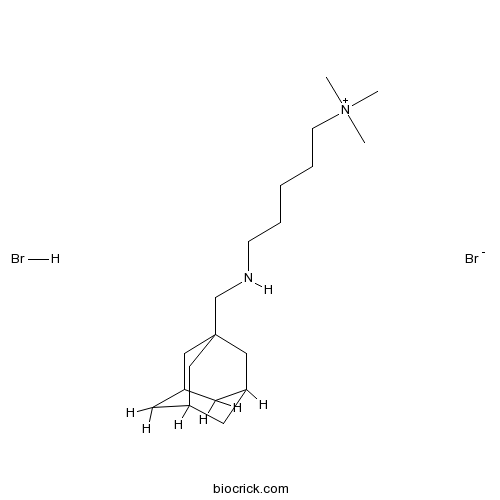
IEM 1754 2HBr is a selective AMPA/kainate receptor blockers for GluR1 and GluR3 with IC50 of 6 μM.

-
BCC6909
1-BCP
1-BCP (Piperonylic acid piperidide) is a centrally active drug that modulates AMPA receptor gated currents. 1-BCP is a memory-enhancing agent.

-
BCC6868
Diazoxide
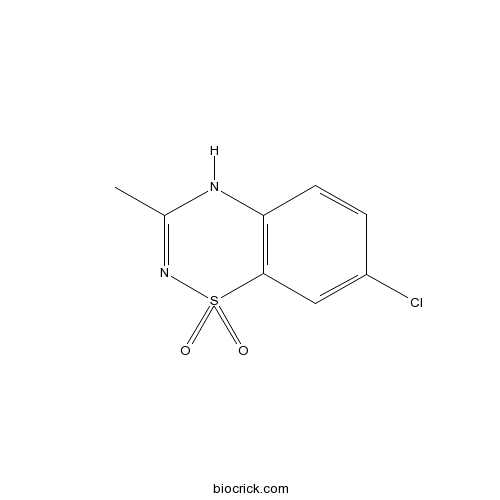
Diazoxide (Sch-6783) is an ATP-sensitive potassium channel activator, has the potential for hyperinsulinism treatment.
-
BCC5785
pep2-SVKE
1315378-76-7

-
BCC5783
pep4c
243843-43-8

-
BCC4824
Piracetam
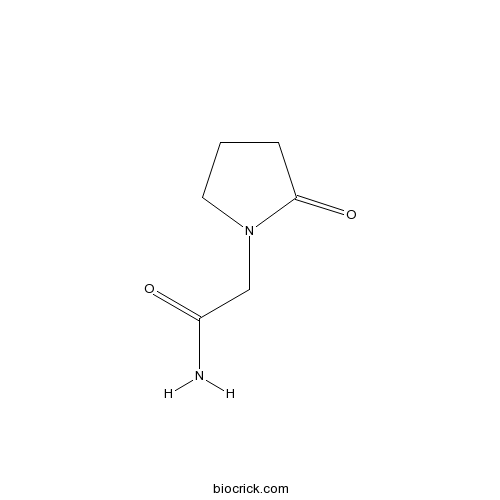
Piracetam (UCB-6215) is a cyclic derivative of the neurotransmitter gamma-aminobutyric acid (GABA), used in treatment of a wide range of cognitive disorders.
-
BCC6940
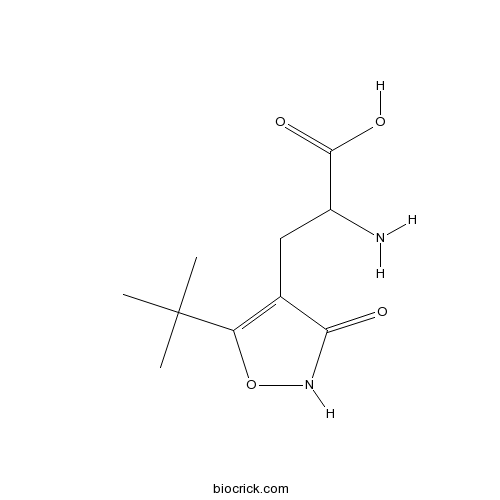
ATPA
ATPA is a selective glutamate receptor GluR5 activator with EC50s of 0.66, 9.5, 1.4, 23, 32, 18, and 14 μM for GluR5wt, GluR5(S741M), GluR5(S721T), GluR5(S721T, S741M), GluR5(S741A), GluR5(S741L), and GluR5(S741V), respectively.
-
BCC6586
Domoic acid
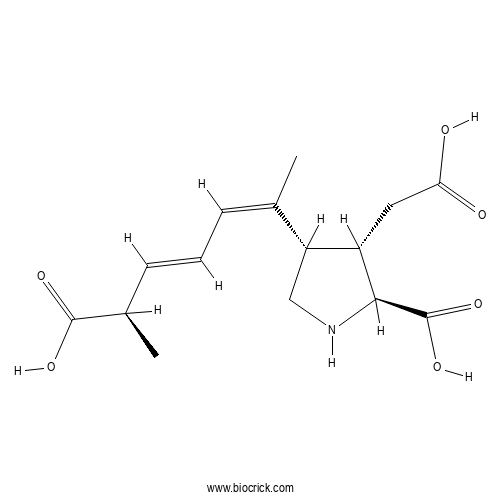
14277-97-5