
Stroke Research
Stroke is classified as both a neurological and a cardiovascular disease, as it is a disruption in blood supply to the brain which causes the neurological abnormalities. There are two types of stroke; ischemic and hemorrhagic.
Stroke Research Products Targets
- Adenosine A2B Receptor (7)
- Adenosine A2A Receptor (11)
- Caspase (9)
- Voltage-gated Sodium (NaV) Channel (30)
- Voltage-gated Potassium (KV) Channel (38)
- Voltage-gated Calcium Channel (CaV) (38)
- Lipoxygenase (8)
- Others (20)
- Cyclooxygenase (24)
- Epithelial Sodium Channel (3)
- STIM-Orai Channel (4)
- Ryanodine Receptor (6)
- Natriuretic Peptide Receptor (4)
- 5-HT7 Receptor (11)
- 5-HT6 Receptor (14)
- 5-ht5 Receptor (2)
- 5-HT4 Receptor (17)
- Glutamate (Metabotropic) Group III Receptor (26)
- Glutamate (Metabotropic) Group II Receptor (33)
- Glutamate (Metabotropic) Group I Receptor (54)
- AMPA Receptor (45)
- GABAA-ρ Receptor (8)
- GABAA Receptor (66)
- NMDA Receptor (87)
- Kainate Receptor (22)
- IP3 Receptor (2)
- Glutamate Transporter (18)
- Adenosine A3 Receptor (8)
- Adenosine A1 Receptor (12)
- Acid-Sensing Ion Channel (3)
- Calcium-Activated Potassium (KCa) Channel (19)
- Calcium-Sensitive Protease Modulator (12)
- Inward Rectifier Potassium (Kir) Channel (21)
- NO donors and precursors (9)
- nNOS (5)
- iNOS (11)
- eNOS (1)
- Prostanoid Receptor (24)
Products for Stroke Research - Page 45
- Cat.No. Product Name Information/Activity
-
BCC7482
TCS 46b
302799-86-6

-
BCC6984
CCMQ
132623-44-0

-
BCC7862
CIQ
CIQ is a subunit-selective potentiator of NMDA receptors containing the NR2C or NR2D subunit.

-
BCC2946
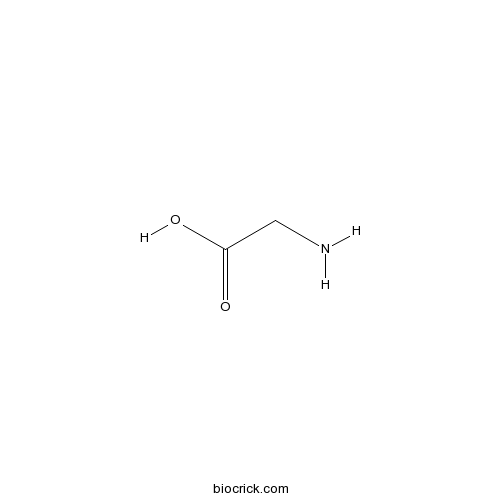
H-Gly-OH
Glycine is an inhibitory neurotransmitter in the CNS and also acts as a co-agonist along with glutamate, facilitating an excitatory potential at the glutaminergic N-methyl-D-aspartic acid (NMDA) receptors.
-
BCC5888
MNI-caged-NMDA
1227675-52-6

-
BCC7292
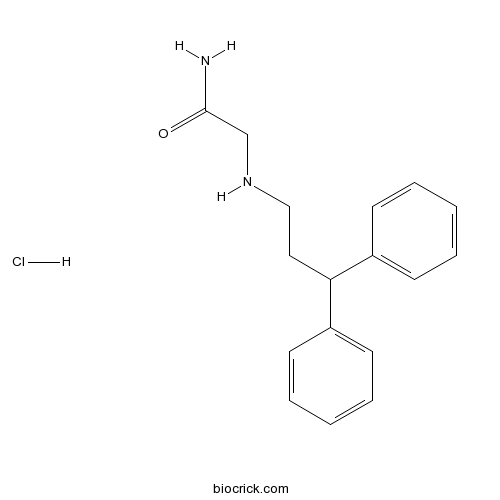
N20C hydrochloride
1177583-87-7
-
BCC2676
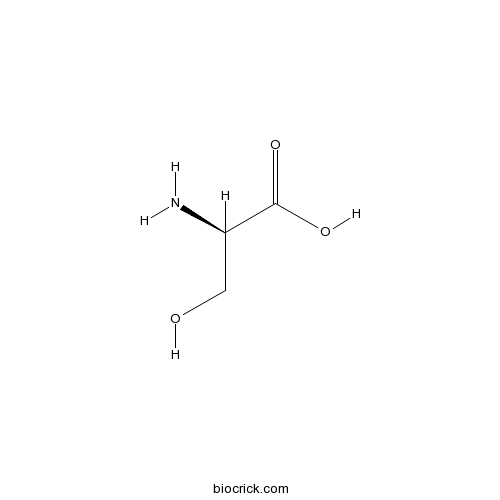
H-D-Ser-OH
(R)-Serine, an endogenous amino acid involved in glia-synapse interactions that has unique neurotransmitter characteristics, is a potent co-agonist at the NMDA glutamate receptor. (R)-Serine has a cardinal modulatory role in major NMDAR-dependent processes including NMDAR-mediated neurotransmission, neurotoxicity, synaptic plasticity, and cell migration.
-
BCC6864
Spermine tetrahydrochloride
Spermine tetrahydrochloride is an endogenous metabolite.

-
BCC6590
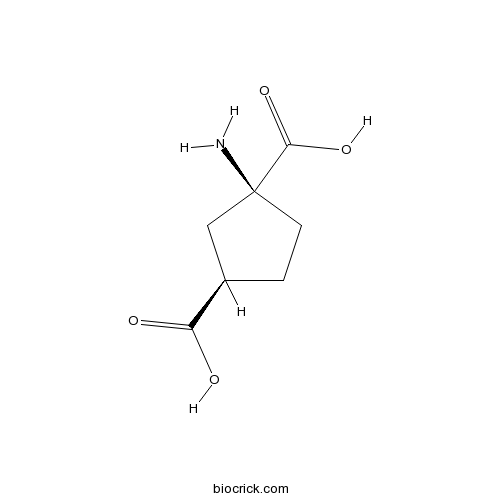
(1S,3R)-ACPD
111900-32-4
-
BCC6567
(±)-trans-ACPD
trans-ACPD, a metabotropic receptor agonist, produces calcium mobilization and an inward current in cultured cerebellar Purkinje neurons.