Stroke Research
Stroke is classified as both a neurological and a cardiovascular disease, as it is a disruption in blood supply to the brain which causes the neurological abnormalities. There are two types of stroke; ischemic and hemorrhagic.
Stroke Research Products Targets
- Adenosine A2B Receptor (7)
- Adenosine A2A Receptor (11)
- Caspase (9)
- Voltage-gated Sodium (NaV) Channel (30)
- Voltage-gated Potassium (KV) Channel (38)
- Voltage-gated Calcium Channel (CaV) (38)
- Lipoxygenase (8)
- Others (20)
- Cyclooxygenase (24)
- Epithelial Sodium Channel (3)
- STIM-Orai Channel (4)
- Ryanodine Receptor (6)
- Natriuretic Peptide Receptor (4)
- 5-HT7 Receptor (11)
- 5-HT6 Receptor (14)
- 5-ht5 Receptor (2)
- 5-HT4 Receptor (17)
- Glutamate (Metabotropic) Group III Receptor (26)
- Glutamate (Metabotropic) Group II Receptor (33)
- Glutamate (Metabotropic) Group I Receptor (54)
- AMPA Receptor (45)
- GABAA-ρ Receptor (8)
- GABAA Receptor (66)
- NMDA Receptor (87)
- Kainate Receptor (22)
- IP3 Receptor (2)
- Glutamate Transporter (18)
- Adenosine A3 Receptor (8)
- Adenosine A1 Receptor (12)
- Acid-Sensing Ion Channel (3)
- Calcium-Activated Potassium (KCa) Channel (19)
- Calcium-Sensitive Protease Modulator (12)
- Inward Rectifier Potassium (Kir) Channel (21)
- NO donors and precursors (9)
- nNOS (5)
- iNOS (11)
- eNOS (1)
- Prostanoid Receptor (24)
Products for Stroke Research - Page 38
- Cat.No. Product Name Information/Activity
-
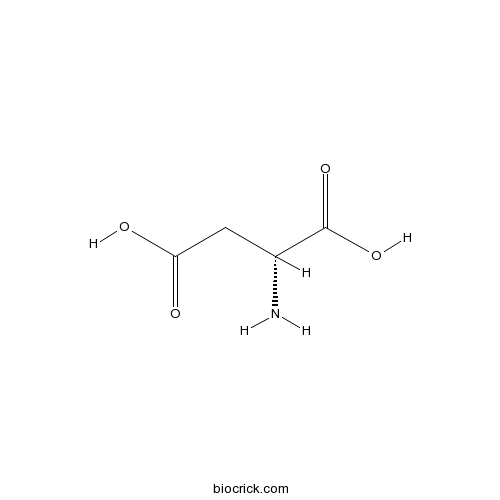
BCC2894
H-D-Asp-OH
(-)-Aspartic acid is an endogenous NMDA receptor agonist.
-
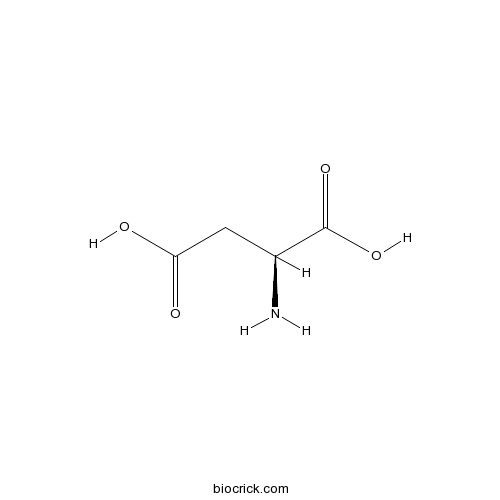
BCC2881
H-Asp-OH
L-Aspartic acid is is an amino acid, shown to be a suitable prodrug for colon-specific drug deliverly.
-
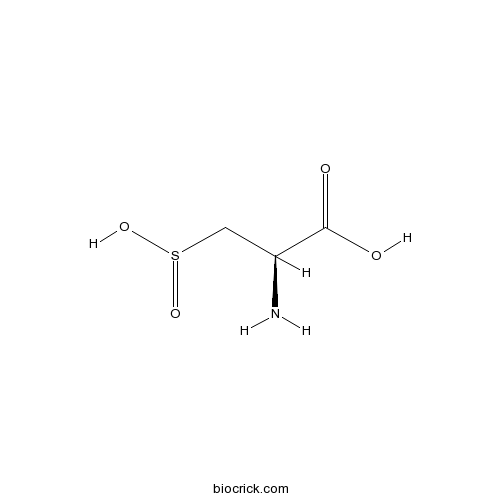
BCC6571
L-Cysteinesulfinic acid
L-Cysteinesulfinic acid is a potent agonist at several rat metabotropic glutamate receptors (mGluRs) with pEC50s of 3.92±0.03, 4.6±0.2, 3.9±0.2, 2.7±0.2, 4.0±0.2, and 3.94±0.08 for mGluR1, mGluR5, mGluR2, mGluR4, mGluR6, and mGluR8, respectively.
-
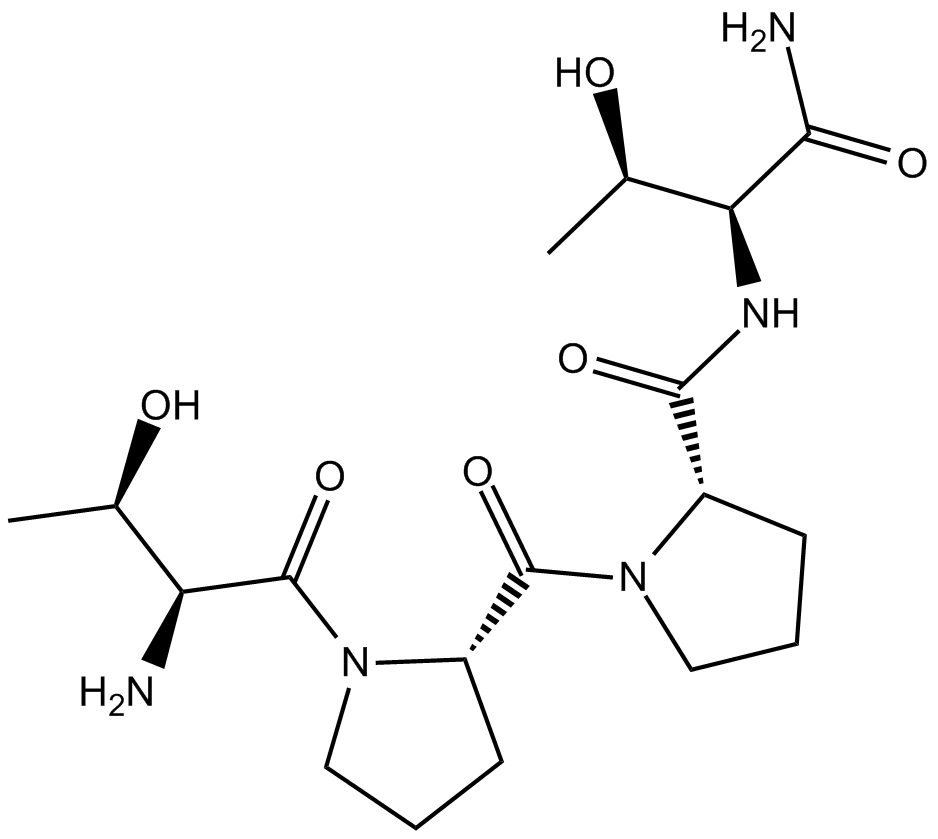
BCC6013
GLYX 13
Rapastinel (GLYX-13) is an N-methyl-D-aspartate receptor (NMDAR) modulator that has characteristics of a glycine site partial agonist.
-
BCC6588
(R)-(+)-HA-966
(R)-(+)-HA-966 ((+)-HA-966) is a partial agonist/antagonist of glycine site of the N-methyl-D-aspartate (NMDA) receptor complex. (R)-(+)-HA-966 selectively blocks the activation of the mesolimbic dopamine system by amphetamine. (R)-(+)-HA-966 can cross the blood-brain barrier and has the potential for neuropathic and acute pain.

-
BCC6570
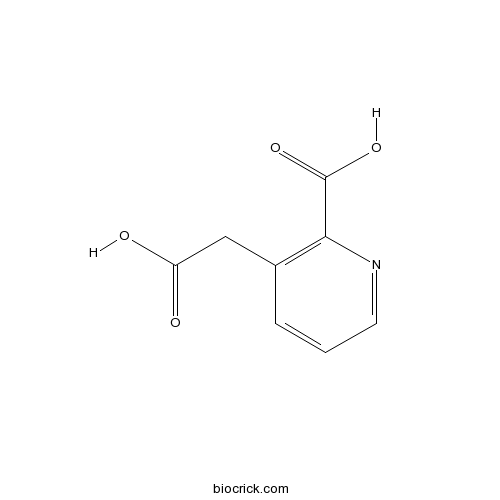
Homoquinolinic acid
490-75-5
-
BCC6591
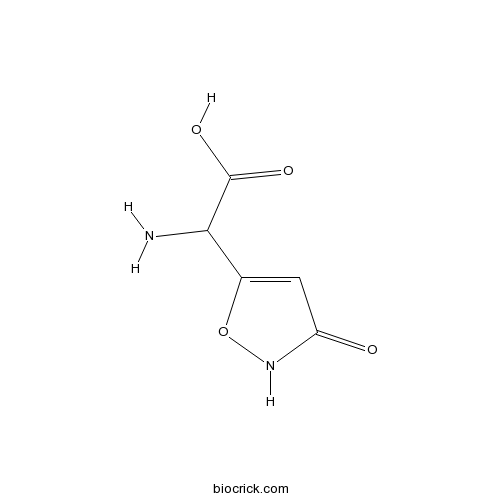
Ibotenic acid
Ibotenic acid has agonist activity at both the N-methyl-D-aspartate (NMDA) and trans-ACPD or metabolotropic quisqualate (Qm) receptor sites.
-
BCC4590
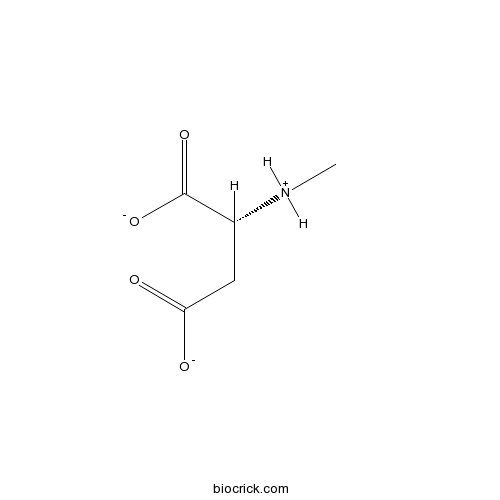
NMDA (N-Methyl-D-aspartic acid)
NMDA is a specific agonist for NMDA receptor mimicking the action of glutamate, the neurotransmitter which normally acts at that receptor.
-
BCC6573
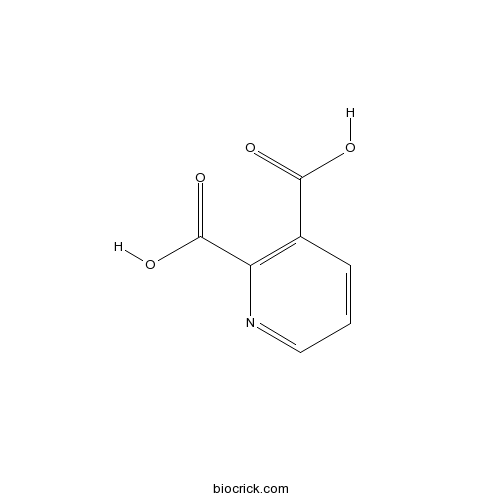
Quinolinic acid
Quinolinic acid is an endogenous N-methyl-D-aspartate (NMDA) receptor agonist synthesized from L-tryptophan via the kynurenine pathway and thereby has the potential of mediating N-methyl-D-aspartate neuronal damage and dysfunction.
-
BCC6865
Spermidine trihydrochloride
Spermidine trihydrochloride maintains cell membrane stability, increases antioxidant enzymes activities, improving photosystem II (PSII), and relevant gene expression. Spermidine trihydrochloride significantly decreases the H2O2 and O2.- contents.