Calcium-Sensitive Protease Modulators
Calpain and cathepsin are calcium-sensitive proteases. Calpains are a family of 14 cysteine proteases that are involved in a range of cellular processes. Cathepsins are lysosomal calcium-sensitive proteases that have a key role in cellular protein turnover.
Products for Calcium-Sensitive Protease Modulators
- Cat.No. Product Name Information/Activity
-
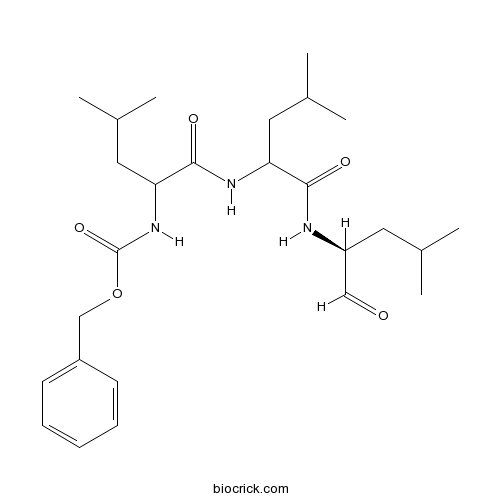
BCC1234
Calpain Inhibitor II, ALLM
Cathepsin inhibitor,Odanacatib (MK 0822) is a potent, selective, and neutral inhibitor of cathepsin K (human/rabbit) with IC50 of 0.2 nM/1 nM, and demonstrated high selectivity versus off-target cathepsin B, L, S. Phase 3.
-
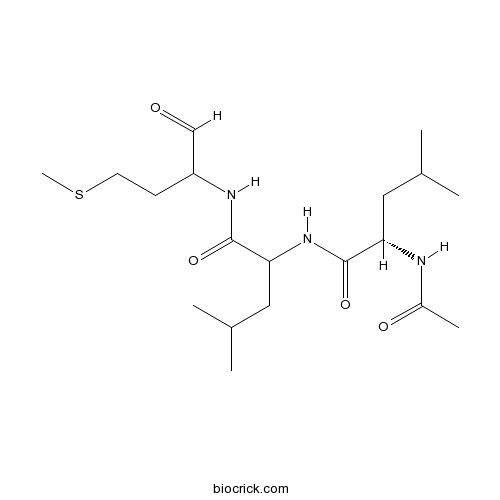
BCC1141
CA 074
CA-074 is a potent inhibitor of cathepsin B with a Ki of 2 to 5 nM.
-
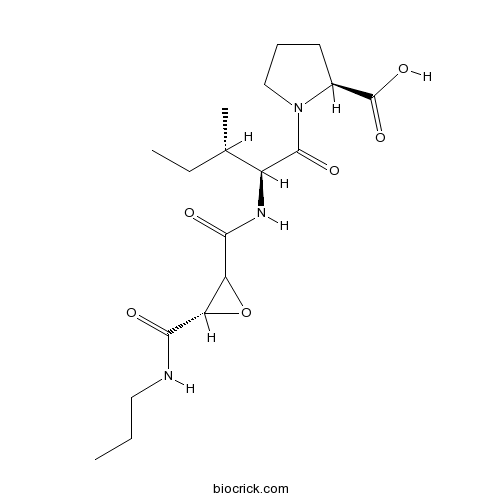
BCC2350
Acetyl-Calpastatin (184-210) (human)
Selective calpain inhibitor
-
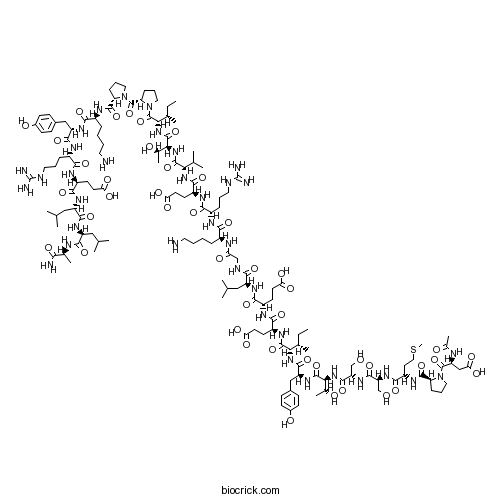
BCC2351
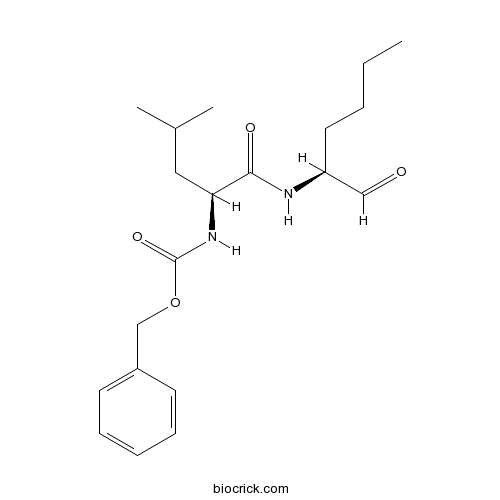
Calpeptin
Calpeptin is a potent, cell penetrating calpain inhibitor, with an ID50 of 40 nM for Calpain I in human platelets. Calpeptin is also an inhibitor of cathepsin K.
-
BCC1222
E-64
E-64 (Proteinase inhibitor E 64) is a potent irreversible inhibitor against general cysteine proteases with IC50 of 9 nM for papain.

-
BCC1127
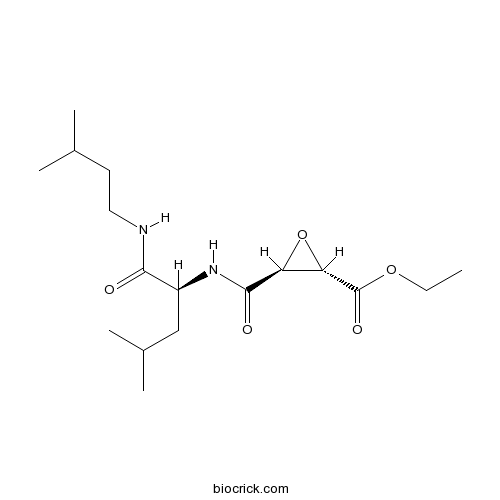
E 64d
Aloxistatin (E64d) is a cell-permeable and irreversible broad-spectrum cysteine protease inhibitor.
-
BCC2361
L 006235
Potent cathepsin K inhibitor

-
BCC2352
MDL 28170
MDL-28170 (Calpain Inhibitor III) is a potent, selective and membrane-permeable cysteine protease inhibitor of calpain that rapidly penetrates the blood-brain barrier following systemic administration. MDL-28170 also block γ-secretase.

-
BCC1233
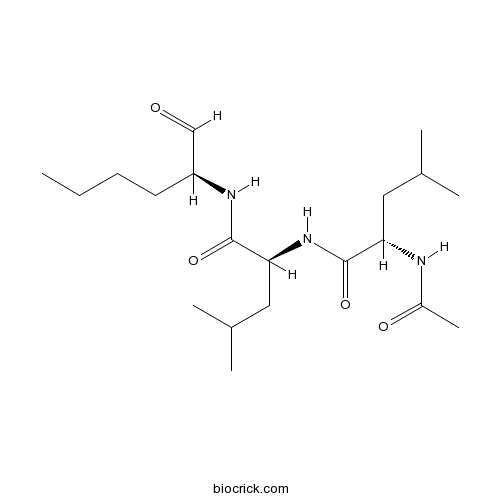
Calpain Inhibitor I, ALLN
MG-101 is a potent inhibitor of cysteine proteases which inhibits calpain I, calpain II, cathepsin B and cathepsin L with Kis of 190, 220, 150 and 500 pM, respectively.
-
BCC1227
MG-132
MG-132 (Z-Leu-leu-leu-al) is a potent proteasome and calpain inhibitor with IC50s of 100 nM and 1.2 μM, respectively. MG-132 effectively blocks the proteolytic activity of the 26S proteasome complex. MG-132, a peptide aldehyde, also is an autophagy activator. MG-132 also induces apoptosis.