Protease-Activated Receptor
Protease-activated receptors (PARs, also known as thrombin receptors) are G-protein-coupled receptors, activated by cleavage of their N-terminal domains by serine proteases. Hydrolysis reveals a tethered peptide ligand, which affects transmembrane signaling.
Products for Protease-Activated Receptor - Page 2
- Cat.No. Product Name Information/Activity
-
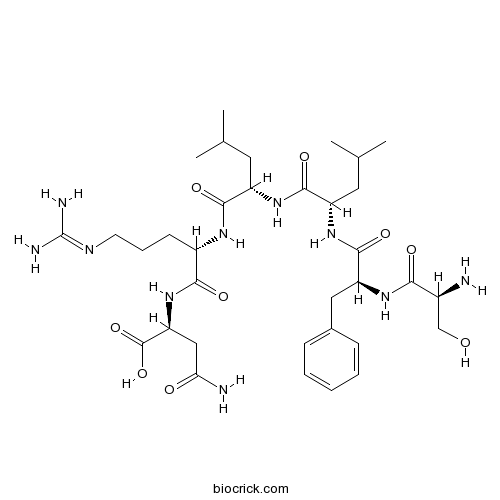
BCC3957
TRAP-6
TRAP-6 (PAR-1 agonist peptide) is a protease-activated receptor 1 (PAR1) agonist.
-
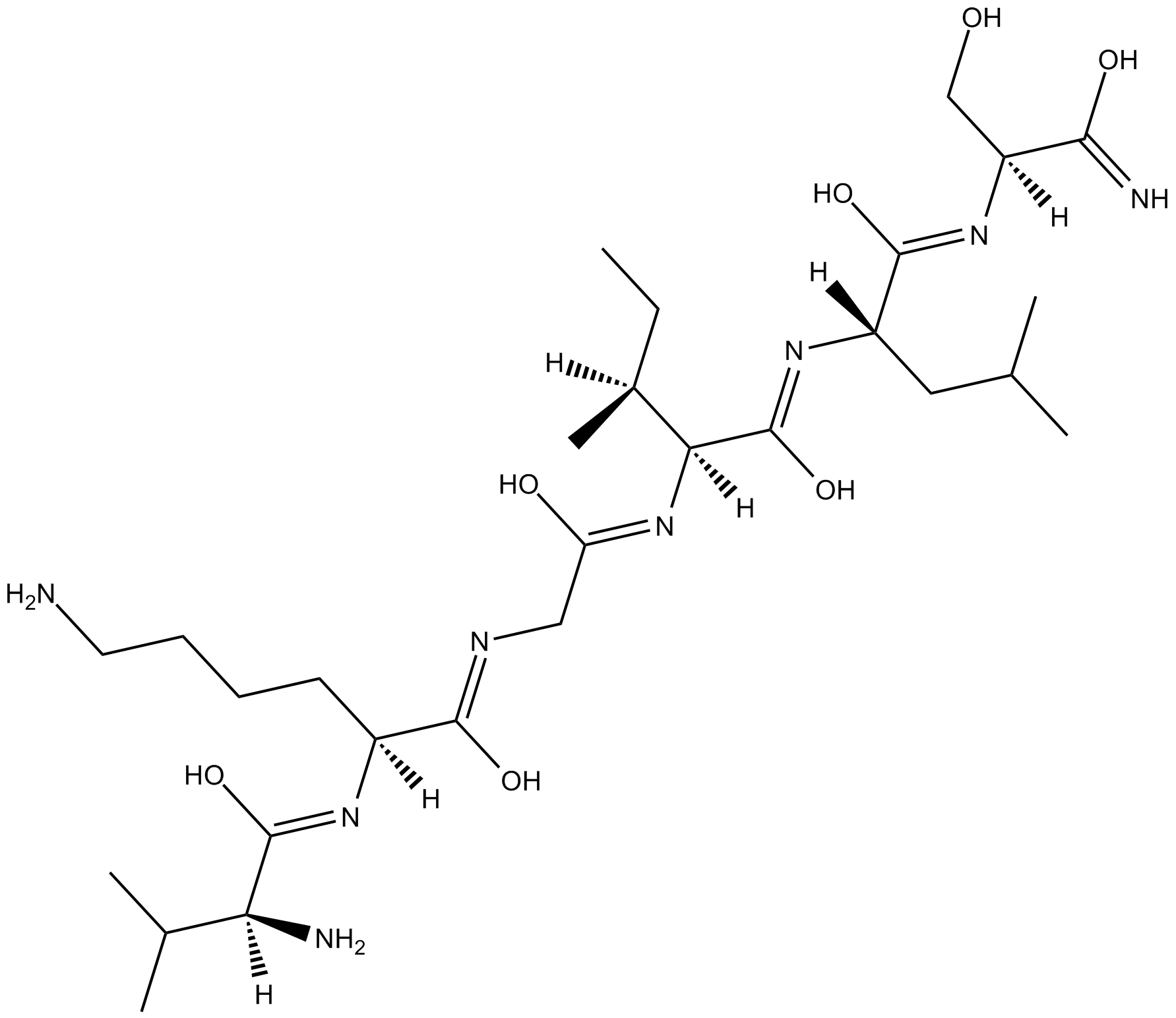
BCC3953
VKGILS-NH2
Control peptide for SLIGKV-NH<sub>2</sub>
-
BCC7734
FR 171113
173904-50-2

-
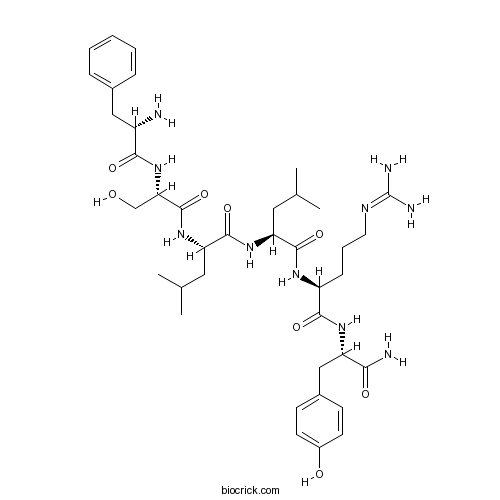
BCC6279
FSLLRY-NH2
245329-02-6
-
BCC7433
RWJ 56110
252889-88-6

-
BCC7125
SCH 79797 dihydrochloride
SCH79797 dihydrochloride is a highly potent, selective nonpeptide protease activated receptor 1 (PAR1) antagonist. SCH79797 dihydrochloride inhibits binding of a high-affinity thrombin receptor-activating peptide to PAR1 with an IC50 of 70 nM and a Ki of 35 nM. SCH79797 dihydrochloride inhibits thrombin-induced platelet aggregation with an IC50 of 3 μM. SCH79797 dihydrochloride has antiproliferative and pro-apoptotic effects, and limits myocardial ischemia/reperfusion injury in rat hearts. SCH79797 dihydrochloride also potently prevents PAR1 activation in vascular smooth muscle cells, endothelial cells, and astrocytes.

-
BCC5770
tcY-NH2
327177-34-4

-
BCC6281
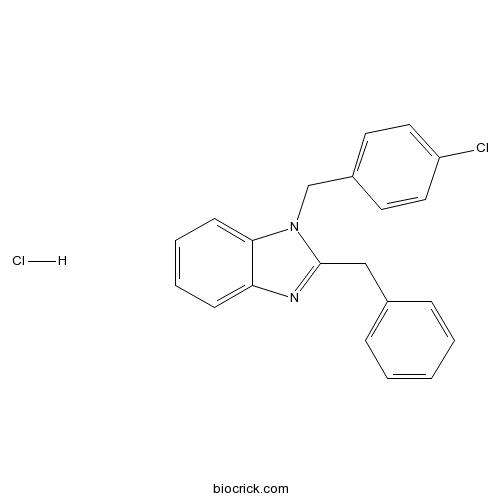
Q94 hydrochloride
1052076-77-3
-
BCC7392
APC 366
Tryptase inhibitor

-
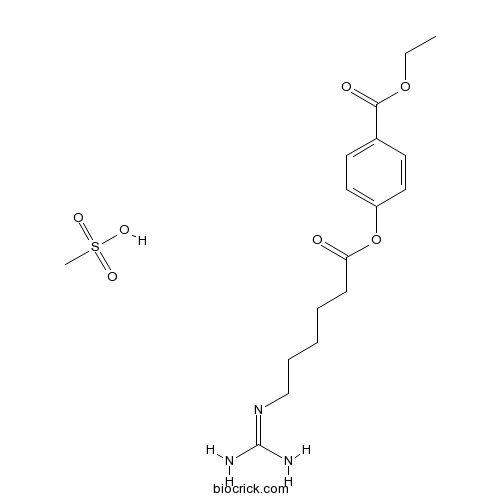
BCC2096
Gabexate mesylate
Gabexate mesylate is a Factor X inhibitor; serine protease inhibitor .