
Products for Sesquiterpenoids
-
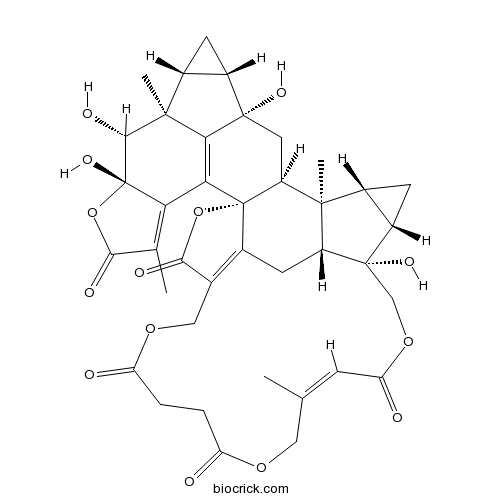
BCN6613
Chloramultilide B
Botanical source: The herb of Chloranthus spicatus.
(CAS NO.:
1000995-47-0)
-
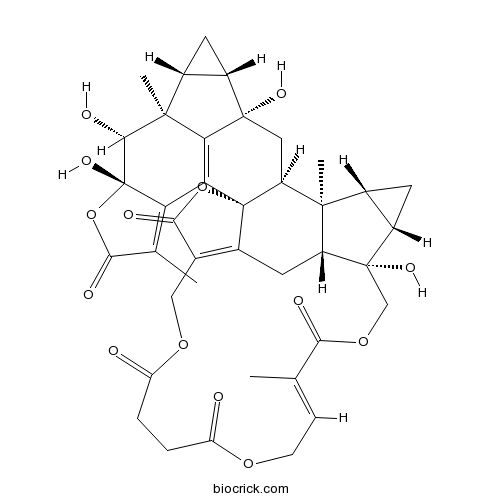
BCN6618
Chloramultilide C
Botanical source: The herb of Chloranthus spicatus.
(CAS NO.:
1000995-48-1)
-
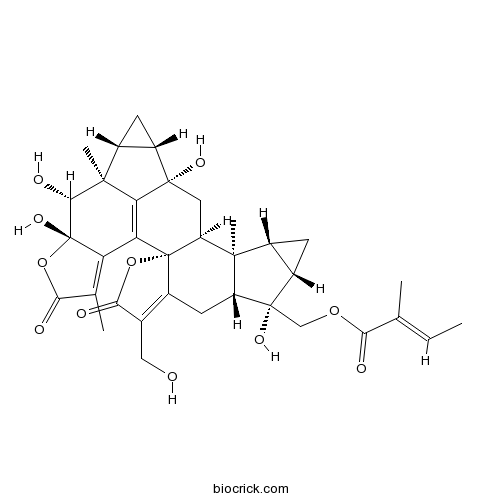
BCN7102
Chloramultilide D
Botanical source: The whole plants of Chloranthus spicatus.
(CAS NO.:
1000995-49-2)
-
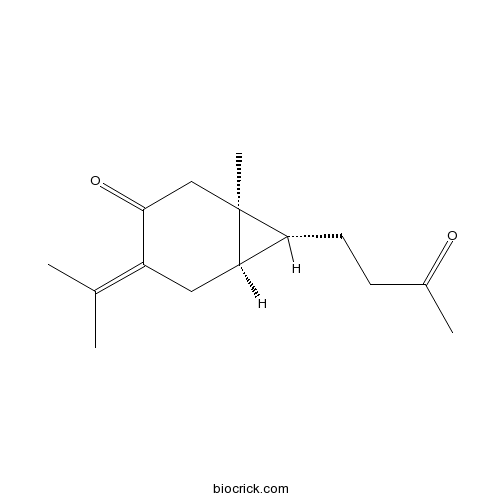
BCN3008
Curcumenone
Botanical source: The rhizome of Curcuma zedoaria
(CAS NO.:
100347-96-4)
-
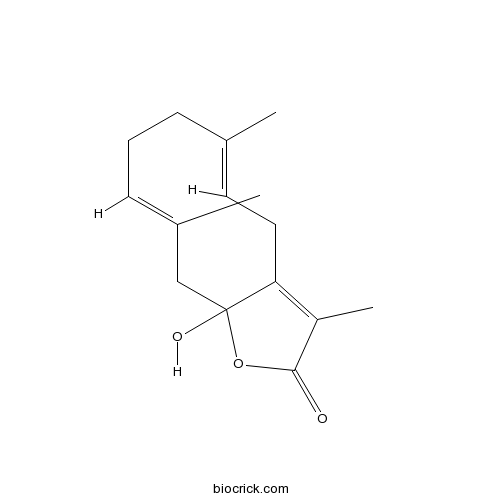
BCN3695
Aeruginolactone
Botanical source: The rhizomes of Curcuma rcenyujin Y,H. Chenet C.Ling
(CAS NO.:
1005208-88-7)
-
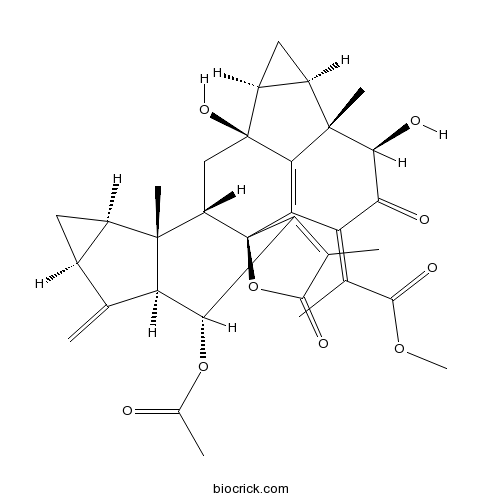
BCN7256
Chlorahololide C
Botanical source: The whole plants of Chloranthus holostegius.
(CAS NO.:
1007859-25-7)
-
BCC8935
Diacetylpiquerol A
Botanical source: The herbs of Vernonia volkameriifolia
(CAS NO.:
130466-34-1)

-
BCN5830
Sulfocostunolide A
Botanical source: The root of Saussurea lappa
(CAS NO.:
1016983-51-9)

-
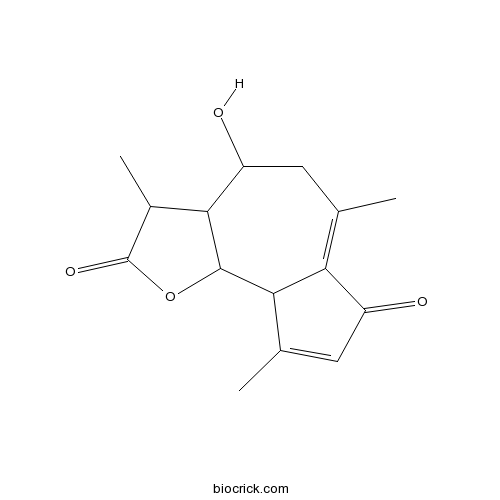
BCN7258
Desacetylmatricarin
Botanical source: The herbs of Taraxacum platycarpum.
(CAS NO.:
10180-88-8)
-
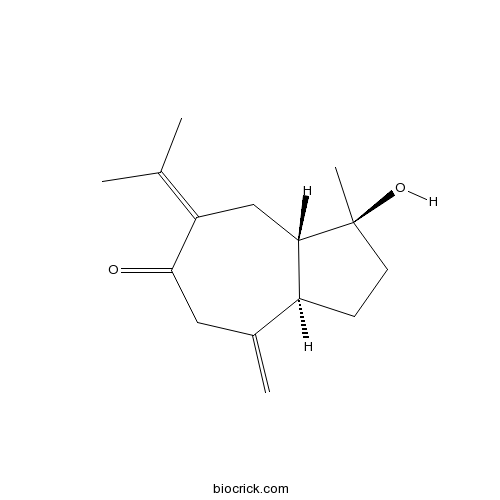
BCN3528
Isoprocurcumenol
Botanical source: The rhizome of Curcuma phaeocaulis.
(CAS NO.:
102130-90-5)
-
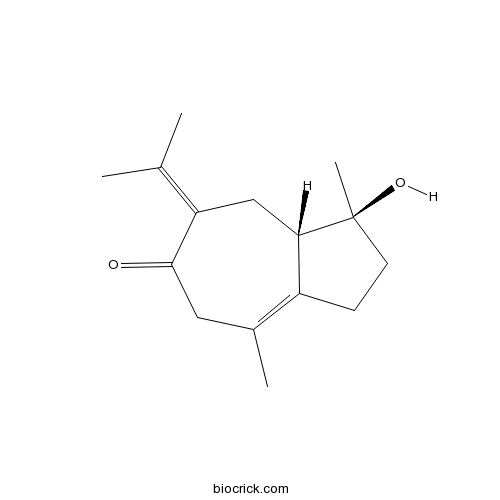
BCN3694
Neoprocurcumenol
Botanical source: The rhizomes of Curcuma zedoaria
(CAS NO.:
102130-91-6)
-
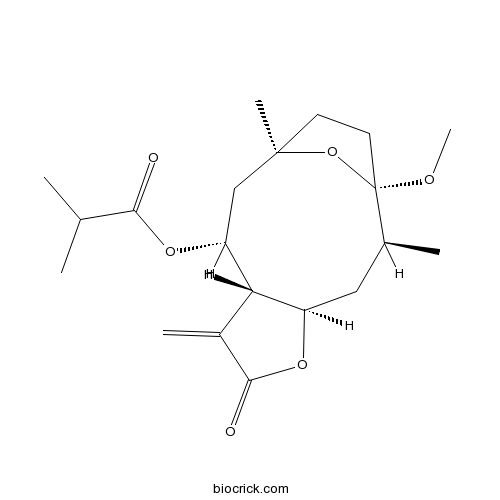
BCN5837
3-O-Methyltirotundin
Botanical source: The herb of Tithonia diversifolia
(CAS NO.:
1021945-29-8)
-
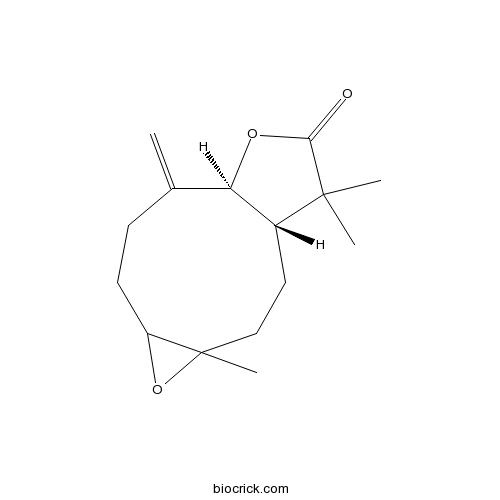
BCN5838
Epoxyparvinolide
Botanical source: The herb of Pogostemon parviflorus
(CAS NO.:
102227-61-2)
-
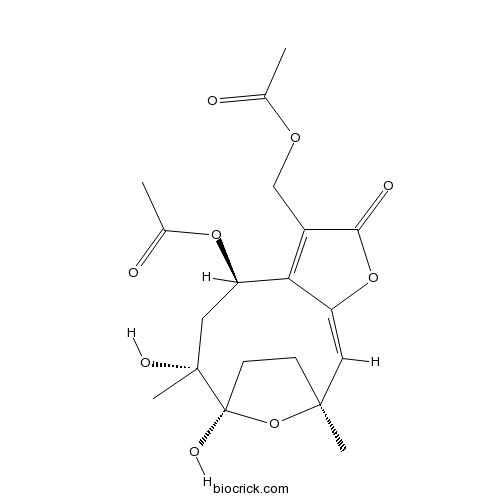
BCN4737
Diacetylpiptocarphol
Diacetylpiptocarphol has antiplasmodial activity
(CAS NO.:
103476-99-9)
-
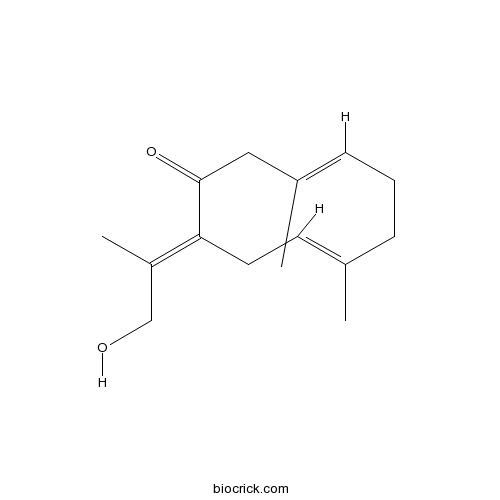
BCN3556
13-Hydroxygermacrone
Botanical source: The rhizomes of Curcuma zedoaria
(CAS NO.:
103994-29-2)
-
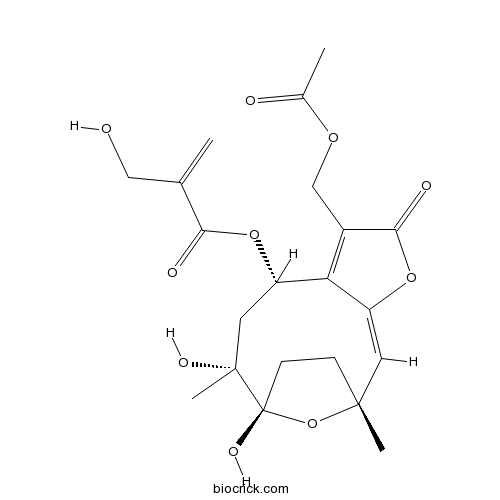
BCN7113
4'-Hydroxypiptocarphin A
Botanical source: The herbs of Vernonia volkameriifolia
(CAS NO.:
103994-39-4)
-
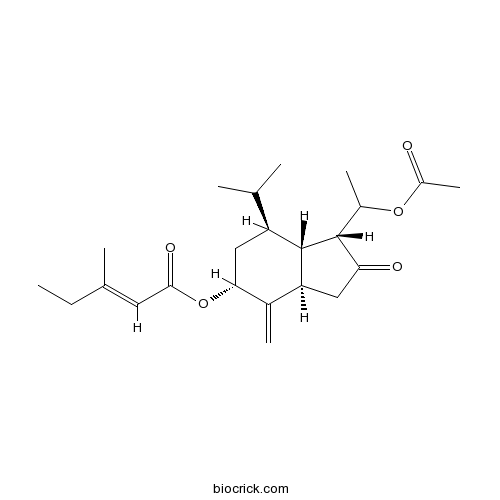
BCN2770
Tussilagone
Tussilagone, a major active component in Tussilago farfara, has anti-inflammatory effect. Tussilagone ameliorates inflammatory responses in dextran sulphate sodium-induced murine colitis. Tussilagone inhibits the inflammatory response and improves survival in cecal ligation and puncture (CLP)-induced septic mice.
(CAS NO.:
104012-37-5)
-
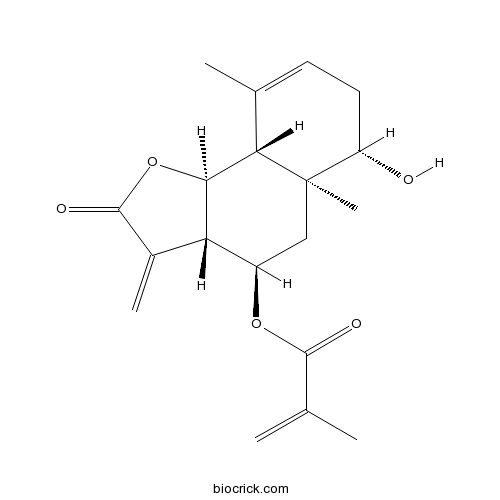
BCN4756
8alpha-Methacryloyloxybalchanin
Botanical source: The herbs of Elephantopus scaber
(CAS NO.:
104021-39-8)
-
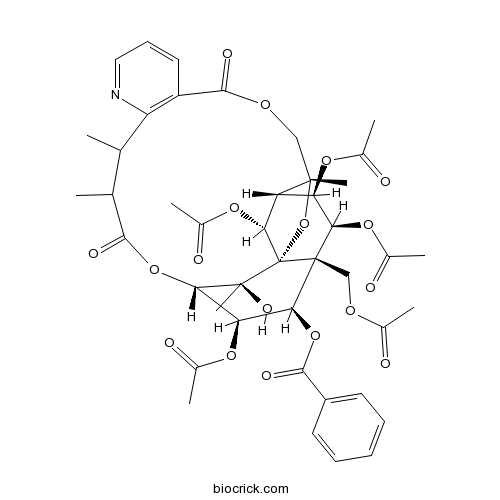
BCN3098
Mayteine
Botanical source:
(CAS NO.:
104736-05-2)
-
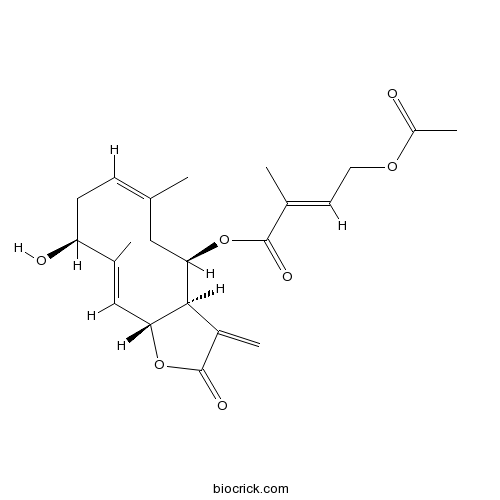
BCN7263
4E-Deacetylchromolaenide 4'-O-acetate
Botanical source: The herbs of Chromolaena glaberrima.
(CAS NO.:
104736-09-6)
-
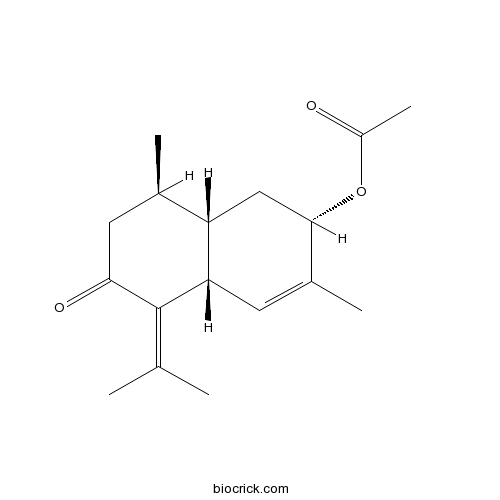
BCN5865
3-Acetoxy-4,7(11)-cadinadien-8-one
Botanical source: The herbs of Eupatorium adenophorum
(CAS NO.:
104975-02-2)
-
BCN6638
Ligucyperonol
Botanical source: The flower buds of Tussilago farfara.
(CAS NO.:
105108-20-1)

-
BCN5866
9-Oxoageraphorone
Botanical source: The herbs of Eupatorium adenophorum
(CAS NO.:
105181-06-4)

-
BCN5870
Sulfocostunolide B
Botanical source: The roots of Saussurea lappa
(CAS NO.:
1059671-65-6)

-
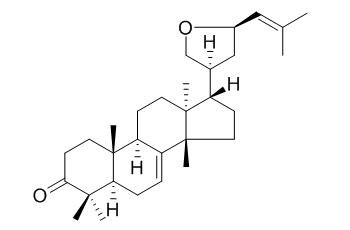
BCN7269
Bisabola-2,10-diene-1,9-dione
Botanical source: The leaves of Alpinia intermedia
(CAS NO.:
107439-25-8)

BioCrick BioTech
88# Keyuan road,Hi-Tech Zone
Chengdu, Sichuan 610042, PRC
Email: info@biocrick.com
Tel:86-28-8543-3893


88# Keyuan road,Hi-Tech Zone
Chengdu, Sichuan 610042, PRC
Email: info@biocrick.com
Tel:86-28-8543-3893
Follow us:
BioCrick is one of the biggest natural products manufacturers in Asia
Our products can be used as reference standards,inhibitors in pharmacological research
Our MISSION is to provide Best-in-class High-purity natural compounds to researchers all around the world

© 2007-2026 BioCrick BioTech. All rights reserved. sitemap