Cancer Research
Cancer is a term used to define a group of diseases in which abnormal cells divide without control, are able to invade neighboring tissues/organs and metastasize. Cancer has been characterized by six hallmarks; self sufficiency in proliferative growth signals, insensitivity to growth inhibitors, evasion of apoptosis, limitless replicative potential, ability to develop blood vessels (angiogenesis), and tissue invasion and metastasis.
Cancer Research Products Areas
Products for Cancer Research - Page 74
- Cat.No. Product Name Information/Activity
-
BCC5382
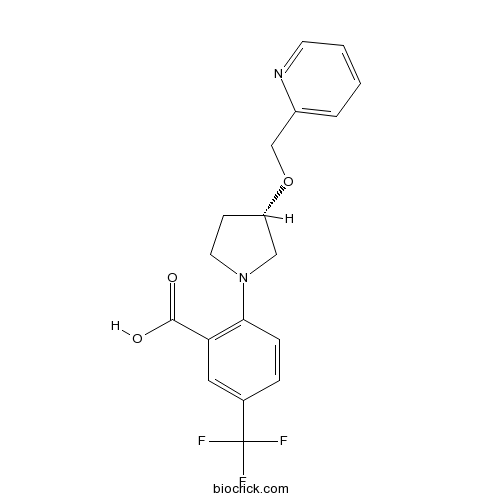
XEN445
XEN445 is a potent and selective EL inhibitor(IC50=0.237 uM), that showed good ADME and PK properties, and demonstrated in vivo efficacy in raising plasma HDLc concentrations in mice.
-
BCC6223
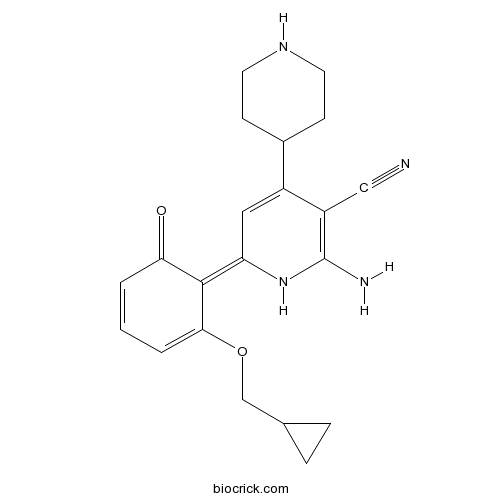
ACHP
406208-42-2
-
BCN6291
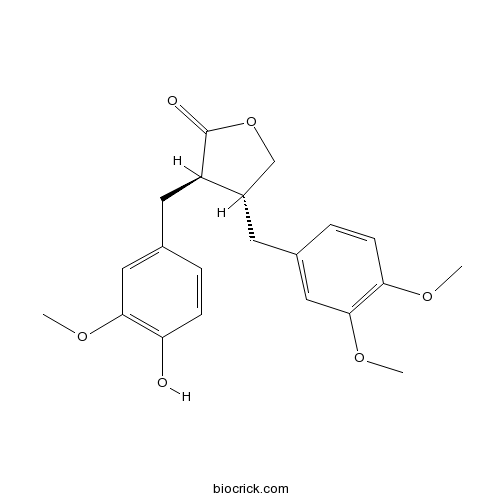
Arctigenin
Arctigenin is a lignan found in certain plants of the Asteraceae; it has shown antiviral and anticancer effects in glass; it is the aglycone of arctiin.
-
BCC5105
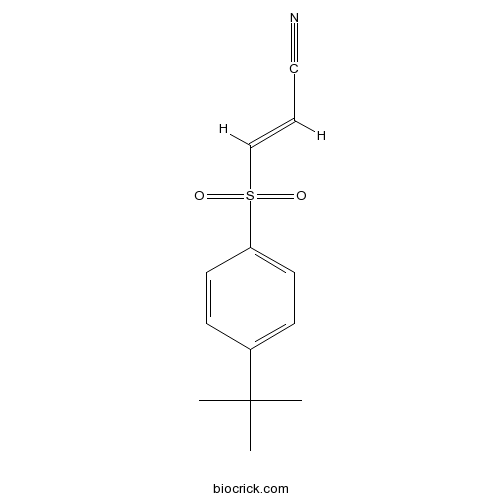
Bay 11-7085
BAY 11-7085 is an inhibitor of NF-κB activation and phosphorylation of IκBα; it stabilizes IκBα with an IC50 of 10 μM.
-
BCC2244
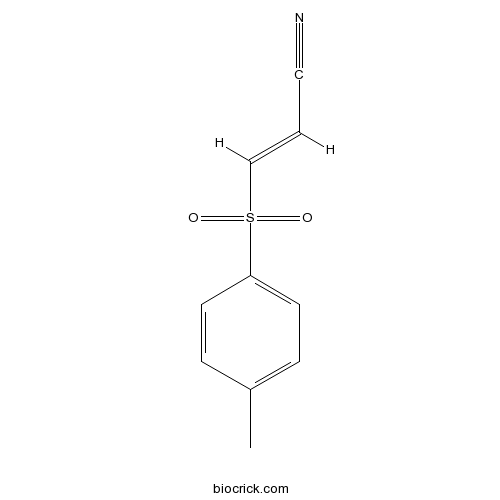
Bay 11-7821(BAY 11-7082)
BAY 11-7082 is an IκBα phosphorylation and NF-κB inhibitor. BAY 11-7082 selectively and irreversibly inhibits the TNF-α-induced phosphorylation of IκB-α, and decreases NF-κB and expression of adhesion molecules. BAY 11-7082 inhibits ubiquitin-specific protease USP7 and USP21 (IC50=0.19, 0.96 μM, respectively). BAY 11-7082 inhibits gasdermin D (GSDMD) pore formation in liposomes and inflammasome-mediated pyroptosis and IL-1β secretion in human and mouse cells.
-
BCC1423
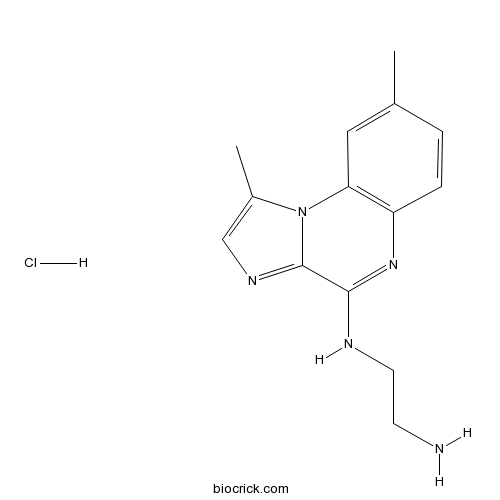
BMS-345541
BMS-345541 hydrochloride is a selective inhibitor of the catalytic subunits of IKK (IKK-2 IC50=0.3 μM, IKK-1 IC50=4 μM). BMS-345541 binds at an allosteric site of IKK.
-
BCN2695
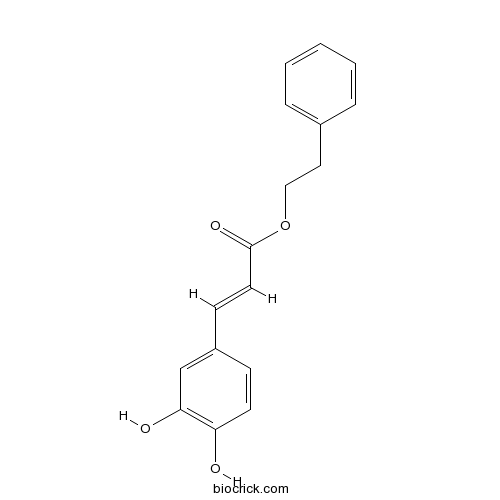
Caffeic acid phenethyl ester
Caffeic acid phenethyl ester is a NF-κB inhibitor.
-
BCN1184
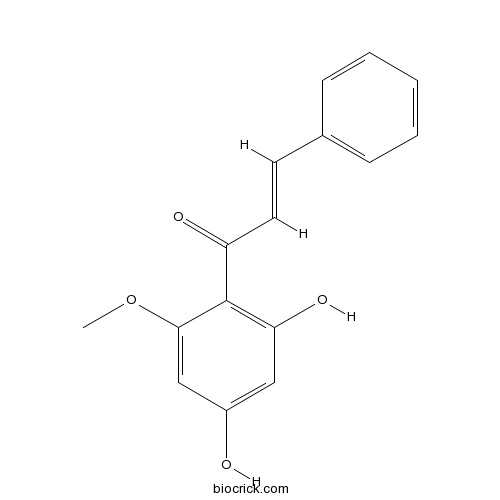
Cardamonin
(E)-Cardamonin ((E)-Cardamomin) is a novel antagonist of hTRPA1 cation channel with an IC50 of 454 nM.
-
BCC1481
1-(3,5-Di-tert-butyl-4-hydroxyphenyl)-2-(2-(3-hydroxypropylamino)-5,6-dimethyl-1H-benzo[d]imidazol-1-yl)ethanone
CID-2858522 is a highly potent and selective antigen receptor-mediated NF-κB activation inhibitor with an IC50 of 70 nM.
![1-(3,5-Di-tert-butyl-4-hydroxyphenyl)-2-(2-(3-hydroxypropylamino)-5,6-dimethyl-1H-benzo[d]imidazol-1-yl)ethanone chemical structure](/media/images/struct/BCC1481.png)
-
BCN3894
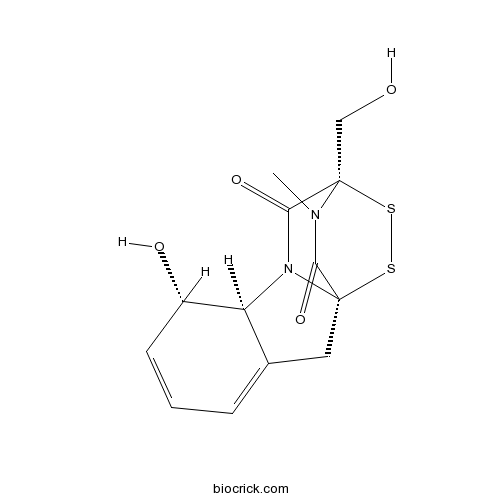
Gliotoxin
Gliotoxin is a secondary metabolite, the most abundant mycotoxin secreted by A. fumigatus, inhibits the phagocytosis of macrophages and the immune functions of other immune cells . Gliotoxin inhibits inducible NF-κB activity by preventing IκB degradation, which consequently induces host-cell apoptosis. Gliotoxin activates PKA and increases intracellular cAMP concentration; modulates actin cytoskeleton rearrangement to facilitate A. fumigatus internalization into lung epithelial cells.