Cancer Metabolism
Genetic alterations and epigenetic modifications of cancer cells result in cellular metabolic pathways that are different in comparison to normal cells. Due to the inherent genetic instability of cancer cells, tumors are heterogeneous with a myriad microenvironments and multiple altered metabolic pathways, which could provide useful cancer therapeutic targets.
Cancer Metabolism Products Targets
- Ribonucleotide Reductase (2)
- PFKFB3 (3)
- Oxidative Phosphorylation (6)
- NHE (3)
- MTH1 (1)
- Monocarboxylate Transporter (3)
- Monoacylglycerol Lipase (6)
- Lactate Dehydrogenase A (1)
- HMG-CoA Reductase (8)
- Hexokinases (1)
- Glutaminase (1)
- Glucose Transporter (2)
- Fatty Acid Synthase (3)
- Dihydrofolate Reductase (2)
- Carbonic Anhydrase (2)
- ATP Citrate Lyase (3)
Products for Cancer Metabolism - Page 4
- Cat.No. Product Name Information/Activity
-
BCC7994
CHC
28166-41-8

-
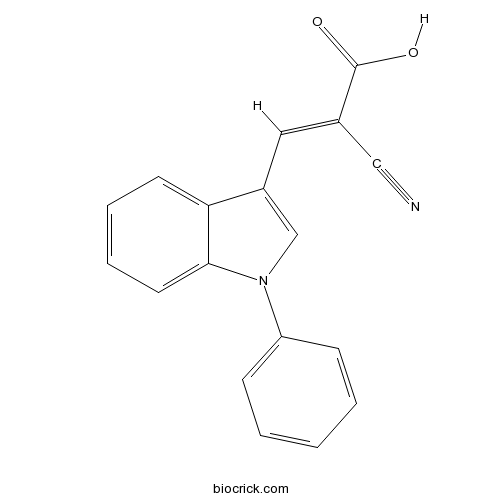
BCC2021
UK-5099
UK-5099 (PF-1005023) is a potent inhibitor of the mitochondrial pyruvate carrier (MPC). UK-5099 (PF-1005023) inhibits pyruvate-dependent O2 consumption with an IC50 of 50 nM.
-
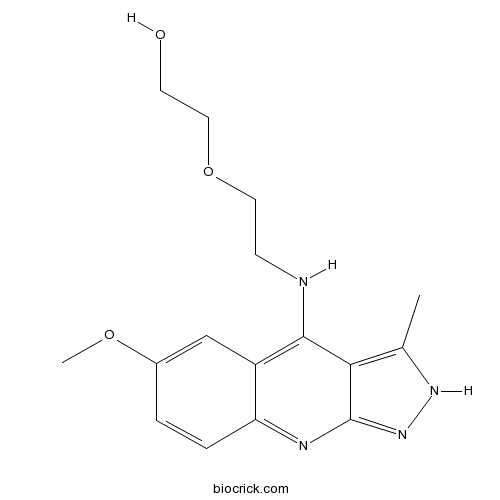
BCC5613
SCH 51344
Potent MTH1 inhibitor
-
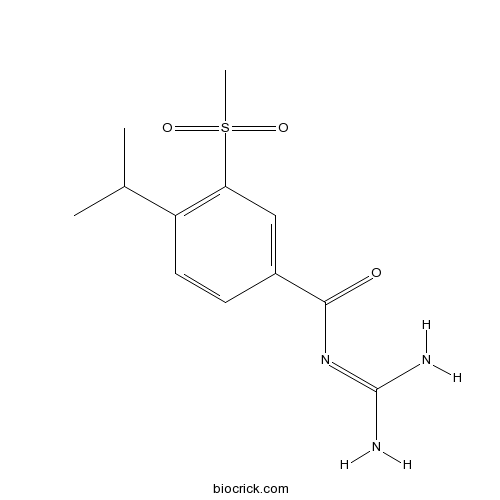
BCC6432
CARIPORIDE
Cariporide (HOE-642) is a selective Na+/H+ exchange inhibitor.
-
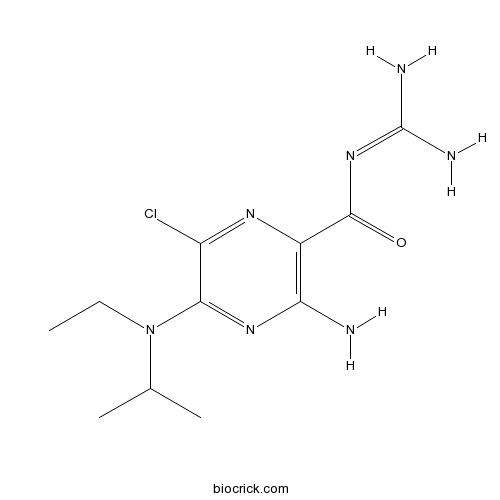
BCC7672
EIPA
EIPA (L593754) is a TRPP3 channel inhibitor with an IC50 of 10.5 μM. EIPA also inhibits Na+/H+-exchanger (NHE) and macropinocytosis.
-
BCC7461
Zoniporide dihydrochloride
241799-10-0

-
BCC7986
Methylmalonate
Methylmalonic acid (Methylmalonate) is an indicator of Vitamin B-12 deficiency in cancer.

-
BCC6303
3-Nitropropionic acid
3-Nitropropanoic acid (β-Nitropropionic acid) is an irreversible inhibitor of succinate dehydrogenase. 3-Nitropropanoic acid exhibits potent antimycobacterial activity with a MIC value of 3.3 μM.

-
BCN5412
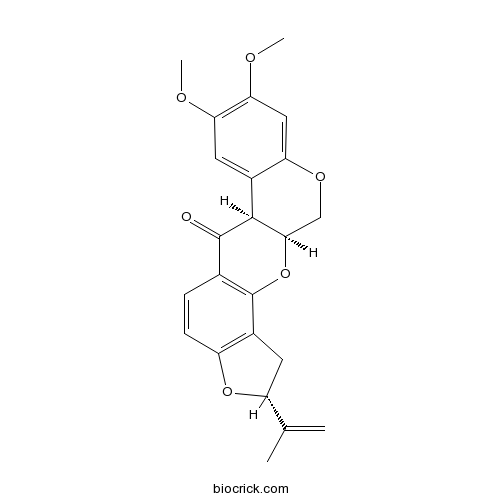
Rotenone
Rotenone is an mitochondrial electron transport chain complex I inhibitor. Rotenone induces apoptosis through enhancing mitochondrial reactive oxygen species production.
-
BCC5658
CCCP
CCCP is an oxidative phosphorylation uncoupler. CCCP induces activation of PINK1 leading to Parkin Ser65 phosphorylation.