
Myocardial Infarction Research
Myocardial infarction (MI) - more commonly referred to as a heart attack - is an acute event caused by the interruption of blood supply to regions of the heart, leading to myocardial necrosis. Infarction of a substantial area of the myocardium can disrupt normal conductance of the heart, leading to cardiac arrest.In the majority of cases, an MI is immediately preceded by the presence of an occlusive thrombus within a coronary artery, blocking blood flow to the downstream tissue. The most common cause of an occlusive thrombus within a coronary artery is the rupture of an atherosclerotic plaque. However, the occlusion of a coronary artery may also result from coronary embolism. This can occur in patients following stent placement, angioplasty, and coronary artery bypass grafting.
Myocardial Infarction Research Products Targets
- Adenosine A2B Receptor (7)
- Adenosine A2A Receptor (11)
- Voltage-gated Sodium (NaV) Channel (30)
- Voltage-gated Potassium (KV) Channel (38)
- Voltage-gated Calcium Channel (CaV) (38)
- Cell Adhesion Molecule (21)
- Others (10)
- Cyclooxygenase (24)
- Epithelial Sodium Channel (3)
- STIM-Orai Channel (4)
- Ryanodine Receptor (6)
- Angiotensin-Converting Enzyme (8)
- IP3 Receptor (2)
- Adenosine A3 Receptor (8)
- Adenosine A1 Receptor (12)
- Acid-Sensing Ion Channel (3)
- Calcium-Activated Potassium (KCa) Channel (19)
- Inward Rectifier Potassium (Kir) Channel (21)
- NO donors and precursors (9)
- nNOS (5)
- iNOS (11)
- eNOS (1)
- Stem Cell Differentiation (54)
- Delta opioid receptor (16)
- Cathepsin (9)
- Adrenergic β3 Receptor (12)
- Adrenergic β2 Receptor (6)
- Adrenergic β1 Receptor (7)
- Prostanoid Receptor (24)
Products for Myocardial Infarction Research - Page 38
- Cat.No. Product Name Information/Activity
-
BCC1451
Capsazepine
Capsazepine is a synthetic analogue of the sensory neurone excitotoxin, and an antagonist of TRPV1 receptor with an IC50 of 562 nM.

-
BCC7674
Benzamil
Benzamil hydrochloride (Benzylamiloride hydrochloride), an Amiloride analogue, is a Na+/Ca2+ exchanger (NCX) inhibitor (IC50~100 nM). Benzamil hydrochloride also is a non-selective Deg/epithelial sodium channels (ENaC) blocker, and can potentiate myogenic vasoconstriction. Benzamil hydrochloride inhibits TRPP3-mediated Ca2+-activated currents, with an IC50 of 1.1 μM.

-
BCC7673
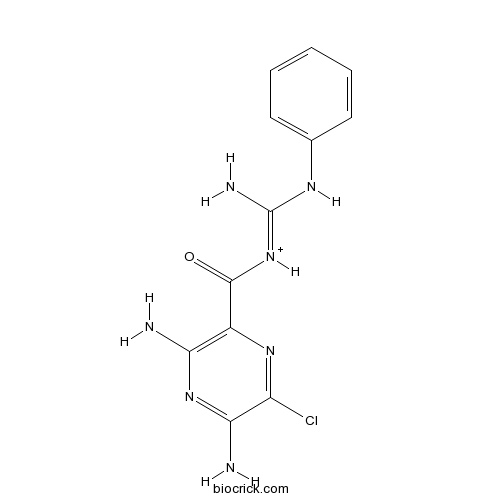
Phenamil
1161-94-0
-
BCC7515
Veratridine
Veratridine (3-Veratroylveracevine), a alkaloid derived from plants in the family Liliaceae, is a sodium channel agonist. Veratridine inhibits the peak current of Nav1.7, with an IC50 of 18.39 µM.

-
BCC5075
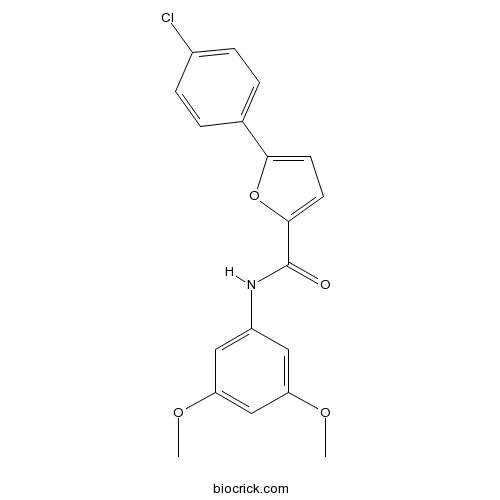
A-803467
A 803467 is a selective Nav1.8 sodium channel blocker with an IC50 of 8 nM; over 100-fold more selective vs. human Nav1.2, 1.3, 1.5 and 1.7.
-
BCC7898
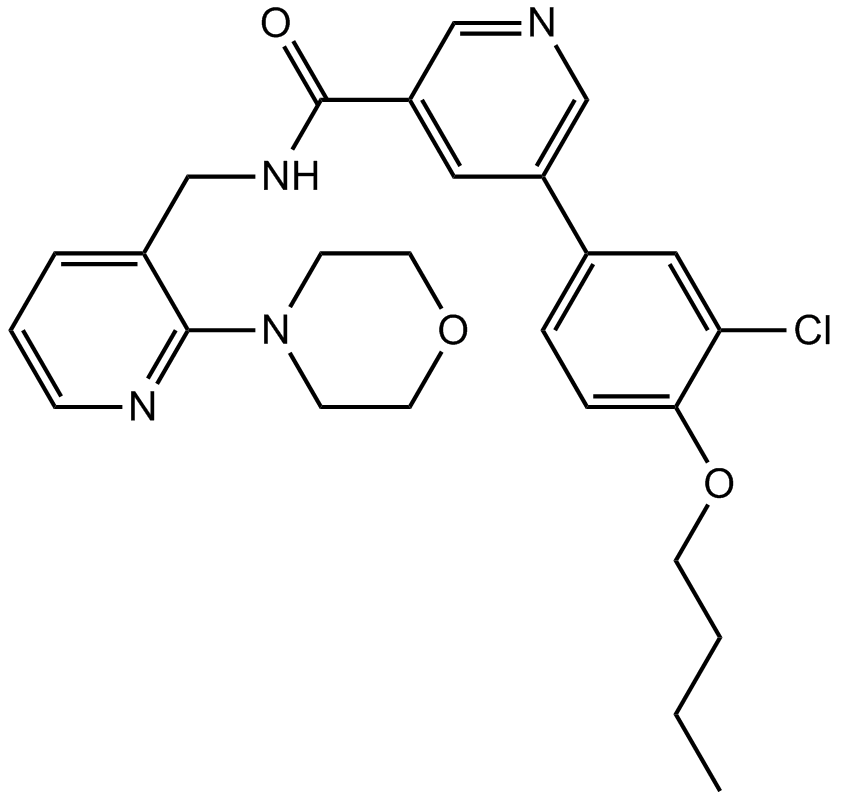
A 887826
A-887826 is a potent, selective, oral bioavailable and voltage-dependent Na(v)1.8 sodium channel blocker with an IC50 of 11 nM . A-887826 attenuates neuropathic tactile allodynia in vivo.
-
BCC5067
Ambroxol HCl
Na<sup>+</sup> channel blocker,AmbroxolHCl is a potent inhibitor of the neuronal Na+ channels, inhibits TTX-resistant Na+ currents with IC50 of 35.2 μM and 22.5 μM for tonic and phasic block, inhibits TTX-sensitive Na+ currents with IC50 of 100 μM. Phase 3.

-
BCC4378
Carbamazepine
Carbamazepine, a sodium channel blocker, is an anticonvulsant drug.

-
BCC7439
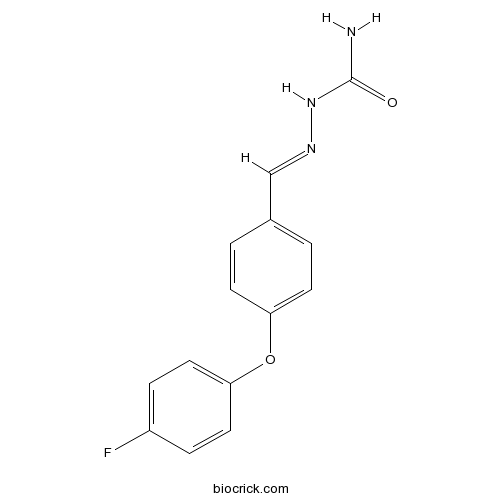
Co 102862
181144-66-1
-
BCC1578
Flecainide acetate
Flecainide acetate (R-818) is a class 1C antiarrhythmic drug especially used for the management of supraventricular arrhythmia; works by blocking the Nav1.5 sodium channel in the heart, causing prolongation of the cardiac action potential.