Myocardial Infarction Research
Myocardial infarction (MI) - more commonly referred to as a heart attack - is an acute event caused by the interruption of blood supply to regions of the heart, leading to myocardial necrosis. Infarction of a substantial area of the myocardium can disrupt normal conductance of the heart, leading to cardiac arrest.In the majority of cases, an MI is immediately preceded by the presence of an occlusive thrombus within a coronary artery, blocking blood flow to the downstream tissue. The most common cause of an occlusive thrombus within a coronary artery is the rupture of an atherosclerotic plaque. However, the occlusion of a coronary artery may also result from coronary embolism. This can occur in patients following stent placement, angioplasty, and coronary artery bypass grafting.
Myocardial Infarction Research Products Targets
- Adenosine A2B Receptor (7)
- Adenosine A2A Receptor (11)
- Voltage-gated Sodium (NaV) Channel (30)
- Voltage-gated Potassium (KV) Channel (38)
- Voltage-gated Calcium Channel (CaV) (38)
- Cell Adhesion Molecule (21)
- Others (10)
- Cyclooxygenase (24)
- Epithelial Sodium Channel (3)
- STIM-Orai Channel (4)
- Ryanodine Receptor (6)
- Angiotensin-Converting Enzyme (8)
- IP3 Receptor (2)
- Adenosine A3 Receptor (8)
- Adenosine A1 Receptor (12)
- Acid-Sensing Ion Channel (3)
- Calcium-Activated Potassium (KCa) Channel (19)
- Inward Rectifier Potassium (Kir) Channel (21)
- NO donors and precursors (9)
- nNOS (5)
- iNOS (11)
- eNOS (1)
- Stem Cell Differentiation (54)
- Delta opioid receptor (16)
- Cathepsin (9)
- Adrenergic β3 Receptor (12)
- Adrenergic β2 Receptor (6)
- Adrenergic β1 Receptor (7)
- Prostanoid Receptor (24)
Products for Myocardial Infarction Research - Page 37
- Cat.No. Product Name Information/Activity
-
BCC7927
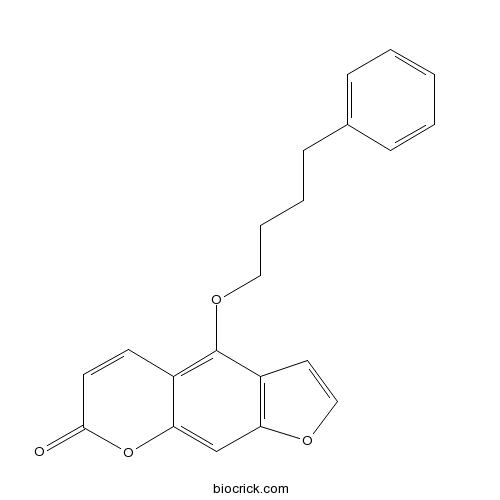
Psora 4
Potent K<sub>V</sub>1.3 channel blocker
-
BCC6044
RuBi-4AP
851956-02-0

-
BCC5990
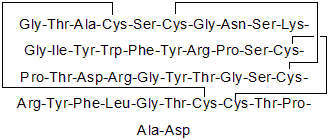
ShK-Dap22
220384-25-8

-
BCC7554
Tetraethylammonium chloride
Non-selective K<sup>+</sup> channel blocker

-
BCC7784
UK 78282 hydrochloride
136647-02-4

-
BCC7232
XE 991 dihydrochloride
XE 991 dihydrochloride, a Kv7 (KCNQ) channels blocker, potently inhibits Kv7.1 (KCNQ1), Kv7.2 (KCNQ2), Kv7.2 + Kv7.3 (KCNQ3) channel, and M-current with IC50s of 0.75 µM, 0.71 µM, 0.6 μM, and 0.98 µM, respectively.

-
BCC4907
Fluticasone propionate
Fluticasone propionate is a high affinity, selective GR (glucocorticoid receptor) agonist which is derived from fluticasone used to treat asthma and allergic rhinitis.

-
BCC6351
GMQ hydrochloride
5361-15-9

-
BCC6054
Neuropeptide SF (mouse, rat)
230960-31-3

-
BCC6294
APETx2
713544-47-9