Myocardial Infarction Research
Myocardial infarction (MI) - more commonly referred to as a heart attack - is an acute event caused by the interruption of blood supply to regions of the heart, leading to myocardial necrosis. Infarction of a substantial area of the myocardium can disrupt normal conductance of the heart, leading to cardiac arrest.In the majority of cases, an MI is immediately preceded by the presence of an occlusive thrombus within a coronary artery, blocking blood flow to the downstream tissue. The most common cause of an occlusive thrombus within a coronary artery is the rupture of an atherosclerotic plaque. However, the occlusion of a coronary artery may also result from coronary embolism. This can occur in patients following stent placement, angioplasty, and coronary artery bypass grafting.
Myocardial Infarction Research Products Targets
- Adenosine A2B Receptor (7)
- Adenosine A2A Receptor (11)
- Voltage-gated Sodium (NaV) Channel (30)
- Voltage-gated Potassium (KV) Channel (38)
- Voltage-gated Calcium Channel (CaV) (38)
- Cell Adhesion Molecule (21)
- Others (10)
- Cyclooxygenase (24)
- Epithelial Sodium Channel (3)
- STIM-Orai Channel (4)
- Ryanodine Receptor (6)
- Angiotensin-Converting Enzyme (8)
- IP3 Receptor (2)
- Adenosine A3 Receptor (8)
- Adenosine A1 Receptor (12)
- Acid-Sensing Ion Channel (3)
- Calcium-Activated Potassium (KCa) Channel (19)
- Inward Rectifier Potassium (Kir) Channel (21)
- NO donors and precursors (9)
- nNOS (5)
- iNOS (11)
- eNOS (1)
- Stem Cell Differentiation (54)
- Delta opioid receptor (16)
- Cathepsin (9)
- Adrenergic β3 Receptor (12)
- Adrenergic β2 Receptor (6)
- Adrenergic β1 Receptor (7)
- Prostanoid Receptor (24)
Products for Myocardial Infarction Research - Page 31
- Cat.No. Product Name Information/Activity
-
BCC7060
DCEBIO
DCEBIO, a derivative of 1-EBIO, is an extremely potent activator of Cl- secretion in T84 colonic cells. DCEBIO stimulates Cl- secretion via the activation of hIK1 K+ channels and the activation of an apical membrane Cl- conductance.

-
BCC7914
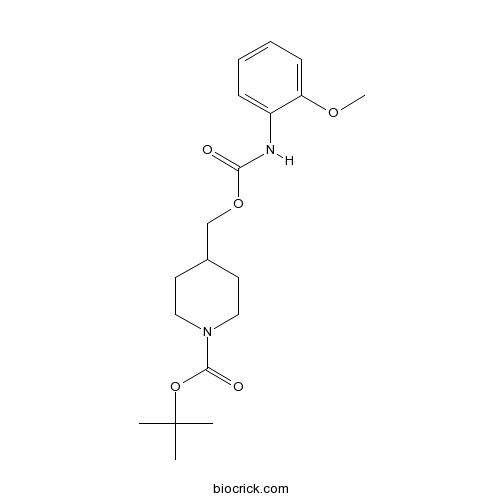
GW 542573X
660846-41-3
-
BCC7779
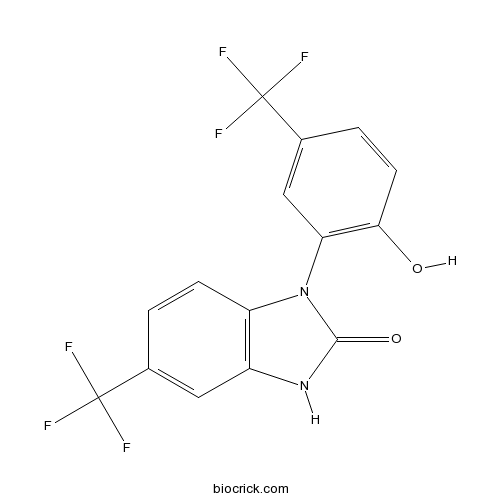
NS 1619
NS-1619 is a selective large conductance Ca2+-activated K+-channel activator.
-
BCC1809
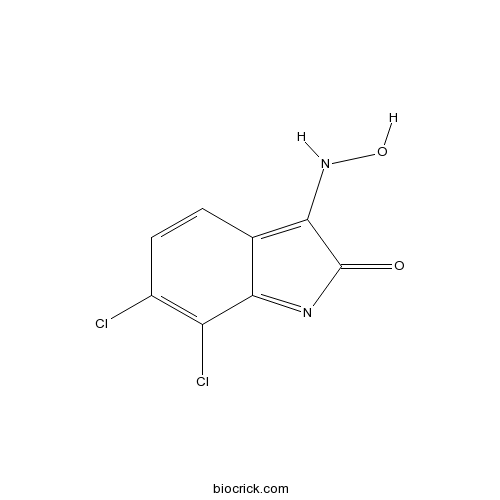
NS309
NS309 is a positive modulator of small- and intermediate- conductance Ca2+-activated K+ channels (KCa2 and KCa3.1 channels); increases Ca2+ sensitivity. Displays no activity at BK channels.
-
BCC7743
SKA 31
SKA-31 is a potent potassium channel activator with EC50s of 260 nM, 1.9 μM, 2.9 μM, and 2.9 μM for KCa3.1, KCa2.2, KCa2.1 and KCa2.3, respectively. SKA-31 potentiates endothelium-derived hyperpolarizing factor response and lowers blood pressure.

-
BCC7141
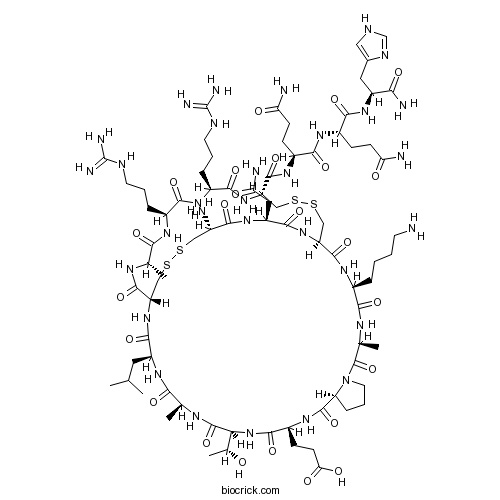
Apamin
Apamin (Apamine) is an 18 amino acid peptide neurotoxin found in apitoxin (bee venom), is known as a specifically selective blocker of Ca2+-activated K+ (SK) channels and exhibits anti-inflammatory and anti-fibrotic activity.
-
BCC6933
Charybdotoxin
95751-30-7

-
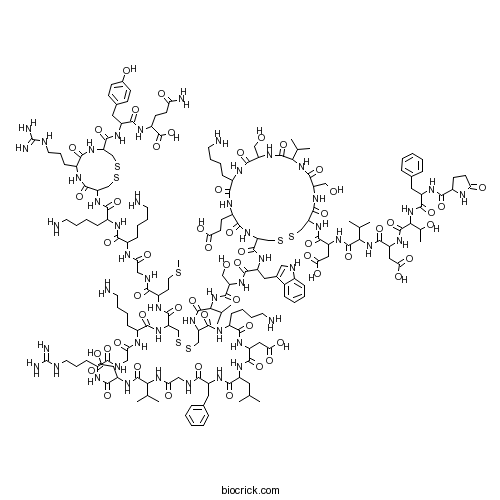
BCC6932
Iberiotoxin
129203-60-7
-
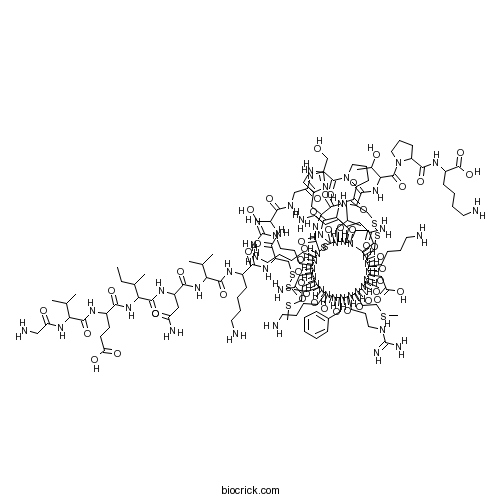
BCC7710
Kaliotoxin
145199-73-1
-
BCC6307
NS 6180
NS6180 is a novel potent and selective KCa3.1 channel inhibitor(IC50= 9 nM) prevents T-cell activation and inflammation.