Huntington's Disease Research
Huntington's disease is a neurodegenerative disease characterized by cognitive decline and motor dysfunction. It is a genetic disorder which results in the production of mutant huntingtin protein (mHtt). This protein aggregates in the cell cytoplasm and nucleus, affecting cellular function.
Huntington's Disease Research Products Targets
- Adenosine A2A Receptor (11)
- Caspase (9)
- Ubiquitin-activating Enzyme E1 (3)
- Ubiquitin E2 Conjugating Enzyme (3)
- Ubiquitin E3 Ligase (10)
- Deubiquitinating Enzyme (12)
- Hsp90 (10)
- Hsp70 (4)
- Glutamate (Metabotropic) Group III Receptor (26)
- Glutamate (Metabotropic) Group II Receptor (33)
- Glutamate (Metabotropic) Group I Receptor (54)
- Vesicular Monoamine Transporter (4)
- Sir 2-like Family Deacetylase (9)
- Post-Translational Modification (11)
- NMDA Receptor (87)
- Kainate Receptor (22)
- IP3 Receptor (2)
- ERK (6)
- D2 Receptor (14)
- D1 and D5 Receptor (16)
- Calpain (7)
- Trk Receptor (13)
- Autophagy (44)
- Antioxidant (19)
- Glutamate Transporter (18)
- Dopamine Transporter (20)
- Cathepsin (9)
- Mitochondrial Permeability Transition Pore (3)
- Proteasome (5)
- Histone Deacetylase (19)
- Histone Acetyltransferase (4)
Products for Huntington's Disease Research - Page 31
- Cat.No. Product Name Information/Activity
-
BCC7685
Tris DBA
51364-51-3

-
BCN3894
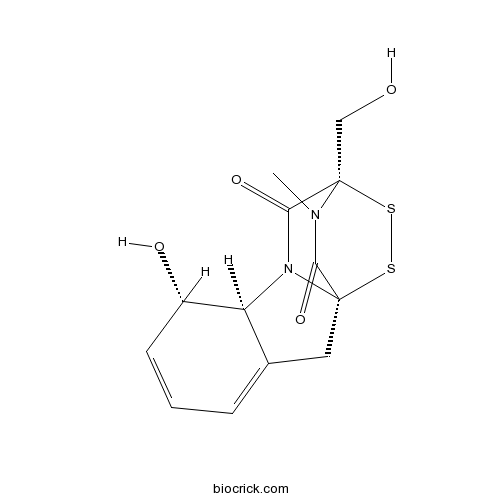
Gliotoxin
Gliotoxin is a secondary metabolite, the most abundant mycotoxin secreted by A. fumigatus, inhibits the phagocytosis of macrophages and the immune functions of other immune cells . Gliotoxin inhibits inducible NF-κB activity by preventing IκB degradation, which consequently induces host-cell apoptosis. Gliotoxin activates PKA and increases intracellular cAMP concentration; modulates actin cytoskeleton rearrangement to facilitate A. fumigatus internalization into lung epithelial cells.
-
BCC5344
LB42708
Selective farnesyltransferase (FTase) inhibitor,LB42708 is an orally active farnesyltransferase (FTase) inhibitor with IC50 of 0.8, 1.2, and 2.0 nM toward H-ras, N-ras, and K-ras, respectively.

-
BCC7988
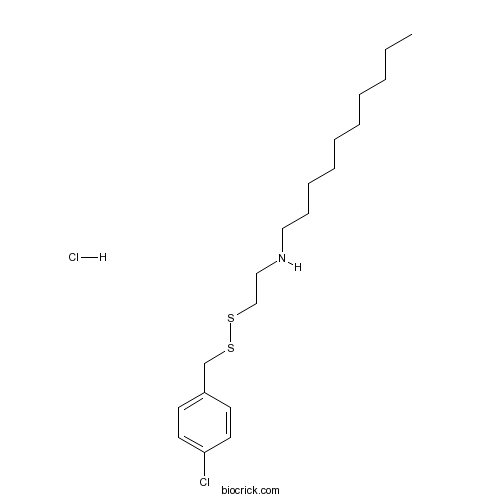
NSC 624206
NSC624206 is an inhibitor of ubiquitin E1 (UBA1), with an IC50 of ~9 μM. NSC624206 specifically blocks ubiquitin-thioester formation (IC50=13 μM) but has no effect on ubiquitin adenylation.
-
BCC4000
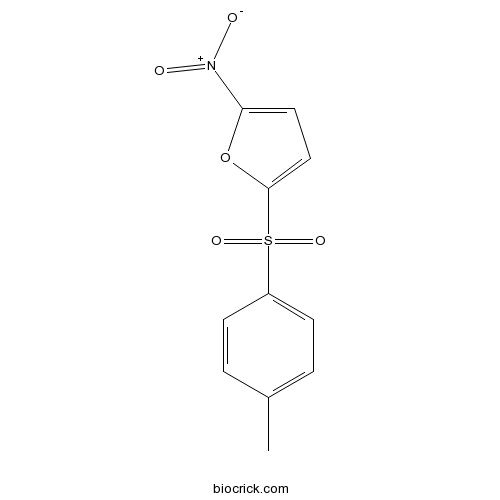
NSC697923
Selective UBE2N inhibitor,NSC697923 is a cell-permeable and selective inhibitor of the Ub-conjugating enzyme (E2) complex Ubc13-Uev1A.
-
BCC4470
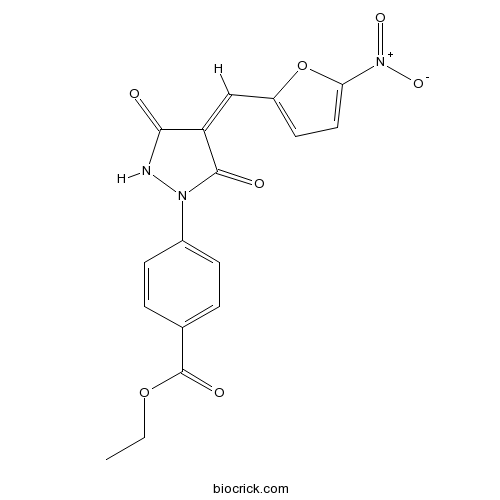
PYR-41
PYR-41 is a selective and cell permeable inhibitor of ubiquitin-activating enzyme E1 with an IC50 of < 10 μM, with little activity at E2 and E3.
-
BCC4253
PYZD-4409
PYZD-4409 is a specific inhibitor of the ubiquitin-activating enzyme UBA1 with an IC50 of 20 μM (cell-free enzymatic assay). PYZD-4409 induces cell death in malignant cells and preferentially inhibits the clonogenic growth of primary acute myeloid leukemia cells.

-
BCC7609
AGK 2
AGK2 is a selective SIRT2 inhibitor with IC50 of 3.5 μM. AGK2 can also inhibit SIRT1 and SIRT3 with IC50 of 30 and 91 μM, respectively.

-
BCC5426
AK-7
AK-7 is a selective cell- and brain-permeable SIRT2 inhibitor, with an IC50 of 15.5 μM.

-
BCC2223
EX 527 (SEN0014196)
Selisistat (EX-527) is a potent and selective SIRT1 inhibitor with IC50 of 98 nM.