Huntington's Disease Research
Huntington's disease is a neurodegenerative disease characterized by cognitive decline and motor dysfunction. It is a genetic disorder which results in the production of mutant huntingtin protein (mHtt). This protein aggregates in the cell cytoplasm and nucleus, affecting cellular function.
Huntington's Disease Research Products Targets
- Adenosine A2A Receptor (11)
- Caspase (9)
- Ubiquitin-activating Enzyme E1 (3)
- Ubiquitin E2 Conjugating Enzyme (3)
- Ubiquitin E3 Ligase (10)
- Deubiquitinating Enzyme (12)
- Hsp90 (10)
- Hsp70 (4)
- Glutamate (Metabotropic) Group III Receptor (26)
- Glutamate (Metabotropic) Group II Receptor (33)
- Glutamate (Metabotropic) Group I Receptor (54)
- Vesicular Monoamine Transporter (4)
- Sir 2-like Family Deacetylase (9)
- Post-Translational Modification (11)
- NMDA Receptor (87)
- Kainate Receptor (22)
- IP3 Receptor (2)
- ERK (6)
- D2 Receptor (14)
- D1 and D5 Receptor (16)
- Calpain (7)
- Trk Receptor (13)
- Autophagy (44)
- Antioxidant (19)
- Glutamate Transporter (18)
- Dopamine Transporter (20)
- Cathepsin (9)
- Mitochondrial Permeability Transition Pore (3)
- Proteasome (5)
- Histone Deacetylase (19)
- Histone Acetyltransferase (4)
Products for Huntington's Disease Research - Page 35
- Cat.No. Product Name Information/Activity
-
BCC7302
ACDPP hydrochloride
37804-11-8

-
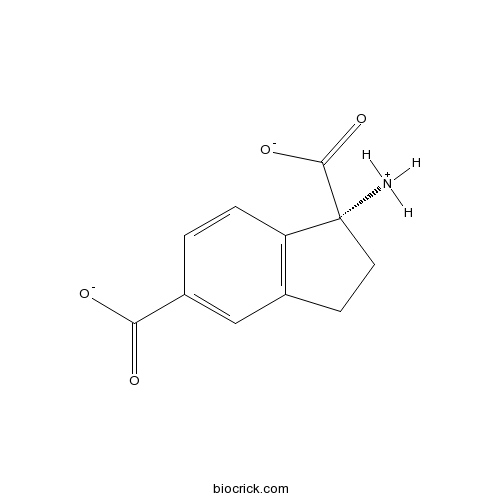
BCC6841
AIDA
168560-79-0
-
BCC2459
DL-AP3
Phosphoserine phosphatase inhibitor

-
BCC5915
Bay 36-7620
Non-competitive mGlu<sub>1</sub> antagonist with inverse agonist activity

-
BCC6607
(S)-3-Carboxy-4-hydroxyphenylglycine
55136-48-6

-
BCC6600
(S)-4-Carboxy-3-hydroxyphenylglycine
85148-82-9

-
BCC6603
(S)-4-Carboxyphenylglycine
134052-73-6

-
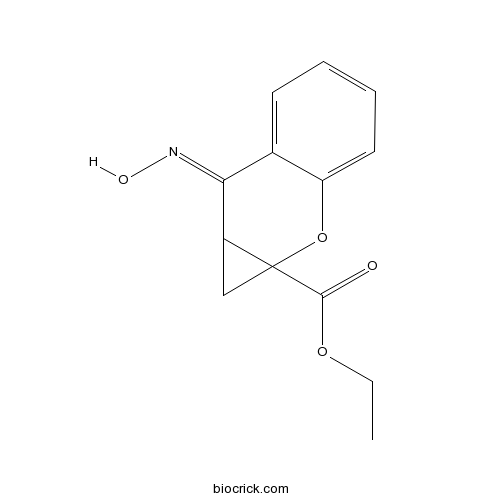
BCC6896
CPCCOEt
179067-99-3
-
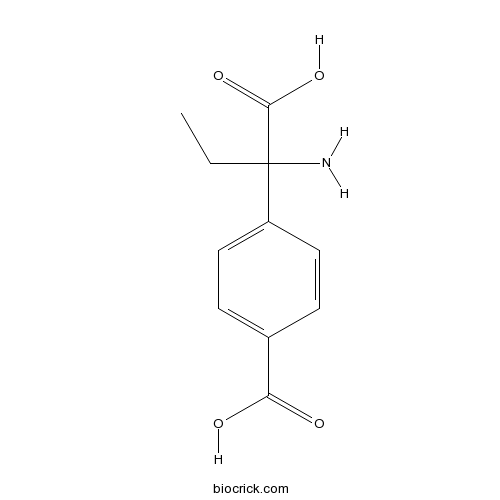
BCC6888
E4CPG
E4CPG is a novel group I/group II metabotropic glutamate receptor antagonist, more potent than (RS)-MCPG .
-
BCC7345
Fenobam
Fenobam is a selective, orally active, and non-competitive mGluR5 antagonist acting at an allosteric modulatory site (Kd values are 54 and 31 nM for rat and human recombinant mGlu5 receptors, respectively). Fenobam displays inverse agonist activity which blocks the mGlu5 receptor basal activity with an IC50 of 84 nM. Fenobam exerts anxiolytic activity.