Memory, Learning and Cognition
Cognition is the term used to define the process of thoughts, including memory, awareness, reasoning and perception. Cognitive enhancement describes the improvement of the information processing systems of the mind and the extension of its main capacities, which can be undertaken simply by learning, especially during early development.
Memory, Learning and Cognition Products Targets
- Voltage-gated Calcium Channel (CaV) (38)
- Others (13)
- D4 Receptor (12)
- 5-HT7 Receptor (11)
- 5-HT6 Receptor (14)
- 5-ht5 Receptor (2)
- 5-HT4 Receptor (17)
- NOP Receptor (21)
- Mu-Opioid Receptors (15)
- Kappa Opioid Receptors (14)
- Glutamate (Metabotropic) Group III Receptor (26)
- Glutamate (Metabotropic) Group II Receptor (33)
- Glutamate (Metabotropic) Group I Receptor (54)
- AMPA Receptor (45)
- GABAA-ρ Receptor (8)
- GABAA Receptor (66)
- GPR55 (8)
- CB2 Receptor (6)
- CB1 Receptor (17)
- Nicotinic (α7) Receptor (25)
- Nicotinic (α4β2) Receptor (14)
- Protein Kinase C (29)
- Calmodulin-Dependent Kinase (8)
- D3 Receptor (12)
- NMDA Receptor (87)
- Kainate Receptor (22)
- D2 Receptor (14)
- D1 and D5 Receptor (16)
- Amyloid beta Peptide (28)
- Histamine H1 Receptor (17)
- M5 Receptor (2)
- M4 Receptor (3)
- M3 Receptor (4)
- M2 Receptor (5)
- M1 Receptor (8)
- Delta opioid receptor (16)
- Protein serine and threonine phosphatase (16)
- Histone Deacetylase (19)
- Phosphodiesterase (34)
Products for Memory, Learning and Cognition - Page 6
- Cat.No. Product Name Information/Activity
-
BCC3866
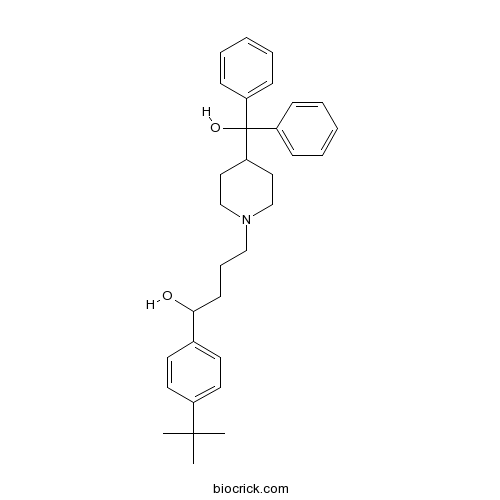
Terfenadine
Terfenadine ((±)-Terfenadine) is a potent open-channel blocker of hERG with an IC50 of 204 nM. Terfenadine, an H1 histamine receptor antagonist, acts as a potent apoptosis inducer in melanoma cells through modulation of Ca2+ homeostasis. Terfenadine induces ROS-dependent apoptosis, simultaneously activates Caspase-4, -2, -9.
-
BCC6742
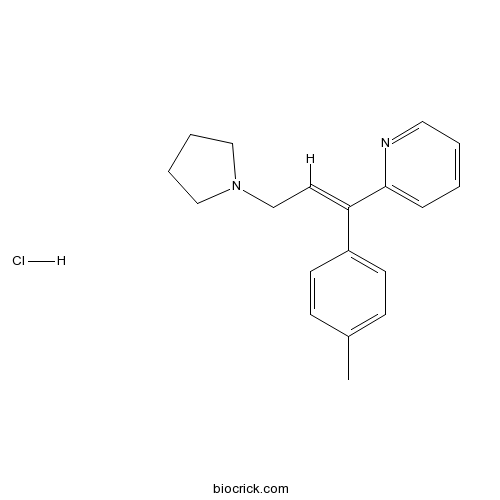
trans-Triprolidine hydrochloride
550-70-9
-
BCC7838
Zotepine
26615-21-4

-
BCC3599
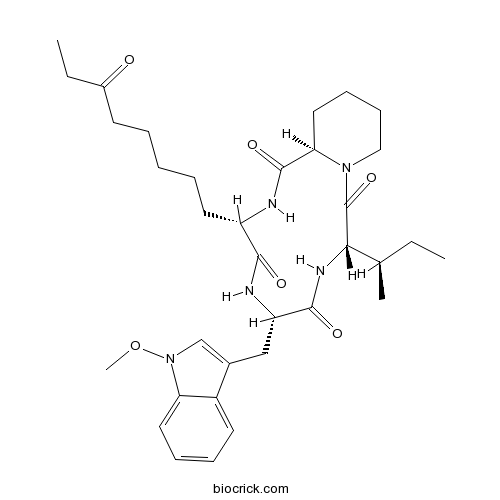
Apicidin
Apicidin (OSI 2040) is a fungal metabolite, acts as a histone deacetylase (HDAC) inhibitor, with antiparasitic activity and a broad spectrum antiproliferative activity.
-
BCC3597
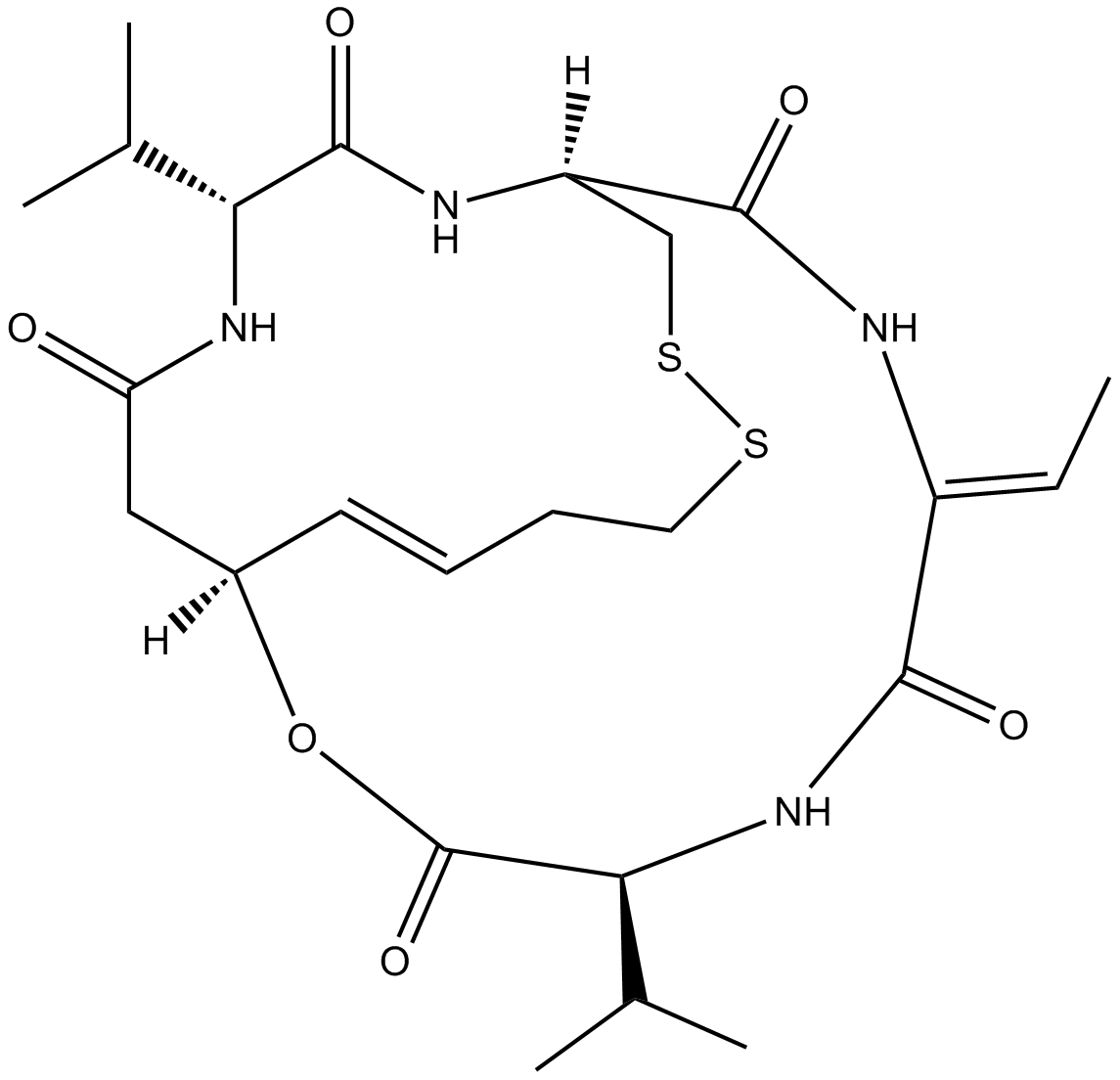
Romidepsin (FK228, depsipeptide)
Romidepsin (FK 228) is a Histone deacetylase (HDAC) inhibitor with anti-tumor activities. Romidepsin (FK 228) inhibits HDAC1, HDAC2, HDAC4, and HDAC6 with IC50s of 36 nM, 47 nM, 510 nM and 1.4 μM, respectively. Romidepsin (FK 228) is produced by Chromobacterium violaceum, induces cell G2/M phase arrest and apoptosis.
-
BCC2421
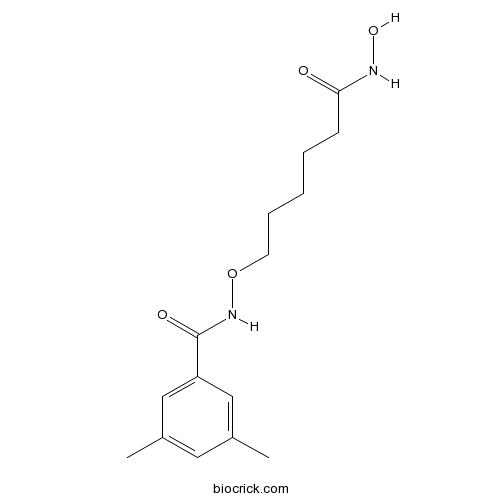
LMK 235
LMK-235 is a potent and selective HDAC4/5 inhibitor, inhibits HDAC5, HDAC4, HDAC6, HDAC1, HDAC2, HDAC11 and HDAC8, with IC50s of 4.22 nM, 11.9 nM, 55.7 nM, 320 nM, 881 nM, 852 nM and 1278 nM, respectively, and is used in cancer research.
-
BCC2162
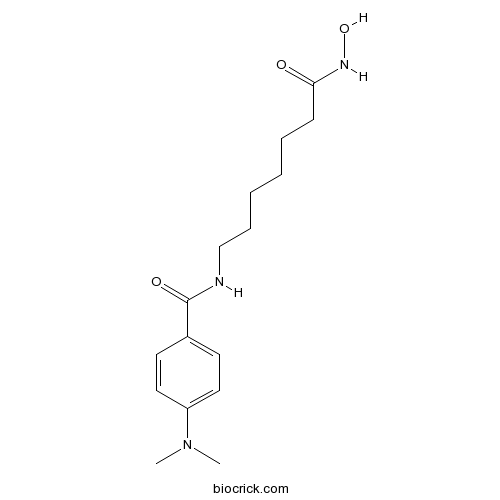
M344
M344 (D 237) is an inhibitor of histone deacetylase (IC50=100 nM) and an inducer of terminal cell fifferentiation.
-
BCC2151
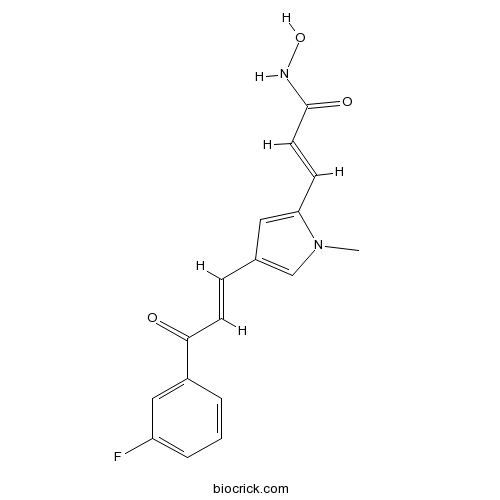
MC1568
MC1568 is a selective class II (IIa) histone deacetylas (HDAC II) inhibitor, used for cancer research.
-
BCC2422
NCH 51
PTACH (NCH-51) is a SAHA-based novel inhibitor of human HDAC. PTACH exerts potent growth inhibition against various human cancer cells, with EC50 values ranging from 1 to 10 μM.

-
BCC2423
NSC 3852
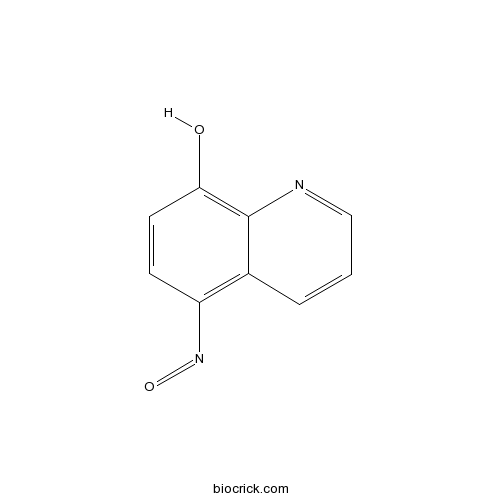
Histone deacetylase inhibitor