
Stress and Anxiety Research
Stress is a valuable evolutionary-conserved physiological response to threatening or adverse environments. Chronic stress is a pathological state that is caused by prolonged upregulation of the normal acute stress response. Anxiety disorders, such as phobias and post-traumatic stress disorder, are due to fear conditioning to a neutral stimulus and involve many of the same brain regions as stress.
Stress and Anxiety Research Products Targets
- Others (13)
- D4 Receptor (12)
- 5-HT7 Receptor (11)
- 5-HT6 Receptor (14)
- 5-ht5 Receptor (2)
- 5-HT4 Receptor (17)
- AMPA Receptor (45)
- GABAA-ρ Receptor (8)
- GABAA Receptor (66)
- D3 Receptor (12)
- NMDA Receptor (87)
- Kainate Receptor (22)
- D2 Receptor (14)
- D1 and D5 Receptor (16)
- Adrenergic α2 Receptor (33)
- Adrenergic α1 Receptor (22)
- Adrenergic β3 Receptor (12)
- Adrenergic β2 Receptor (6)
- Adrenergic β1 Receptor (7)
Products for Stress and Anxiety Research - Page 7
- Cat.No. Product Name Information/Activity
-
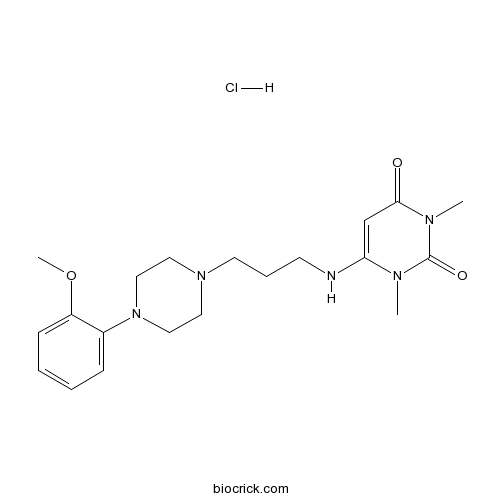
BCC5044
Urapidil HCl
Urapidil HCl is an α1-adrenoceptor antagonist and 5-HT1A receptor agonist.
-
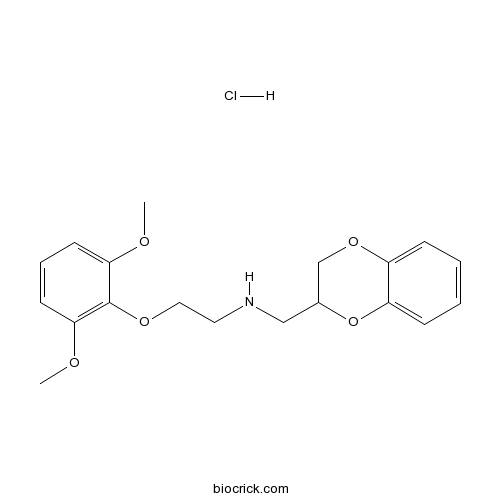
BCC6858
WB 4101 hydrochloride
2170-58-3
-
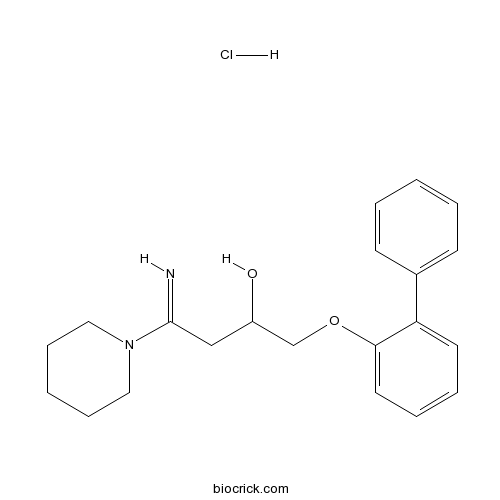
BCC6883
AH 11110 hydrochloride
179388-65-9
-
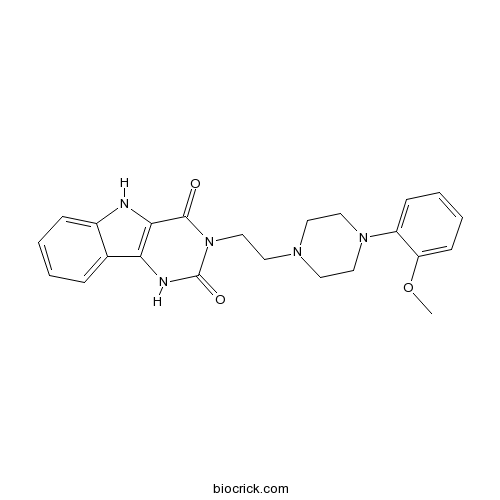
BCC6705
3-MPPI
133399-65-2
-
BCC1417
B-HT 920
Talipexole dihydrochloride (B-HT 920 dihydrochloride) is a dopamine D2 receptor agonist, α2-adrenoceptor agonist and 5-HT3 receptor antagonist, which displays antiParkinsonian activity.

-
BCC7474
B-HT 933 dihydrochloride
36067-72-8

-
BCC4325
Clonidine HCl
Clonidine hydrochloride is an agonist of α2-adrenoceptor and potent antihypertensive agent.

-
BCC4347
Dexmedetomidine HCl
Dexmedetomidine Hydrochloride is an agonist of adrenergic alpha-2 receptor, which is used in veterinary medicine for its analgesic and sedative properties.

-
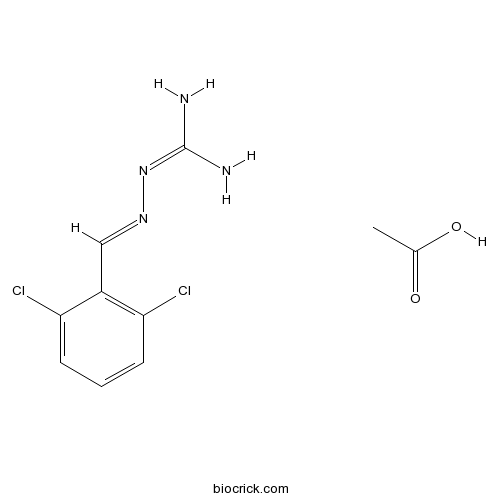
BCC4327
Guanabenz Acetate
Guanabenz (Acetate) (BR-750) is an alpha-2 selective adrenergic agonist used as an antihypertensive agent.
-
BCC1609
Guanfacine hydrochloride
Guanfacine hydrochloride, an anti-hypertensive agent, is a selective α2A-adrenoceptor agonist with Kd of 31 nM and displays 60-fold selectivity over α2B-adrenoceptors.