
2',4'-DihydroxychalconeCAS# 25515-43-9 |
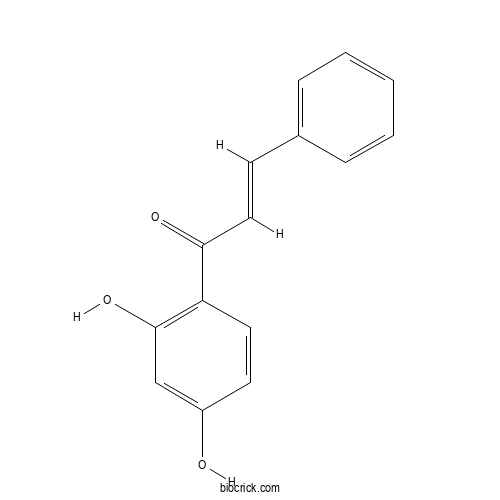
| Cas No. | 25515-43-9 | SDF | File under preparation. |
| PubChem ID | 5376979.0 | Appearance | Yellow powder |
| Formula | C15H12O3 | M.Wt | 240.2 |
| Type of Compound | N/A | Storage | Desiccate at -20°C |
| Solubility | Soluble in Chloroform,Dichloromethane,Ethyl Acetate,DMSO,Acetone,etc. | ||
| Chemical Name | (E)-1-(2,4-dihydroxyphenyl)-3-phenylprop-2-en-1-one | ||
| SMILES | C1=CC=C(C=C1)C=CC(=O)C2=C(C=C(C=C2)O)O | ||
| Standard InChIKey | JUMSUVHHUVPSOY-RMKNXTFCSA-N | ||
| Standard InChI | InChI=1S/C15H12O3/c16-12-7-8-13(15(18)10-12)14(17)9-6-11-4-2-1-3-5-11/h1-10,16,18H/b9-6+ | ||
| General tips | For obtaining a higher solubility , please warm the tube at 37 ℃ and shake it in the ultrasonic bath for a while.Stock solution can be stored below -20℃ for several months. We recommend that you prepare and use the solution on the same day. However, if the test schedule requires, the stock solutions can be prepared in advance, and the stock solution must be sealed and stored below -20℃. In general, the stock solution can be kept for several months. Before use, we recommend that you leave the vial at room temperature for at least an hour before opening it. |
||
| About Packaging | 1. The packaging of the product may be reversed during transportation, cause the high purity compounds to adhere to the neck or cap of the vial.Take the vail out of its packaging and shake gently until the compounds fall to the bottom of the vial. 2. For liquid products, please centrifuge at 500xg to gather the liquid to the bottom of the vial. 3. Try to avoid loss or contamination during the experiment. |
||
| Shipping Condition | Packaging according to customer requirements(5mg, 10mg, 20mg and more). Ship via FedEx, DHL, UPS, EMS or other couriers with RT, or blue ice upon request. | ||
Quality Control & MSDS
3D structure
Package In Stock

Number of papers citing our products


2',4'-Dihydroxychalcone Dilution Calculator
2',4'-Dihydroxychalcone Molarity Calculator
-
 2',4'-DihydroxychalconeCatalog No.: BCN5647CAS No.: 1776-30-3
-
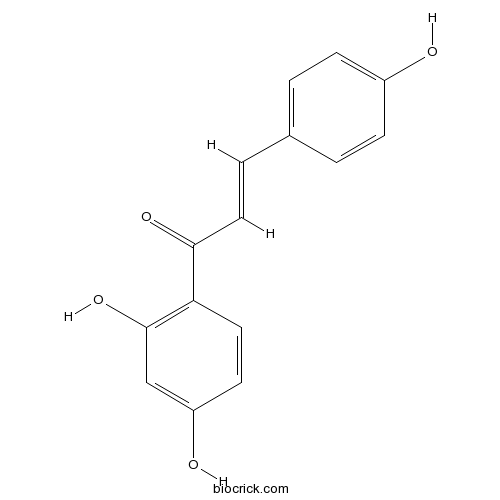 IsoliquiritigeninCatalog No.: BCN4512CAS No.: 961-29-5
-
 RobteinCatalog No.: BCN4658CAS No.: 2679-65-4
-
 ButeinCatalog No.: BCN5592CAS No.: 487-52-5
-
 Pinocembrin chalconeCatalog No.: BCN7223CAS No.: 4197-97-1
-
 4,2'-Dihydroxy-4'-methoxychalconeCatalog No.: BCN7704CAS No.: 63529-06-6
| 1 mg | 5 mg | 10 mg | 20 mg | 25 mg | |
| 1 mM | 4.1632 mL | 20.816 mL | 41.632 mL | 83.2639 mL | 104.0799 mL |
| 5 mM | 0.8326 mL | 4.1632 mL | 8.3264 mL | 16.6528 mL | 20.816 mL |
| 10 mM | 0.4163 mL | 2.0816 mL | 4.1632 mL | 8.3264 mL | 10.408 mL |
| 50 mM | 0.0833 mL | 0.4163 mL | 0.8326 mL | 1.6653 mL | 2.0816 mL |
| 100 mM | 0.0416 mL | 0.2082 mL | 0.4163 mL | 0.8326 mL | 1.0408 mL |
| * Note: If you are in the process of experiment, it's necessary to make the dilution ratios of the samples. The dilution data above is only for reference. Normally, it's can get a better solubility within lower of Concentrations. | |||||
- 5,7-Dimethoxy-4'-hydroxyflavan
Catalog No.:BCX2414
CAS No.:103963-45-7
- 7,4'-Dihydroxyhomoisoflavan
Catalog No.:BCX2413
CAS No.:84638-49-3
- 7,4'-Dihydroxyflavan
Catalog No.:BCX2412
CAS No.:82925-54-0
- Aesculioside H
Catalog No.:BCX2411
CAS No.:254896-72-5
- cis-Pterostilbene
Catalog No.:BCX2410
CAS No.:441351-32-2
- Steppogenin 7,4'-di-O-glucoside
Catalog No.:BCX2409
CAS No.:1193750-99-0
- (11R)-12-Chloronootkaton-11-ol
Catalog No.:BCX2408
CAS No.:1446439-13-9
- Zataroside B
Catalog No.:BCX2407
CAS No.:95645-52-6
- Aesculioside A
Catalog No.:BCX2406
CAS No.:254896-53-2
- Blumenol C
Catalog No.:BCX2405
CAS No.:36151-02-7
- Tinoscorside D
Catalog No.:BCX2404
CAS No.:1257394-29-8
- Aesculioside B
Catalog No.:BCX2403
CAS No.:106310-33-2
- Didendronbiline A
Catalog No.:BCX2416
CAS No.:2267991-55-7
- Esculetin 6-O-β-D-apiofuranosyl-(1→6)-β-D-glucopyranoside
Catalog No.:BCX2417
CAS No.:163017-13-8
- Escin Ia methyl ester
Catalog No.:BCX2418
CAS No.:26339-91-3
- Aesculioside G
Catalog No.:BCX2419
CAS No.:254896-70-3
- Kuwanon F
Catalog No.:BCX2420
CAS No.:71344-07-5
- Sanggenon I
Catalog No.:BCX2421
CAS No.:86450-79-5
- Morusalnol B
Catalog No.:BCX2422
CAS No.:1941207-44-8
- Spiradine G
Catalog No.:BCX2423
CAS No.:21040-66-4
- Kuwanon D
Catalog No.:BCX2424
CAS No.:67172-84-3
- Aesculioside F
Catalog No.:BCX2425
CAS No.:254896-69-0
- Artemorin
Catalog No.:BCX2426
CAS No.:64845-92-7
- Aesculioside E
Catalog No.:BCX2427
CAS No.:254896-68-9
[Retracted] 2',4'-dihydroxychalcone, a flavonoid isolated from Herba oxytropis, suppresses PC-3 human prostate cancer cell growth by induction of apoptosis.[Pubmed:42621497]
Oncol Lett. 2026 Aug 11;32(4):454.
[This retracts the article DOI: 10.3892/ol.2015.3795.].
GC-Ms, UHPLC-MS/MS(n) Phytoconstituents Characterization and Physio-pharmacological Investigation of Silene colorata subsp. amphorina (Pomel) Batt. From Northeastern Algeria.[Pubmed:42555847]
Chem Biodivers. 2026 Aug;23(8):e71578.
Natural remedies combined with bioinformatics accelerate the formulation of safer, targeted drugs. This study provides a comprehensive description of the phytochemical and pharmacological aspects of Silene colorata. Binding profiles of eight identified compounds were simulated against alpha-amylase. GC-MS analysis revealed 57 compounds, mainly fatty acids and esters (73.65%), while UHPLC-MS/MS identified 2',4'-dihydroxychalcone (20.72%), (epi)gallocatechin-C-hexoside (12.53%), apigetrin (10.10%), and hexahydroxyheptanoic acid (8.57%) as major components. The hydro-alcoholic extract showed a strong antiradical effect (IC(50) = 7.57 +/- 0.26 microg/mL by ABTS assay; A(0.50) = 48.93 +/- 3.88 microg/mL by phenanthroline assay). Its sun protection factor (SPF) was also the highest (40.561 +/- 0.87). The chloroform fraction showed notable activity against alpha-amylase (IC(50) = 22.86 +/- 3.19 microg/mL) and butyrylcholinesterase (IC(50) = 111.08 +/- 4.72 microg/mL). The complex 3-tetradecyn-1-ol and alpha-amylase appeared more stable, but in an antagonistic manner (-4.8 kcal/mol). While this work reveals crucial findings, further in vivo studies are needed to confirm and expand on these results.
First report of chalcones in Corema album berries: Multi-target suppression of macrophage inflammation through COX-2 inhibition and NF-kappaB modulation.[Pubmed:42172777]
Biomed Pharmacother. 2026 Jul;200:119526.
Corema album, an Atlantic endemic berry traditionally consumed in the Iberian Peninsula, is gaining increasing attention due to its rich phenolic profile. Here, we report for the first time the isolation, structural characterization, and quantification of three chalcones from their fruits: 2',4'-dihydroxydihydrochalcone, 2',4'-dihydroxychalcone, and 2'-methoxy-4'-hydroxydihydrochalcone. Structural elucidation was achieved by NMR and mass spectrometry, and quantification was performed by UHPLC-HRMS. Their antioxidant and anti-inflammatory activities were evaluated in human (THP-1) and murine (RAW 264.7) macrophage models. All compounds significantly reduced intracellular ROS levels under oxidative stress conditions and suppressed LPS-induced production of IL-6 and TNF-alpha. In RAW 264.7 cells, 2',4'-dihydroxychalcone and 2'-methoxy-4'-hydroxydihydrochalcone decreased nitric oxide production through iNOS downregulation. Moreover, chalcones inhibited COX-2 activity in vitro (IC(5)(0) approximately 45 microM) and modulated NF-kappaB-related signaling markers, including NF-kappaB p65, IkappaBalpha and IL-1beta expression. Notably, 2',4'-dihydroxychalcone increased HO-1 protein levels in both macrophage models. These results highlight the multi-target anti-inflammatory potential of C. album chalcones, mediated through coordinated regulation of oxidative stress and key inflammatory pathways. The findings provide mechanistic support for the traditional use of these berries and underscore their promise as natural anti-inflammatory agents. Further in vivo studies are warranted to evaluate their therapeutic efficacy.
Cytotoxicity Evaluation of Chalcones and Flavanones from the Leaves of Corema album (L.) D. Don.[Pubmed:42072631]
Biomolecules. 2026 Mar 28;16(4):509.
In a preliminary screening of phytochemical compounds from Andalusian vascular plants, the ethyl acetate extract obtained from the leaves of Corema album (L.) D. Don (Ericaceae) was selected due to its cytotoxic activity. Eight phenolic compounds were isolated from this extract: four chalcones (2',4'-dihydroxydihydrochalcone, 2',4'-dihydroxychalcone, 2',4'-dihydroxy-6'-methoxydihydrochalcone, 2'-methoxy-4'-hydroxydihydrochalcone) and four flavanones (pinocembrin, 6-methylpinocembrin, 6,8-dimethylpinocembrin and 7-O-prenylpinocembrin). Their structures were elucidated using (1)H NMR and (13)C NMR data, including 2D NMR, as well as mass spectrometry. These compounds were evaluated using the MTT cytotoxicity assay against human colorectal adenocarcinoma (HT-29) and renal adenocarcinoma (ACHN) cell lines. The chalcone 2',4'-dihydroxychalcone exhibited greater cytotoxicity than the corresponding 2',4'-dihydroxydihydrochalcone in both cell lines. The IC(50) values (microM +/- SEM) were 13.31 +/- 0.48 and 9.43 +/- 0.34 for the chalcone, and 62.23 +/- 1.06 and 54.68 +/- 1.62 for the dihydrochalcone, respectively. The introduction of methyl groups at positions 6 and 8 of pinocembrin increased cytotoxicity in the ACHN cell line. The IC(50) values (microM +/- SEM) were 91.28 +/- 3.03 for pinocembrin, 64.36 +/- 0.53 for 6-methylpinocembrin, and 28.74 +/- 0.35 for 6,8-dimethylpinocembrin. These results highlight the leaves of C. album as a promising source of chalcones and flavanones with pharmacological interest.
Flavonoids from Adesmia balsamica for growth control of Saprolegnia sp.: an in vitro and in silico analysis.[Pubmed:41955642]
Nat Prod Res. 2026 Apr 9:1-6.
Phytochemical analysis of the resinous exudate from the Chilean plant Adesmia balsamica using chromatographic and spectroscopic methods led to the identification of five known metabolites: 1-(2',4'-dihydroxy-5'-(3-methylbut-2-en-1-yl)phenyl)-3-phenylpropan-1-one (1), glabranin (2), isocordoin (3), 2',4'-dihydroxychalcone (4), and 7-hydroxyflavanone (5). Their activity was evaluated in vitro against Saprolegnia parasitica and S. australis and complemented by in silico molecular docking against Htp-1 and ATPase. Results identified 2',4'-dihydroxychalcone (4) as the most potent compound, with high efficacy (MIC
2',4'-dihydroxychalcone alleviates inflammatory bowel disease by inhibiting NLRP3 inflammasome and modulating gut microbiota.[Pubmed:41727437]
Front Immunol. 2026 Feb 6;17:1751218.
INTRODUCTION: Abrus cantoniensis Hance (ACH), an edible traditional Chinese medicinal herb, has significant anti-inflammatory activity. However, there is limited research on the molecular targets of its active ingredients and their application in inflammatory bowel disease (IBD). Nucleotide-binding domain and leucine-rich repeat protein 3 (NLRP3) inflammasome plays a crucial role in IBD. METHODS: Here, we explored the inhibitory activity of the 25 main ingredients from ACH on NLRP3 inflammasome using THP-1 and J774A.1 macrophage models, and the dextran sulfate sodium salt (DSS)-induced acute ulcerative colitis mouse model was used to investigate the therapeutic potential. 16S rRNA analysis was performed for gut microbiota assessment. RESULTS: The results demonstrated that 2',4'-dihydroxychalcone (2',4'-DHC) exhibited the remarkable inhibitory effect on the activation of NLRP3 inflammasome. ELISA and western blotting analyses revealed that 2',4'-DHC effectively inhibited caspase-1 and Gasdermin D activation and IL-1beta release but not TNF-alpha in macrophages. Furthermore, 2',4'-DHC significantly alleviated inflammation in IBD mice, which mitigated body weight loss, reduced DAI score, preserved colon length and protected the gut barrier by enhance the tight junction proteins occludin and ZO-1 expression. Importantly, 2',4'-DHC treatment inhibited NLRP3 inflammasome, while also balancing gut microbiota in colitis mice. The results showed that 2',4'-DHC reduced the abundance of Proteobacteria, reshaped the bacterial diversity and composition. DISCUSSION: Overall, this study identified 2',4'-DHC in ACH that regulated the NLRP3 inflammasome activation to exert anti-inflammatory effects in IBD, highlighting its potential in treating NLRP3-related inflammatory diseases.
2',4'-dihydroxychalcone induces ferroptosis through ERO1A/GPX4 regulatory axis in cholangiocarcinoma.[Pubmed:40902362]
Phytomedicine. 2025 Nov;147:157192.
BACKGROUND: Cholangiocarcinoma (CCA) , an aggressive cancer often detected late, carries a grim prognosis. 2',4'-Dihydroxychalcone (2',4'-DHC), a flavonoid monomer isolated from Empetrum nigrum, has demonstrated notable anti-tumor activity in multiple cancer types. However, its therapeutic mechanism in cholangiocarcinoma remains poorly understood, especially regarding the regulation of ferroptosis, a mechanism that has not yet been fully elucidated in this disease. PURPOSE: This study reveals that 2',4'-DHC induces ferroptosis through modulation of the ERO1A/GPX4 signaling axis, thereby suppressing the progression of cholangiocarcinoma. These findings provide novel mechanistic insights and propose a potential therapeutic strategy for this highly refractory malignancy. METHODS: Proliferation, migration, and epithelial-mesenchymal transition assays were employed to determine the effects of 2',4'-DHC and ERO1A on CCA cells. Electron microscopy and ferroptosis markers confirmed the involvement of ferroptosis. Molecular docking and molecular dynamics simulations established direct targeting between 2',4'-DHC and ERO1A. Ubiquitination assays validated ferroptosis potentiation. The anti-tumor efficacy of 2',4'-DHC was assessed in murine xenograft models. RESULTS: In our study, we first demonstrated that 2',4'-DHC inhibited the proliferation, migration and EMT progression of CCA cells, by inducing ferroptosis, Mechanistically, 2',4'-DHC targeted ERO1A, leading to GPX4 ubiquitination and subsequent proteasomal degradation. In vivo, 2',4'-DHC suppressed tumor growth and significantly enhanced the therapeutic efficacy of oxaliplatin, without causing evident toxicity to major organs. CONCLUSION: 2',4'-DHC induces ferroptosis in CCA cells through the ERO1A/GPX4 axis and inhibits malignant progression. 2',4'-DHC drug-adjuvant therapy may enhance the efficacy of current anticancer treatments. It also holds promise as a prognostic molecular marker and therapeutic target in CCA.
Bioactive Chalcones from Aizoon africanum: Isolation and Cytotoxicity Against Liver and Neural Cancer Cells.[Pubmed:40805738]
Plants (Basel). 2025 Aug 2;14(15):2389.
Aizoon africanum (L.) Klak (Synonym Galenia africana L.) is traditionally used for a variety of medicinal purposes; however, it has been reported to cause liver damage and severe ascites, particularly in sheep and Angora goats in the arid regions of the Western Cape. This study explores its cytotoxic properties to identify potential cytotoxic compound(s) in the plant. The methanolic extract of A. africanum was re-investigated and subjected to various chromatographic techniques, including preparative HPLC, resulting in the isolation of eight compounds (1-8). Structural elucidation was primarily based on NMR data. Among the isolated compounds, four were flavanones, one was a flavonone, and three were chalcones. Notably, compound 8 was identified as a new chalcone, while compounds 2 and 3 were reported for the first time from this plant. The toxicity of these isolated compounds was evaluated against the HepG2 and SH-SY5Y cancer cell lines using the MTT assay. We further investigated markers of cell death using spectrophotometric and luminometric methods. Among the isolated compounds, 7 and 8 exhibited cytotoxic activities within the range of 3.0-20.0 microg/mL. Notably, the compounds demonstrated greater cytotoxicity towards liver-derived HepG2 cells compared to the neuronal SH-SY5Y cell line. Compound 7 (2',4'-dihydroxychalcone) was identified as inducing apoptosis through the intrinsic pathway without causing overt necrosis. The findings indicate that the phytochemicals derived from A. africanum exhibit differential cytotoxic effects based on cell type, suggesting potential for developing novel anticancer agents, particularly compound 7. Additionally, the identification of compound 8 provides insight into the liver toxicity of this plant observed in sheep in South Africa.
Control of Bacterial Canker caused by Pseudomonas syringae pv. actinidiae (Psa) in kiwifruit plants by resinous exudates and extracts of Adesmia balsamica.[Pubmed:40391566]
Pest Manag Sci. 2025 Sep;81(9):5484-5498.
BACKGROUND: Pseudomonas syringae pv. actinidiae (Psa) is the pathogen responsible for kiwifruit's bacterial canker, which produces significant economic losses. Effective treatments and measures to control this disease have not yet been found; it is currently controlled with many products containing heavy metals (especially copper) or antibiotics (especially streptomycin), which can cause serious phytotoxicity and antibacterial resistance problems. Therefore, it is essential to develop new strategies to control this disease by obtaining a product of natural origin of sustainable use, which is biodegradable and nontoxic to the environment, that could be used as biopesticide. RESULTS: The ethyl acetate extract of Adesmia balsamica and the compound 2',4'-dihydroxychalcone (2,4-DHCH; 4) exhibited the same or similar antibacterial activity, respectively, as the positive control (commercial pesticide) at an effective concentration of 500 mug mL(-1), on kiwifruit plants (Soreli variety) in vivo. Fluorescence microscopy revealed that one of the main modes-of-action by which it inhibits bacterial growth of Psa is by increasing membrane permeation, causing its disruption and intracellular alteration. Additionally, the application of the extract and 4 manages to control Psa bacterial canker disease by reducing gene expression related to the hrp W gene; Psa concentratiosn were specifically detected through real-time quantitative polymerase chain reaction (qPCR). CONCLUSION: The ethyl acetate extract of A. balsamica effectively controls Psa in vitro and in vivo applied on kiwifruits plants, and therefore is a potential biopesticide for the control of bacterial canker in kiwifruit and potentially other crops. (c) 2025 Society of Chemical Industry.
In Vitro and In Silico Cytotoxic Activity of Isocordoin from Adesmia balsamica Against Cancer Cells.[Pubmed:40076860]
Int J Mol Sci. 2025 Mar 2;26(5):2238.
This study investigates the anticancer potential of isocordoin, a prenylated chalcone found in Adesmia balsamica. In vitro assays on colorectal (HT-29), breast (MCF-7) and prostate (PC-3) cancer cell lines, together with a non-cancerous colon cell line (CoN CCD841), revealed that isocordoin is cytotoxic, with PC-3 and MCF-7 cells showing the highest sensitivity. The selectivity index was higher for PC-3 (5.2) than for MCF-7 (3.7) and HT-29 (2.9). Isocordoin induced morphological changes suggestive of apoptosis in tumor cells. Mechanistic studies on HT-29 and MCF-7 lines indicated that isocordoin might possess antioxidant properties while promoting the loss of mitochondrial membrane potential and caspases activation. Molecular docking showed a favorable interaction of isocordoin with caspase-3, which could explain its apoptotic effects. In silico predictions suggest that isocordoin has drug-like properties, including good absorption and permeability to the blood-brain barrier. The presence of the prenyl chain in isocordoin appears crucial for cytotoxic activity, supported by its higher lipophilicity and better interaction with caspase-3 compared to non-prenylated 2',4'-dihydroxychalcone. Overall, isocordoin demonstrates promising anticancer activity, warranting further investigation as a potential therapeutic agent.
Machine learning and molecular docking prediction of potential inhibitors against dengue virus.[Pubmed:39776767]
Front Chem. 2024 Dec 24;12:1510029.
INTRODUCTION: Dengue Fever continues to pose a global threat due to the widespread distribution of its vector mosquitoes, Aedes aegypti and Aedes albopictus. While the WHO-approved vaccine, Dengvaxia, and antiviral treatments like Balapiravir and Celgosivir are available, challenges such as drug resistance, reduced efficacy, and high treatment costs persist. This study aims to identify novel potential inhibitors of the Dengue virus (DENV) using an integrative drug discovery approach encompassing machine learning and molecular docking techniques. METHOD: Utilizing a dataset of 21,250 bioactive compounds from PubChem (AID: 651640), alongside a total of 1,444 descriptors generated using PaDEL, we trained various models such as Support Vector Machine, Random Forest, k-nearest neighbors, Logistic Regression, and Gaussian Naive Bayes. The top-performing model was used to predict active compounds, followed by molecular docking performed using AutoDock Vina. The detailed interactions, toxicity, stability, and conformational changes of selected compounds were assessed through protein-ligand interaction studies, molecular dynamics (MD) simulations, and binding free energy calculations. RESULTS: We implemented a robust three-dataset splitting strategy, employing the Logistic Regression algorithm, which achieved an accuracy of 94%. The model successfully predicted 18 known DENV inhibitors, with 11 identified as active, paving the way for further exploration of 2683 new compounds from the ZINC and EANPDB databases. Subsequent molecular docking studies were performed on the NS2B/NS3 protease, an enzyme essential in viral replication. ZINC95485940, ZINC38628344, 2',4'-dihydroxychalcone and ZINC14441502 demonstrated a high binding affinity of -8.1, -8.5, -8.6, and -8.0 kcal/mol, respectively, exhibiting stable interactions with His51, Ser135, Leu128, Pro132, Ser131, Tyr161, and Asp75 within the active site, which are critical residues involved in inhibition. Molecular dynamics simulations coupled with MMPBSA further elucidated the stability, making it a promising candidate for drug development. CONCLUSION: Overall, this integrative approach, combining machine learning, molecular docking, and dynamics simulations, highlights the strength and utility of computational tools in drug discovery. It suggests a promising pathway for the rapid identification and development of novel antiviral drugs against DENV. These in silico findings provide a strong foundation for future experimental validations and in-vitro studies aimed at fighting DENV.
Regulation of NLRP3 inflammasome and Caspase-3/4/11 by 2',4'-dihydroxychalcone contributes to anti-colorectal cancer.[Pubmed:39520954]
Phytomedicine. 2024 Dec;135:156194.
BACKGROUND: Chronic inflammation is closely related to the occurrence and progression of many cancers, especially colorectal cancer (CRC), which can be triggered by repeated and sustained induction of colitis in mice. CRC is a typical type of cancer that can be caused by inflammation and NLRP3 inflammasome dysregulation plays a certain role in the pathogenesis of CRC. PURPOSE: As an edible Chinese medicine, Abrus cantoniensis Hance (ACH) has both anti-inflammatory and anti-tumor activities. However, most research has focused on inflammation-related diseases, and less research has been done on its active ingredients and targets and its application in CRC. Here, this study deeply explored the target of 2',4'-DHC and its pharmacological mechanism in anti-colon cancer, and provided a new strategy for its drug development and treatment of colon cancer. METHODS: The cytotoxicity of ACH's active ingredient in HT29 and CT26 cells was measured by CCK-8, clone formation, apoptosis, and cell cycle assay. The metastasis inhibition of CRC cells was determined by wound-healing assay. Western blotting was used to detect the NLRP3 inflammasome activation, pyroptosis, and apoptosis activation. Finally, the in vivo efficacy of 2',4'-DHC was verified by establishing CT26 and HT29 tumor transplant models in mice. RESULTS: Here, our study firstly demonstrated that 2',4'-DHC inhibited the growth of CRC cells mainly by increasing CRC cell death and ameliorating tumor immunosuppressive environment, which is verified by inducing apoptosis and pyroptosis by regulating caspase-3/4/11, arresting cell cycle in G2/M phase, suppressing the migration of CRC cells, and inhibiting NLRP3 inflammasome activation through inhibiting the NF-kappaB pathway, enhancing the anticancer immune response by increasing the infiltration of T cells and function of CD8(+) cytotoxic T cells but decreasing the infiltration of CD11b(+) CD206(+) macrophages and function. Importantly, the administration of 2',4'-DHC decreased liver and spleen indexs to mice's normal levels and reduced the burden of CT26 and HT29 tumor-bearing in mice without pathological changes in the major organs. CONCLUSION: 2',4'-DHC inhibited CRC growth through various mechanisms, mainly by regulating NLRP3 inflammasome and caspase-3/4/11 activation. Considering the anti-tumor and immunomodulation roles of 2',4'-DHC, it might be a new direction for the development of new strategies to treat colorectal cancer.
Chemical-Functional Analysis of Extracts Obtained from Zuccagnia punctata Powder Using Green Solvents (NaDESs) in Conjunction with Traditional and Non-Traditional Techniques.[Pubmed:39339538]
Plants (Basel). 2024 Sep 12;13(18):2563.
Zuccagnia punctata Cav. (Family Fabaceae. Subfamily Caesalpinioideae) is a native plant species with a long history of use in Argentine traditional medicine. The purpose of the present study was to extract bioactive compounds with antioxidant and antifungal activity from Z. punctata aerial parts using conventional solvents (water, ethanol 60 degrees , vegetal oil) and unconventional solvents (natural deep eutectic solvents or NaDESs) such as green solvents with and without the assistance of ultrasound (UAE) and microwaves (MAE). NaDESs such as glucose: lactic acid (LGH), sucrose: citric acid (CAS), choline chloride: urea (CU) and glucose: fructose: sucrose (FGS) were used. LGH and CU were effective in the extraction of phenolic compounds (6710 +/- 10.12 microg GAE/mL and 7140 +/- 15.00 microg GAE/mL, respectively) as well as ethanol (6270 microg +/- 12.00 microg GAE/mL) using conventional methods. Two chemical markers of Z. punctata (2',4'-dihydroxychalcone and 2',4'-dihydroxy -3-methoxychalcone) were extracted in a high proportion in ethanol, oil, LGH and CU with UAE. The ABTS antioxidant capacity was higher in the extracts obtained with LGH and CU (SC(50): 0.90 +/- 0.10 microg GAE/mL and 1.08 +/- 0.16 microg GAE/mL, respectively). The extract obtained with vegetal oil was the most potent as antifungal, followed by the extracts in ethanol, LGH and CU. These findings highlight the importance of using environmentally friendly solvents such as NaDESs to obtain bioactive metabolites from Z. punctata, an endemic plant of Argentina with a potential application in the food, cosmetic and pharmaceutical industries.
Structure-Activity Relationship of Natural Dihydrochalcones and Chalcones, and Their Respective Oxyalkylated Derivatives as Anti-Saprolegnia Agents.[Pubmed:39065502]
Plants (Basel). 2024 Jul 19;13(14):1976.
Saprolegnia sp. is a pathogenic oomycete responsible for severe economic losses in aquaculture. To date, there is no treatment for its control that is effective and does not pose a threat to the environment and human health. In this research, two dihydrochalcones 1 and 2, and three chalcones 3-5, isolated from the resinous plant Adesmia balsamica, as well as their synthesized oxyalkylated derivatives 6-29 already reported and a new synthesized series of oxyalkylchalcones 30-35, were evaluated for their anti-saprolegnia activity and structure-activity relationship as potential control and treatment agents for strains of Saprolegnia parasitica and S. australis. Among the molecules tested, natural 2',4'-dihydroxychalcone (3) and new oxyalkylchalcone 34 were the most potent antisaprolegnia agents against both strains, even with better results than the commercial control bronopol. On the other hand, the structure-activity relationship study indicates that the contributions of steric and electrostatic fields are important to enhance the activity of the compounds, thus the presence of bulky substituents favors the activity.

Calcutta University

University of Minnesota

University of Maryland School of Medicine

University of Illinois at Chicago

The Ohio State University

University of Zurich

Harvard University

Colorado State University

Auburn University

Yale University

Worcester Polytechnic Institute

Washington State University

Stanford University

University of Leipzig

Universidade da Beira Interior

The Institute of Cancer Research

Heidelberg University

University of Amsterdam

University of Auckland

TsingHua University

The University of Michigan

Miami University

DRURY University

Jilin University

Fudan University

Wuhan University

Sun Yat-sen University

Universite de Paris

Deemed University

Auckland University

The University of Tokyo

Korea University



