
Arrhythmia Research
An arrhythmia (also known as cardiac dysrhythmia) is defined as an irregular heartbeat, and results from abnormal electrical activity in the heart. There are various different types of arrhythmia, often resulting in a heartbeat that is too fast (tachycardia) or too slow (bradycardia). Atrial and ventricular fibrillation, which are the most common cardiac arrhythmias, account for 10-20% of all deaths among adults in the Western world. The incidence of atrial fibrillation increases with age; it not only affects cardiac function, but also increases the risk of stroke and may worsen heart failure.
Arrhythmia Research Products Targets
- Voltage-gated Sodium (NaV) Channel (30)
- Voltage-gated Potassium (KV) Channel (38)
- Voltage-gated Calcium Channel (CaV) (38)
- Epithelial Sodium Channel (3)
- STIM-Orai Channel (4)
- Ryanodine Receptor (6)
- IP3 Receptor (2)
- Acid-Sensing Ion Channel (3)
- Calcium-Activated Potassium (KCa) Channel (19)
- Inward Rectifier Potassium (Kir) Channel (21)
- HCN Channel (4)
- Adrenergic β3 Receptor (12)
- Adrenergic β2 Receptor (6)
- Adrenergic β1 Receptor (7)
Products for Arrhythmia Research - Page 10
- Cat.No. Product Name Information/Activity
-
BCC6307
NS 6180
NS6180 is a novel potent and selective KCa3.1 channel inhibitor(IC50= 9 nM) prevents T-cell activation and inflammation.

-
BCC7235
Paxilline
Paxilline is an indole alkaloid mycotoxin from Penicillium paxilli, acts as a potent BK channels inhibitor by an almost exclusively closed-channel block mechanism. Paxilline also inhibits the sarco/endoplasmic reticulum Ca2+ ATPase (SERCA) with IC50s between 5 μM and 50 μM for differing isoforms. Paxilline possesses significant anticonvulsant activity.

-
BCC1122
TRAM-34
TRAM-34 is a highly selective blocker of intermediate-conductance calcium-activated K+ channel (IKCa1) (Kd=20 nM).

-
BCC8038
TRAM 39
Potent K<sub>Ca</sub>3.1 blocker

-
BCC7016
UCL 1684
199934-16-2

-
BCC7446
UCL 2077
UCL 2077 is a selective slow-afterhyperpolarization (sAHP) channel blocker (IC50 = 500 nM in hippocampal neurons in culture), having minimal effects on Ca2+ channels, action potentials, input resistance and the medium after hyperpolarization. UCL 2077 is also a subtype-selective blocker of the epilepsy associated KCNQ channels.

-
BCC7038
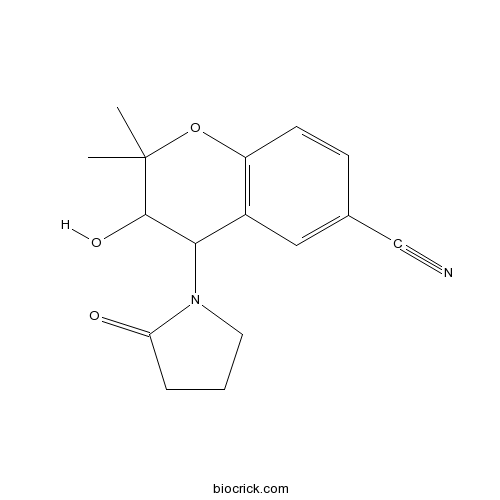
Cromakalim
94470-67-4
-
BCC6868
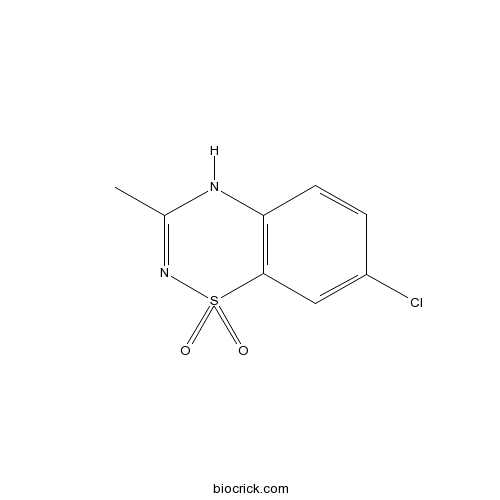
Diazoxide
Diazoxide (Sch-6783) is an ATP-sensitive potassium channel activator, has the potential for hyperinsulinism treatment.
-
BCC7039
Levcromakalim
Levcromakalim ((-)-Cromakalim) is an ATP-sensitive K+ channel (KATP) activator.

-
BCC4297
Minoxidil
Minoxidil (U10858) is an ATP-sensitive potassium (KATP) channel opener, a potent oral antihypertensive agent and a peripheral vasodilator that promotes vasodilation also affects hair growth. Minoxidil is also a potent inhibitor of soybean lipoxygenaseare with an IC50 of 20 μM.