Arrhythmia Research
An arrhythmia (also known as cardiac dysrhythmia) is defined as an irregular heartbeat, and results from abnormal electrical activity in the heart. There are various different types of arrhythmia, often resulting in a heartbeat that is too fast (tachycardia) or too slow (bradycardia). Atrial and ventricular fibrillation, which are the most common cardiac arrhythmias, account for 10-20% of all deaths among adults in the Western world. The incidence of atrial fibrillation increases with age; it not only affects cardiac function, but also increases the risk of stroke and may worsen heart failure.
Arrhythmia Research Products Targets
- Voltage-gated Sodium (NaV) Channel (30)
- Voltage-gated Potassium (KV) Channel (38)
- Voltage-gated Calcium Channel (CaV) (38)
- Epithelial Sodium Channel (3)
- STIM-Orai Channel (4)
- Ryanodine Receptor (6)
- IP3 Receptor (2)
- Acid-Sensing Ion Channel (3)
- Calcium-Activated Potassium (KCa) Channel (19)
- Inward Rectifier Potassium (Kir) Channel (21)
- HCN Channel (4)
- Adrenergic β3 Receptor (12)
- Adrenergic β2 Receptor (6)
- Adrenergic β1 Receptor (7)
Products for Arrhythmia Research - Page 14
- Cat.No. Product Name Information/Activity
-
BCC7691
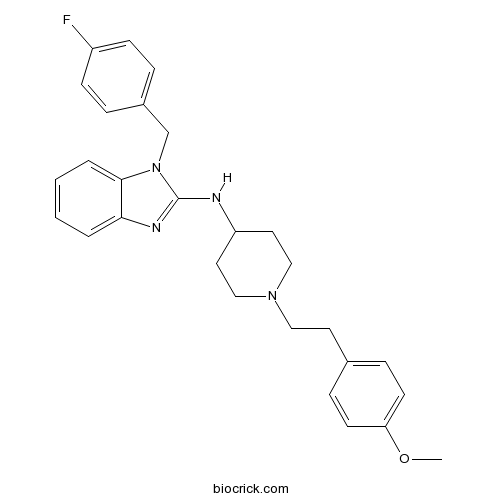
Astemizole
Astemizole (R 43512), a second-generation antihistamine drug to diminish allergic symptoms with a long duration of action, is a histamine H1-receptor antagonist, with an IC50 of 4 nM. Astemizole also shows potent hERG K+ channel blocking activity with an IC50 of 0.9 nM. Astemizole has antipruritic effects.
-
BCC5456
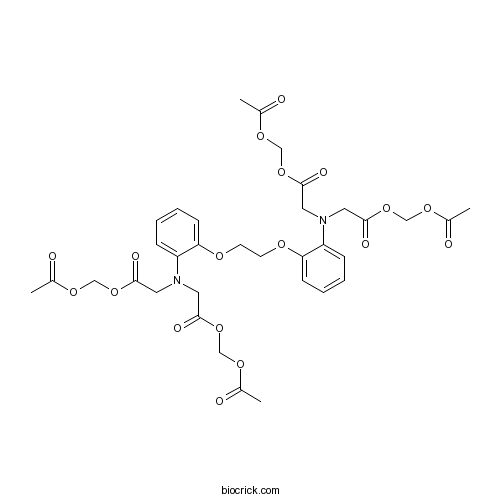
BAPTA-AM
BAPTA-AM is a well-known membrane permeable Ca2+ chelator. BAPTA-AM inhibits hERG channels, hKv1.3 and hKv1.5 channels in HEK 293 cells with IC50s of 1.3 μM, 1.45 μM and 1.23 μM, respectively.
-
BCC7055
Chromanol 293B
163163-23-3

-
BCC7080
(-)-[3R,4S]-Chromanol 293B
163163-24-4
![(-)-[3R,4S]-Chromanol 293B chemical structure](/media/images/struct/BCC7080.png)
-
BCC7048
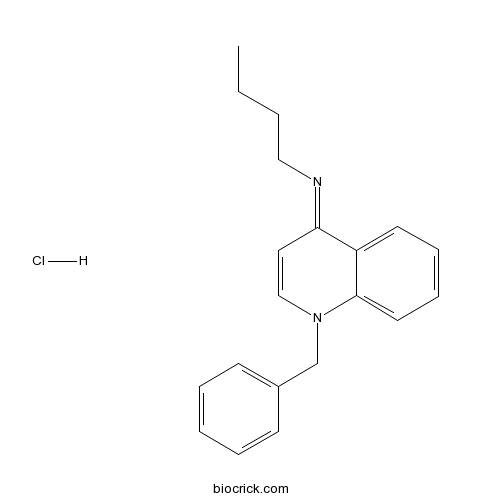
CP 339818 hydrochloride
478341-55-8
-
BCC3770
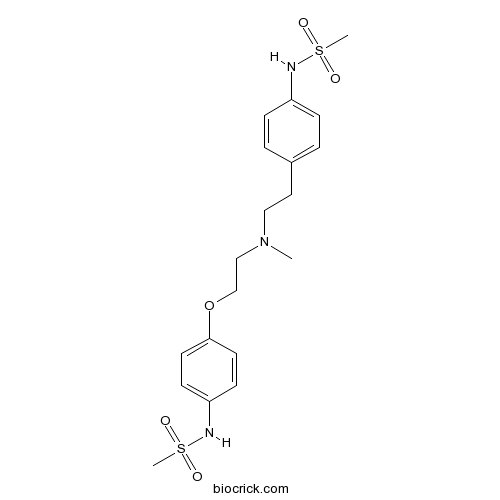
Dofetilide
Dofetilide(Tikosyn) is a class III antiarrhythmic agent.
-
BCC7398
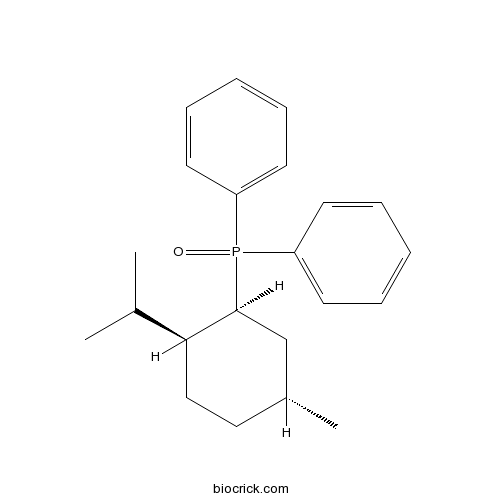
DPO-1
43077-30-1
-
BCC7182
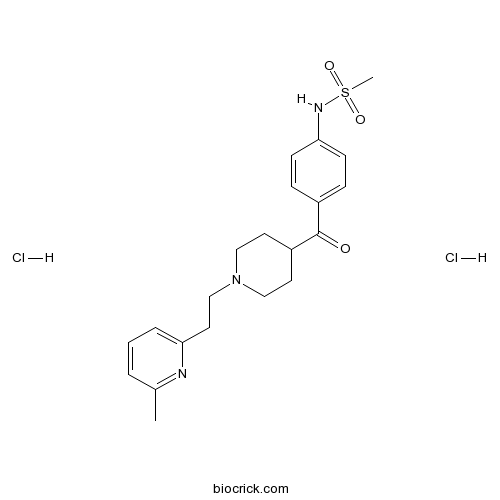
E-4031 dihydrochloride
E-4031 is a class III antiarrhythmic agent which selectively blocks hERG potassium channel.
-
BCC7806
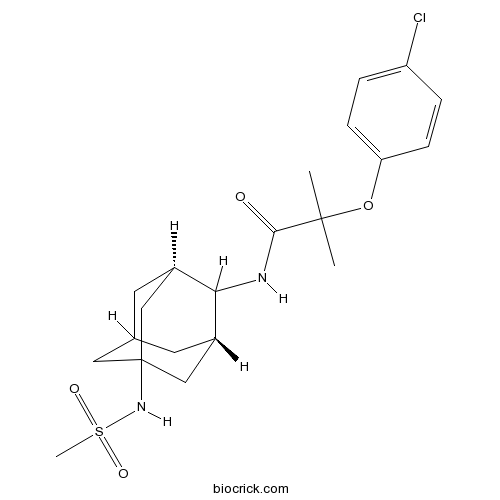
JNJ 303
JNJ 303 is a potent IKs blocker with an IC50 value of 64 nM. JNJ 303 does not have any effects on other cardiac channels at concentrations of 3.3 μM for INa, Ica, Ito, and IKr. JNJ 303 induces QT-prolongations and causes unprovoked torsades de pointes (TdP).
-
BCC1682
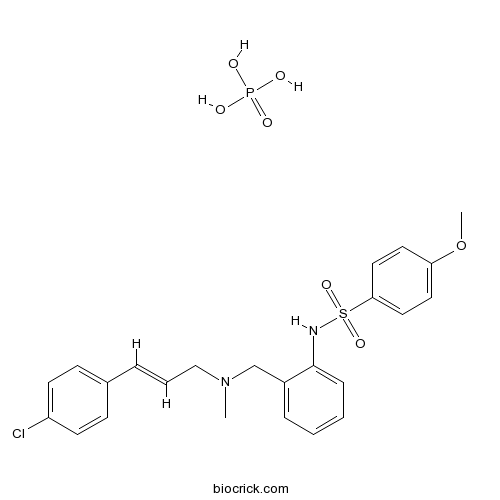
KN-92 phosphate
KN-92 phosphate is an inactive derivative of KN-93.