Arrhythmia Research
An arrhythmia (also known as cardiac dysrhythmia) is defined as an irregular heartbeat, and results from abnormal electrical activity in the heart. There are various different types of arrhythmia, often resulting in a heartbeat that is too fast (tachycardia) or too slow (bradycardia). Atrial and ventricular fibrillation, which are the most common cardiac arrhythmias, account for 10-20% of all deaths among adults in the Western world. The incidence of atrial fibrillation increases with age; it not only affects cardiac function, but also increases the risk of stroke and may worsen heart failure.
Arrhythmia Research Products Targets
- Voltage-gated Sodium (NaV) Channel (30)
- Voltage-gated Potassium (KV) Channel (38)
- Voltage-gated Calcium Channel (CaV) (38)
- Epithelial Sodium Channel (3)
- STIM-Orai Channel (4)
- Ryanodine Receptor (6)
- IP3 Receptor (2)
- Acid-Sensing Ion Channel (3)
- Calcium-Activated Potassium (KCa) Channel (19)
- Inward Rectifier Potassium (Kir) Channel (21)
- HCN Channel (4)
- Adrenergic β3 Receptor (12)
- Adrenergic β2 Receptor (6)
- Adrenergic β1 Receptor (7)
Products for Arrhythmia Research - Page 18
- Cat.No. Product Name Information/Activity
-
BCC6328
Phrixotoxin 3
880886-00-0

-
BCC6103
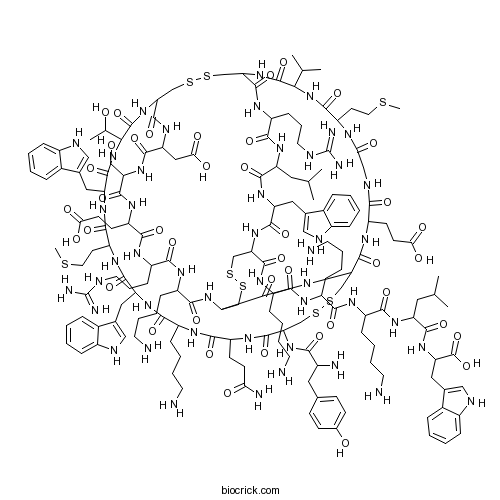
ProTx II
ProTx II is a selective blocker of Nav1.7 sodium channels with an IC50 of 0.3 nM, and is at least 100-fold selective for Nav1.7 over other sodium channel subtypes. ProTx-II inhibits sodium channels by decreasing channel conductance and shifting activation to more positive potentials and blocks action potential propagation in nociceptors.
-
BCC6906
QX 222
5369-00-6

-
BCC6889
QX 314 bromide
QX-314 bromide is a membrane-impermeable permanently charged sodium channel blocker.

-
BCC7326
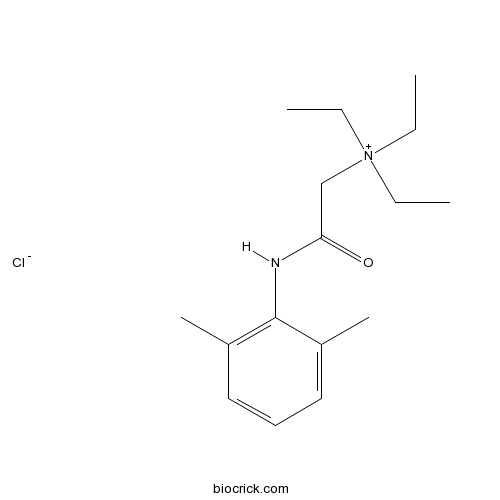
QX 314 chloride
QX-314 chloride is a membrane-impermeable permanently charged sodium channel blocker.
-
BCC7844
Ralfinamide mesylate
Ralfinamide mesylate (FCE-26742A mesylate) is an orally available Na+ channel blocker derived from α-aminoamide, with function of suppressing pain.

-
BCC7847
Sipatrigine
Sipatrigine, a neuroprotective agent, is a glutamate release inhibitor, voltage-dependent sodium channel and calcium channel inhibitor, penetrating the central nervous system. Has potential to treat focal cerebral ischemia and stroke.

-
BCC6179
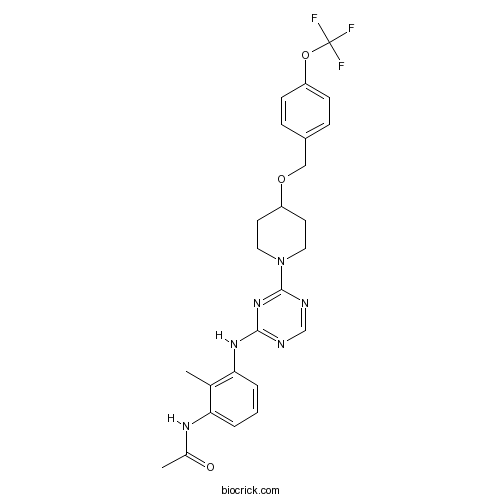
TC-N 1752
1211866-85-1
-
BCN1035
Tetrodotoxin
Tetrodotoxin is a highly selective <b>sodium channel</b> blocker, with <b>IC<sub>50</sub></b> of 33 nM for <b>Nav1.6</b>.

-
BCC2156
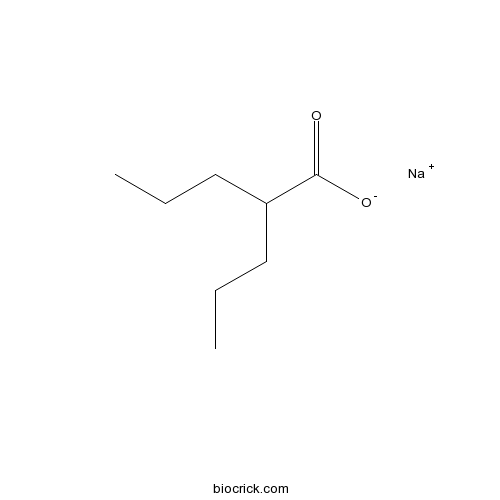
Valproic acid sodium salt (Sodium valproate)
Valproic acid sodium salt (Sodium Valproate) is an HDAC inhibitor, with IC50 in the range of 0.5 and 2 mM, also inhibits HDAC1 (IC50, 400 μM), and induces proteasomal degradation of HDAC2. Valproic acid sodium salt activates Notch1 signaling and inhibits proliferation in small cell lung cancer (SCLC) cells. Valproic acid sodium salt is used in the treatment of epilepsy, bipolar disorder and prevention of migraine headaches.